That you might have missed
Here are the 10 updates that happened in .NET in 2025:
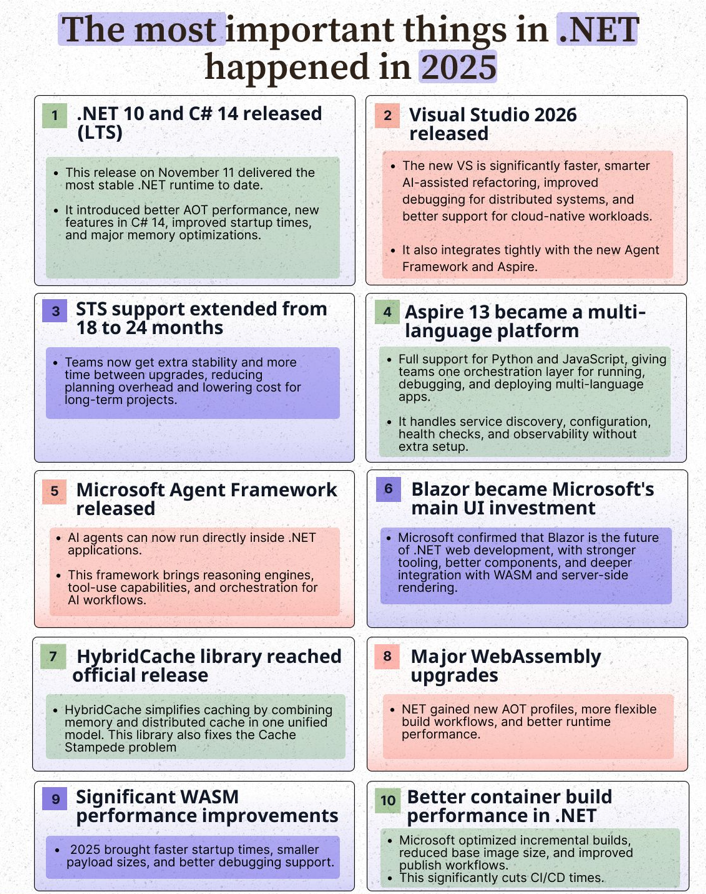
𝟭/ .𝗡𝗘𝗧 𝟭𝟬 𝗮𝗻𝗱 𝗖# 𝟭𝟰 𝗿𝗲𝗹𝗲𝗮𝘀𝗲𝗱 (𝗟𝗧𝗦)
→ This release on November 11 delivered the most stable .NET runtime to date.
→ It introduced better AOT performance, new features in C# 14, improved startup times, and major memory optimizations.
𝟮/ 𝗩𝗶𝘀𝘂𝗮𝗹 𝗦𝘁𝘂𝗱𝗶𝗼 𝟮𝟬𝟮𝟲 𝗿𝗲𝗹𝗲𝗮𝘀𝗲𝗱
→ The new VS is significantly faster, smarter AI-assisted refactoring, improved debugging for distributed systems, and better support for cloud-native workloads.
→ It also integrates tightly with the new Agent Framework and Aspire.
𝟯/ 𝗦𝗧𝗦 𝘀𝘂𝗽𝗽𝗼𝗿𝘁 𝗲𝘅𝘁𝗲𝗻𝗱𝗲𝗱 𝗳𝗿𝗼𝗺 𝟭𝟴 𝘁𝗼 𝟮𝟰 𝗺𝗼𝗻𝘁𝗵𝘀
→ Teams now get extra stability and more time between upgrades, reducing planning overhead and lowering cost for long-term projects.
𝟰/ 𝗔𝘀𝗽𝗶𝗿𝗲 𝟭𝟯 𝗯𝗲𝗰𝗮𝗺𝗲 𝗮 𝗺𝘂𝗹𝘁𝗶-𝗹𝗮𝗻𝗴𝘂𝗮𝗴𝗲 𝗽𝗹𝗮𝘁𝗳𝗼𝗿𝗺
→ Aspire is no longer just for .NET developers.
→ Version 13 introduced full support for Python and JavaScript, giving teams one orchestration layer for running, debugging, and deploying multi-language apps.
→ It handles service discovery, configuration, health checks, and observability without extra setup.
𝟱/ 𝗠𝗶𝗰𝗿𝗼𝘀𝗼𝗳𝘁 𝗔𝗴𝗲𝗻𝘁 𝗙𝗿𝗮𝗺𝗲𝘄𝗼𝗿𝗸 𝗿𝗲𝗹𝗲𝗮𝘀𝗲𝗱
→ AI agents can now run directly inside .NET applications.
→ This framework brings reasoning engines, tool-use capabilities, and orchestration for AI workflows.
𝟲/ 𝗕𝗹𝗮𝘇𝗼𝗿 𝗯𝗲𝗰𝗮𝗺𝗲 𝗠𝗶𝗰𝗿𝗼𝘀𝗼𝗳𝘁’𝘀 𝗺𝗮𝗶𝗻 𝗨𝗜 𝗶𝗻𝘃𝗲𝘀𝘁𝗺𝗲𝗻𝘁
→ Microsoft confirmed that Blazor is the future of .NET web development, with stronger tooling, better components, and deeper integration with WASM and server-side rendering.
𝟳/ 𝗛𝘆𝗯𝗿𝗶𝗱𝗖𝗮𝗰𝗵𝗲 𝗹𝗶𝗯𝗿𝗮𝗿𝘆 𝗿𝗲𝗮𝗰𝗵𝗲𝗱 𝗼𝗳𝗳𝗶𝗰𝗶𝗮𝗹 𝗿𝗲𝗹𝗲𝗮𝘀𝗲
→ HybridCache simplifies caching by combining memory and distributed cache in one unified model. This library also fixes the Cache Stampede problem
𝟴/ 𝗠𝗮𝗷𝗼𝗿 𝗪𝗲𝗯𝗔𝘀𝘀𝗲𝗺𝗯𝗹𝘆 𝘂𝗽𝗴𝗿𝗮𝗱𝗲𝘀
→ .NET gained new AOT profiles, more flexible build workflows, and better runtime performance.
𝟵/ 𝗦𝗶𝗴𝗻𝗶𝗳𝗶𝗰𝗮𝗻𝘁 𝗪𝗔𝗦𝗠 𝗽𝗲𝗿𝗳𝗼𝗿𝗺𝗮𝗻𝗰𝗲 𝗶𝗺𝗽𝗿𝗼𝘃𝗲𝗺𝗲𝗻𝘁𝘀
→ 2025 brought faster startup times, smaller payload sizes, and better debugging support.
𝟭𝟬/ 𝗕𝗲𝘁𝘁𝗲𝗿 𝗰𝗼𝗻𝘁𝗮𝗶𝗻𝗲𝗿 𝗯𝘂𝗶𝗹𝗱 𝗽𝗲𝗿𝗳𝗼𝗿𝗺𝗮𝗻𝗰𝗲 𝗶𝗻 .𝗡𝗘𝗧
→ Microsoft optimized incremental builds, reduced base image size, and improved publish workflows.
→ This significantly cuts CI/CD times.