


Introduction
Dependency Injection (DI) is a widely used approach in object-oriented programming that handles how different parts of a system are connected and interact with one another. In traditional code, a class might create the objects it needs directly, which can make the code tightly coupled and harder to maintain or test.
With Dependency Injection, these required objects—called dependencies—are passed into the class from the outside, rather than the class creating them itself. This approach promotes loose coupling between components, improves flexibility, and makes unit testing much easier, since dependencies can be easily replaced with mock objects during testing.
Why Dependency Injection Is Foundational in Modern Java Development?
- Loose Coupling: Reduces direct dependencies between classes, making code easier to change and extend.
- Better testability: Allow easy replacement of real objects with mocks during testing.
- Simplifies Maintenance: Centralizes object creation and configuration, helping manage complex applications.
- Follows Inversion of Control: Shifts responsibility of creating objects from classes to external frameworks or containers.
- Increase Reusability: Enables classes to work with different implementations without modification.
- Framework Support: Essential for popular Java frameworks like Spring and Jakarta EE to manage components effectively.
Types of Dependency Injection in Spring
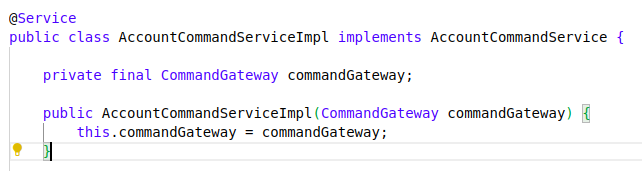
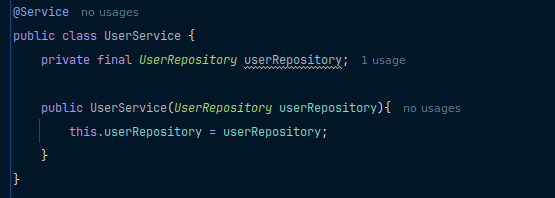
1. Constructor Injection
Dependencies are provided through a class constructor. This guarantees that all necessary dependencies are provided during object creation, helping to keep the object immutable and ensuring essential components are always available.
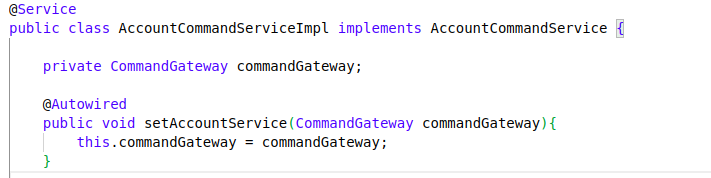
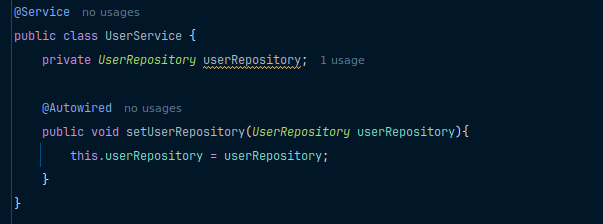
2. Setter Injection
Dependencies are injected using setter methods once the object has been instantiated. This allows optional dependencies and the ability to change dependencies later if needed.
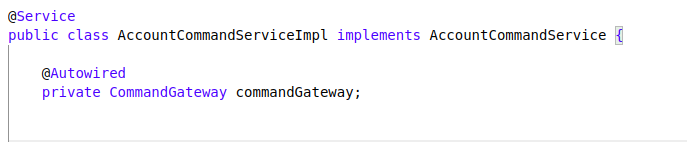
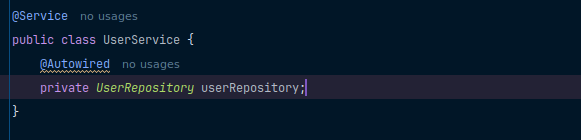
3. Field Injection
Dependencies are assigned straight to class fields with annotations such as @Autowired. This is the easiest to use but is less preferred because it hides dependencies and makes testing harder.
Benefits of Dependency Injection in Spring
1. Loose Coupling and Modularity:
- Separate Object creation from business logic.
- Reduces tight dependencies between classes.
- Enables independent development and updates of components.
2. Enhanced Testability and Maintainability:
- Allows easy replacement of real components with mocks in tests.
- Improves test reliability and speed.
- Simplifies maintenance due to loosely connected components.
3. Cleaner Code and Reduced Boilerplate:
- Automates object creation and dependency management
- Eliminates repetitive setup code
- Results in clearer, more readable, and concise code
4. Flexible Configuration and Environment Adaptability:
- Allows easy switching between configurations for various environments like development, testing, and production.
- Enables behavior changes without altering core code
- Enhances deployment flexibility and application adaptability
Dependency Injection in Action: Practical Examples
Real-World Scenarios in Spring Applications
In typical Spring applications, Dependency Injection is used to manage service, repository, and controller objects. For example, a UserService class might depend on a UserRepository to access database data. Instead of creating the repository inside the service, Spring injects it, allowing easier testing and flexible configuration.
Sample Code: Constructor Injection – preferred for mandatory dependencies.
Setter Injection (useful for optional dependencies):
Field Injection (quick but less recommended):
Pitfalls and Best Practices
1. Common Mistakes to Avoid
- Excessive use of field injection can obscure dependencies and complicate unit testing.
- Injecting too many dependencies in a single class can indicate poor design and complicate maintenance.
2. Choosing the Right Injection Strategy
- Prefer constructor injection for mandatory dependencies to ensure immutability and clear contracts.
- Use setter injection for optional or changeable dependencies to allow flexibility.
- Reserve field injection for quick prototyping or simple cases, avoiding it in production code.
3. Managing Configuration Complexity in Large Projects
- Use Spring profiles to switch configurations based on environments (e.g., dev, test, prod).
- Apply conditional bean creation to load beans only when specific conditions are met.
- Split configuration into multiple
@Configurationclasses for better organization and maintainability.
How Dependency Injection Powers Modern Java Apps?
1. Scalability and Robustness:
- Promotes loose coupling, allowing components to be replaced or extended without changing dependent code.
- Enables swapping implementations easily by changing configuration instead of modifying business logic.
- Supports adding new features or integrating new technologies smoothly.
2. Ease of Testing and Mocking Dependencies:
- Makes unit testing easier by enabling the use of mock dependencies during tests.
- Enables isolation of the class under test, improving test reliability and speed.
- Reduces the need for complex setup or integration tests for every change.
3. Enhanced Maintainability and Reusability:
- Clearly defines and manages dependencies, making code easier to follow.
- Reduces complexity by separating object creation from business logic.
- Promotes writing generic, interface-based modules rather than concrete implementations.
4. Support for Aspect-Oriented Programming (AOP):
- Integrates seamlessly with AOP to add cross-cutting concerns like logging or transactions.
- Keeps business code clean by separating concerns such as security and auditing.
- Enables consistent application of policies across components without manual code changes.
Conclusion
Grasping Dependency Injection in Spring is key to developing modern Java applications that are easy to manage, modular, and built to scale. By managing dependencies externally, Spring enables cleaner code, easier testing, and flexible configuration. Whether through constructor, setter, or field injection, Dependency Injection empowers developers to create robust apps that adapt smoothly to change, making it a vital concept in today’s Java development landscape.
References
https://docs.spring.io/spring-framework/reference/core/beans/dependencies/factory-collaborators.html
https://stackoverflow.com/questions/130794/what-is-dependency-injection