


Introduction
What if you could find software problems before they become big issues? That’s what Shift Left Testing is all about. It’s a new way of testing that happens right at the start of the software development lifecycle (SDLC). In today’s fast-paced work environments like Agile and DevOps, quality isn’t a final checkpoint, it’s part of every step. Testing earlier helps improve the product and saves time and resources.
Understanding Shift Left Testing
The Traditional Testing Model
In the past, the typical “Shift Right” approach meant testing was done at the end of development. This way, problems are only found once the code is finished, causing delays, extra work, and sometimes missed deadlines. When issues are discovered late, fixing them becomes much harder and more expensive.
What Is Shift Left Testing?
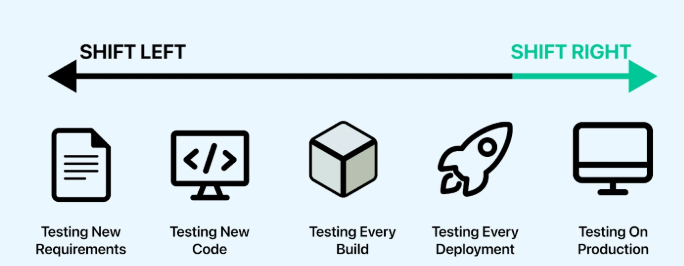
Shift Left Testing reverses this timeline by starting the testing early in the development process. By performing tests during requirements gathering, design, and even coding, teams can catch issues before they grow into complex problems. Practices such as test automation, unit testing, static analysis, and continuous integration are implemented much earlier, ensuring that quality is built into the system from the ground up.
Key Benefits of Shift Left Testing
Early Detection of Defect
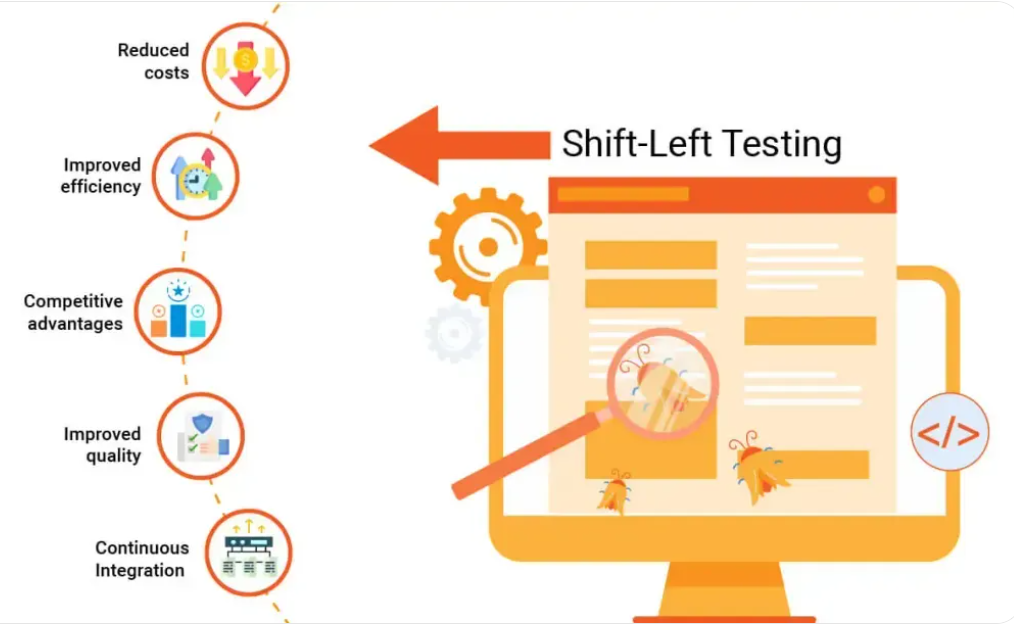
Catching defects early in the cycle is perhaps Shift Left’s greatest strength. By finding issues during unit tests or code reviews, developers can address bugs while they are small and manageable. This proactive approach prevents issues from growing into larger problems where they might require extensive rework.
Cost Efficiency
The later a bug is found, the more expensive it is to fix. Studies have indicated that a defect found in production can cost up to 30 times more to resolve than one caught during the design phase. By starting testing earlier, your team can cut down on these extra costs, keeping the budget smaller and the development process more efficient.
Faster Time to Market
Immediate feedback is crucial for agile development. Testing early and regularly helps developers get quick alerts about potential issues during code commits, allowing them to fix problems right away. This results in shorter development cycles and more frequent, dependable releases.
Improved Software Quality
Consistent testing throughout each phase encourages developers to produce cleaner, stronger code from the start. Continuous feedback not only catches problems early but also improves the software’s overall quality by promoting best practices and strict validation standards.
How Shift Left Testing Works
Test Automation
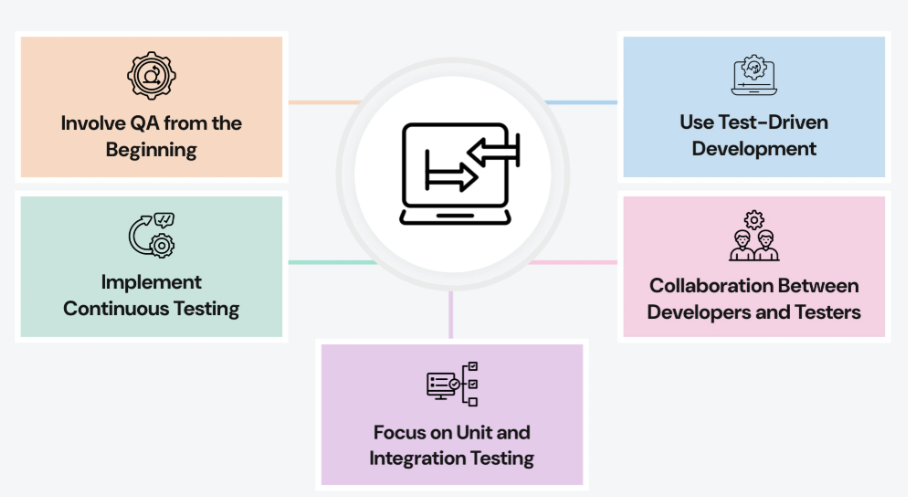
Test automation is a key part of Shift Left Testing. Automated tests, from unit tests to integration tests, are run constantly during development cycle. Tools such as Selenium, JUnit, and TestNG enable developers to run these tests repeatedly, ensuring that any code changes do not introduce new errors.
Continuous Integration (CI) and Continuous Testing (CT)
Integrating testing into your CI pipeline is a big difference. With CI tools like Jenkins or GitLab CI/CD, every code commit triggers automated tests that validate the new code immediately. This seamless integration of continuous testing ensures that potential defects are caught the moment they occur.
Static Code Analysis
Static code analysis tools like SonarQube review your source code to detect errors, security risks, and code quality issues; even before the code is executed. This early check helps catch potential problems early, before they can impact the system’s performance later.
Behavior-Driven Development (BDD) and Test-Driven Development (TDD)
Approaches such as BDD and TDD are key examples of Shift Left Testing. In TDD, developers write tests before actual coding begins, making sure expectations are clear and the code works as planned. BDD, on the other hand, helps developers, testers, and business analysts work together, ensuring that everyone shares a common understanding of the expected behavior of the software.
Challenges of Implementing Shift Left Testing

Cultural Shift
Implementing Shift Left Testing isn’t just about making technical changes; it also requires a big change in your team’s culture. Developers need to view testing as a natural part of their work, not as something separate handled by QA. Although this shift in mindset can be tough, it’s key to building a culture focused on quality and ongoing improvement.
Tooling and Automation Complexity
While the benefits are clear, setting up automated testing and CI/CD pipelines can be tricky and take up a lot of resources. It takes time and effort to learn new tools, set up, and integrate them with your current processes. However, once these challenges are handled, the long-term benefits in efficiency and reliability are well worth the effort.
Increased Initial Time Investment
At first, shifting testing practices might seem like it slows things down. Creating detailed test scripts, setting up automation tools, and changing team workflows all take time to get started. However, the reward is fewer defects, less rework, and faster development in the long run.
Shift Left vs. Shift Right Testing
| Feature | Shift Left Testing | Shift Right Testing |
|---|---|---|
| Timing | Early in the development cycle | Post-deployment or staging |
| Goal | Defect prevention | Defect detection |
| Focus | Quality assurance | User experience and performance |
| Tools | Unit tests, TDD frameworks | Monitoring tools, A/B testing |
Best Practices for Effective Shift Left Testing
- Start Small, Scale Gradually: Begin by automating essential unit tests and expand your testing practices as your team gains confidence. Transition gradually from unit tests to more comprehensive integration and performance tests.
- Involve Testers Early: Engage testers from the very beginning of the development process. Early collaboration helps in better defining test scenarios and integrating testing feedback into design decisions.
- Use the Right Tools: Invest in modern CI/CD tools, automation frameworks, and static analysis solutions that align with your project’s needs. Right tool choices can make integration easier and improve testing results.
- Focus on Continuous Improvement: Shift Left Testing is an evolving process. Regularly assess your testing strategies, learn from past challenges, and stay updated with the latest tools and methods to improve your approach.
Real-World Example: Success with Shift Left Testing
Consider the case of XYZ Corporation. Faced with discovering defects late in the process, which caused delays and higher costs, XYZ Corp. changed its development approach by adopting Shift Left Testing. By automating unit tests and adding them to their CI pipeline, the company cut defect detection time by almost 50%. This early testing strategy not only sped up release cycles but also greatly improved software quality, showing that testing early really pays off.
Conclusion
Shift Left Testing isn’t just a method; it’s a new way of thinking that focuses on building quality into software from the start. By catching defects early, reducing costs, accelerating time to market, and encouraging continuous improvement, Shift Left Testing helps set your development process up for success.
If you’re ready to improve your software quality practices, it’s time to change your approach. Start with small changes—automate your unit tests, set up a CI pipeline, and involve testers from the outset. Adopt Shift Left Testing and turn defects into chances for cleaner, better code.
Further Exploration
If this approach has caught your attention, consider learning more about Test-Driven Development (TDD) and Behavior-Driven Development (BDD). Explore how powerful CI/CD tools like Jenkins or GitLab can boost your testing efforts, and check out static analysis tools like SonarQube to maintain code quality. Embrace the change and aim for better software quality!
Happy testing, and here’s to a future of smooth, efficient, and high-quality software development!
Reference
ISTQB Certified Tester – Foundation Level Syllabus v4.0
https://katalon.com/resources-center/blog/shift-left-testing-approach
https://www.headspin.io/blog/essence-of-shift-left-testing-in-organizations