


In many organizations, the software testing team is kept separate from the development process and is only brought in once the code is available in the test environment.
This traditional testing approach often creates bottlenecks that delay releases and compromise product quality. That’s exactly where QAOps steps into the limelight.
QAOps integrates the QA team with both development and operations teams, making quality assurance an active part of the CI/CD pipeline. By fostering collaboration and continuous testing, QAOps helps deliver higher-quality software faster and more efficiently.
But what exactly is QAOps, and what methodologies support its lifecycle? Let’s explore
What is QAOps?
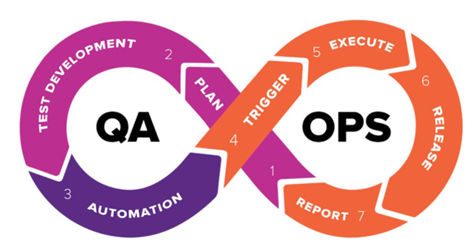
QAOps is a new approach to embedding QA into the heart of the software delivery pipeline. It emphasizes close collaboration between QA, development, and operations teams throughout the software development lifecycle (SDLC).
This integration is achieved by embedding QA processes, automation frameworks, and reporting dashboards directly into the CI/CD workflow.
By adopting QAOps, QA teams take on a more active role in the development cycle, promoting stronger alignment with developers and operations — ultimately improving product quality and delivery speed.
Life Cycle of QAOps: 3 Crucial Steps
QAOps is all about establishing a robust platform with the right tools integrated into the CI/CD pipeline to ensure that new code is thoroughly validated and tested. Setting up the QA test platform typically involves three essential steps: Trigger, Implement, and Report.
1.Trigger
The trigger phase is where automated testing begins. It focuses on generating precise and relevant test cases that evaluate the technical aspects of the product—without wasting time on unnecessary tests.
When designing the trigger stage, three key considerations must be addressed:
- Plan testing activities early in the development cycle.
- Include all relevant testing types, including integration testing.
- Incorporate automated tests for code verification and deployment.
A well-planned trigger step sets the tone for the rest of the QAOps lifecycle. If this stage is executed effectively, it builds confidence across the team for the upcoming release.
2. Implement
The implementation phase is where the parallel testing strategies defined during the trigger step are actually executed.
This stage involves multiple critical components:
- Launching parallel test suites to accelerate the process.
- Ensuring the test environment supports all forms of integration testing.
- Validating scalability and performance of the testing infrastructure.
- Executing test cases in the correct order as defined in the plan.
- Distributing testing workloads across multiple teams.
- Ensuring all tools, infrastructure, and frameworks are in place and accessible.
This phase is crucial because it brings the test plan to life. Effective coordination between the trigger and implement phases ensures the testing process remains seamless and efficient.
3. Report
The final phase is reporting, which consolidates the results from both the trigger and implementation stages. A detailed yet concise report is created to summarize the entire testing lifecycle.
A well-designed reporting module includes:
- High-level snapshots and deep-dive views of test results.
- Analysis of root causes for test failures or issues.
- Immediate access to test results with no confusion.
- Historical test data for trend analysis and future reference
- Clear, accessible reporting for all stakeholders.
- Scalable reporting architecture to handle large datasets.
Effective reporting not only helps in debugging but also improves visibility and decision-making across the team.
Methodologies utilized in QAOps Framework
The QAOps framework is not a standalone process but a combination of modern testing methodologies that align with DevOps principles. These methodologies ensure testing is integrated, automated, and continuously improved throughout the software delivery lifecycle.
Here are the core methodologies that power QAOps:
- Continuous Testing
- Testing is performed at every stage of the CI/CD pipeline.
- Ensures faster feedback, early bug detection, and reduced release risks.
- Shift-Left Testing
- Testing activities start early in the development cycle (during requirements and design).
- Promotes proactive quality rather than reactive bug-fixing.
- Shift-Right Testing
- Focuses on post-deployment testing in production environments.
- Includes monitoring, user behavior testing, and real-time feedback collection.
- Test Automation
- Automates repetitive tests (unit, integration, regression, UI, API, etc.).
- Improves test speed, consistency, and scalability.
- Behavior-Driven Development (BDD)
- Encourages collaboration between QA, devs, and business stakeholders.
- Uses natural language (e.g., Gherkin) to define test scenarios that reflect real business needs.
- Parallel Testing
- Executes multiple tests simultaneously across environments and devices.
- Reduces test execution time and accelerates delivery.
- CI/CD Integration
- Testing is embedded directly into continuous integration/continuous deployment workflows (Jenkins, GitLab CI, GitHub Actions).
- Tests run automatically on code changes, ensuring rapid validation.
Crucial advandces of the QAOps Process
QAOps brings a modern, integrated approach to software testing that offers several critical benefits. Here are some of the most significant advances it introduces:
Continuous Testing Across the CI/CD Pipeline: QA is no longer a final step — it becomes an ongoing activity integrated into every stage of development and deployment.
Improved Collaboration Between QA, Dev, and Ops: QAOps breaks down silos by aligning QA teams with developers and operations, enabling faster feedback loops and smoother workflows.
Faster Time-to-Market: By automating test execution and integrating QA into the pipeline, QAOps significantly reduces delays, helping teams release software faster.
Scalable and Cloud-Based Testing: QAOps supports cloud infrastructure and containerization (e.g., Docker, Kubernetes), making it easier to scale test environments and manage resources efficiently.
Real-Time Reporting and Insights: Built-in reporting dashboards give stakeholders instant visibility into test results, bugs, and release readiness — improving decision-making.
Broader Test Coverage: QAOps enables comprehensive testing across devices, browsers, and platforms — especially important in mobile-first and multi-platform environments.
Cost Efficiency: Automated and integrated QA processes reduce the need for manual intervention, lowering long-term testing costs and human error.
Quality Built from the Start: By shifting testing left, QAOps ensures bugs are caught earlier in the SDLC, resulting in fewer post-release issues and higher product stability.
Future of QAOps in organizations
In today’s market landscape, the future of business-critical software testing is rapidly shifting toward high automation and cloud-based solutions—with QAOps emerging as the next major advancement. While many organizations have already embraced the DevOps model, QAOps represents the natural and essential next step in enhancing quality within continuous delivery pipelines.
By implementing QAOps effectively, teams can achieve broader test coverage, including testing across a wide range of mobile devices.
When properly designed and executed, QAOps accelerates software delivery, improves the customer experience, and ensures efficiency without sacrificing quality.
References
https://www.browserstack.com/guide/what-is-qaops
https://shiftasia.com/community/qaops-a-software-testing-trend-in-2023/