



In today’s digital economy, user experience (UX) is more than just design — it’s the bridge that connects technology with human behavior. A well-designed product doesn’t only serve existing users better; it also expands the market by reaching those who were previously excluded. Let’s explore this idea through a familiar challenge: shifting from a cash-based culture to digital payments.

The Challenge: Why Adopting Digital Payments is Harder Than Changing Technology
Imagine working for an e-wallet company — say, Momo or Zalo Pay, one of Vietnam’s largest digital payment platforms. The goal? Encourage people to replace cash with online transfers for everyday transactions like eating out or buying coffee.
The obstacle? A significant segment of society — especially older or low-tech individuals — finds digital transactions intimidating. They fear scams, have trouble verifying fake bills, and struggle to navigate complex app interfaces. No matter how advanced the technology, if it feels unsafe or confusing, adoption will stall.
You could respond by improving app usability and conducting training sessions. But despite your best efforts, these users still find digital payments inconvenient. For example:
- Cashiers can’t check the shop owner’s personal account for payment confirmation.
- Busy customers find it tedious to open their phones after every transaction.
- And what about users with visual impairments — how will they confirm payment visually?
The problem becomes clear: we’re trying to change people, not the product.

The Breakthrough: Build Products That Fit People — Not the Other Way Around
You realize that not everyone is “tech-savvy.” But everyone has one thing in common — they can hear.
So instead of relying on visual confirmation, you design a new feature: voice-based transaction confirmation.
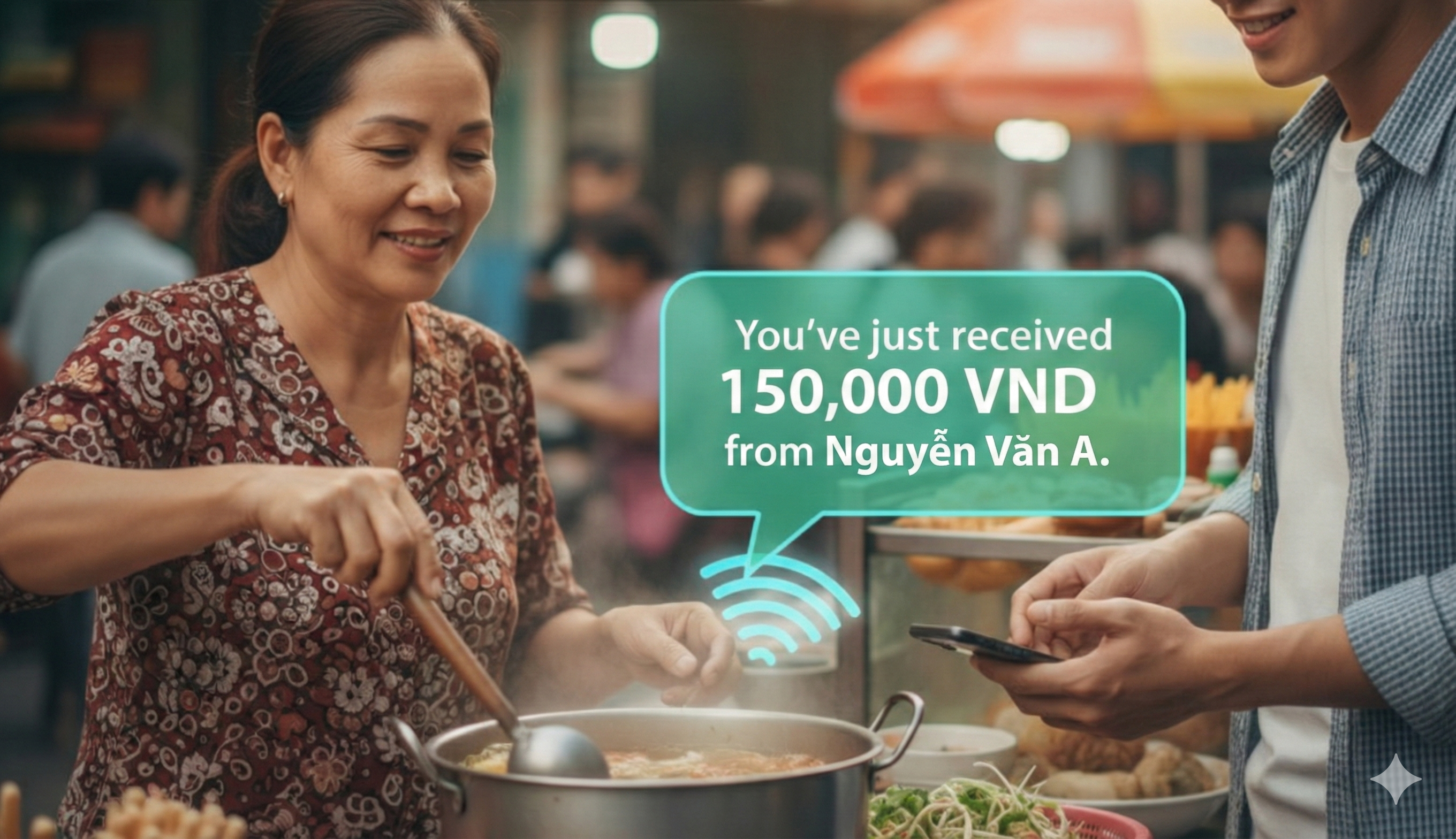
Now, when a customer scans a QR code and completes a payment, a clear, human-like voice (e.g., Google Voice) announces the amount received:
“You’ve just received 150,000 VND from Nguyen Van A.”
This simple audio cue transforms the experience:
- Convenient: Shop owners don’t need to look at their phones while multitasking.
- Transparent: Both sender and receiver have real-time confirmation — no more disputes or uncertainty.
- Security: You are not worry about the scam fear anymore.
A small UX change, yet its impact is enormous — it builds trust, boosts inclusivity, and strengthens user confidence in digital payments. Momo successfully launched this product.
System Issues Impact UX Than You think
We often think how to improve the UX of a feature, however, user usually leave because of an issue related to system or network so that you may be missed
Have you ever been in this situation? You are at a busy Banh Mi stand during the breakfast rush.
You scan the QR code to pay via your bank-linked e-wallet. and press confirm. And then… the screen spins. Status: Pending. The money hasn’t left your account, or maybe it has, but the merchant hasn’t received it. The network (NAPAS or the Bank) is congested.
- The Merchant: Cannot let you go because you have not paid.
- You: Call Customer Service, but usually they need time to resolve it, and you cannot wait 2 hours for the system to settle.
- The Risk: If you pay cash now to leave, the digital transaction might succeed an hour later, causing you to pay double with no easy way to get a refund.
There has not yet been any e-wallet that has been able to significantly improve this user experience, as it is truly a difficult problem to solve. So what best practices do you think could address this challenge?
Let’s look forward to the next blog post, where we’ll explore possible solutions together.