


When working in software testing, you may often hear the terms smoke testing and sanity testing.
At first, these two types of testing can sound very similar. Many beginners even confuse them.
But in reality, they serve different purposes and are used at different times in the testing process.
In this blog, we will explore both types in a simple way, with clear examples, so you can easily understand and remember them.
What is Smoke Testing?
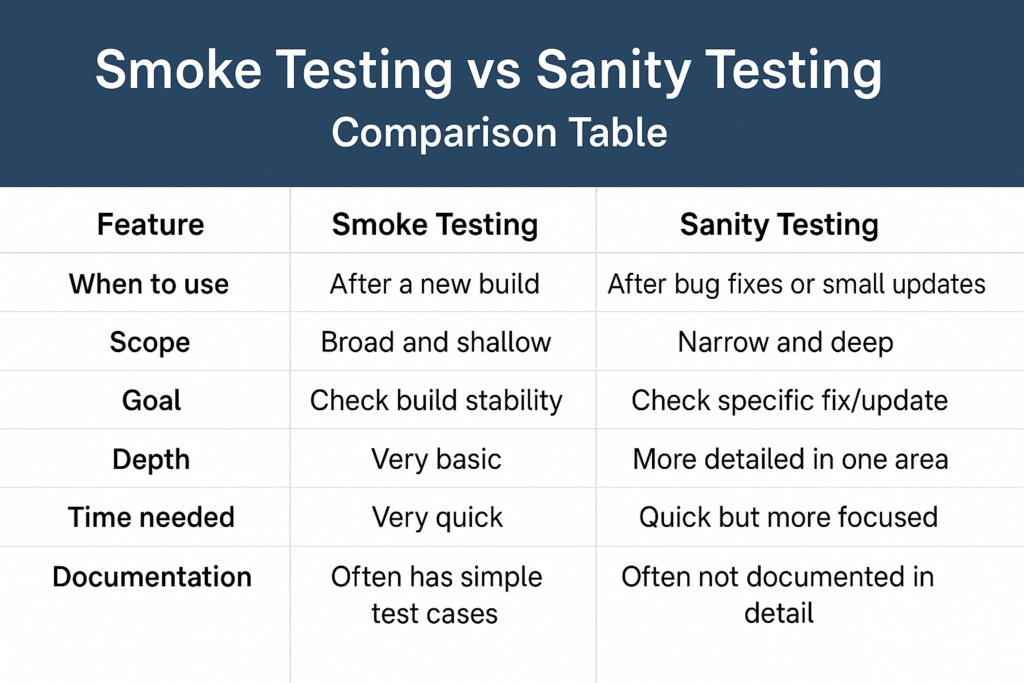
Smoke testing is a quick and simple test done after receiving a new build from developers.
Its main purpose is to check whether the basic and most important functions of the application are working.
You can think of smoke testing like checking a new product right after buying it.
For example, if you buy a new phone, the first thing you do is:
- Does it turn on?
- Can you unlock it?
- Does the screen respond?
If the phone doesn’t even turn on, you can’t check anything else.
Similarly, if the software build fails at the basic level, it is not ready for deeper testing.
Typical Smoke Test Checks
- Can the application open without crashing?
- Can users log in?
- Does the main dashboard or homepage load?
- Are key buttons clickable?
These tests are not detailed. They only check if the main flow works.
Why Smoke Testing Is Important
- It saves time by avoiding testing a broken build.
- It tells the team early if the build is stable.
- It helps developers quickly know if something major is wrong.
If smoke testing fails, testers usually reject the build and wait for developers to fix it.
What is Sanity Testing?
Sanity testing is done after developers fix bugs or make small changes to the software.
The goal is to make sure that:
- The reported bug is really fixed.
- The fix did not break any important related function.
Sanity testing is more focused than smoke testing.
Instead of checking many areas, testers check only a specific part but test it more deeply.
Typical Sanity Test Checks
If developers fix a login issue, sanity testing may include:
- Can the user now log in successfully?
- Are error messages correct?
- After login, does the app redirect to the correct page?
Why Sanity Testing Is Important
- It ensures the fix works as expected.
- It catches unexpected side effects from the new change.
- It prevents broken features from moving into the next test cycle.
Sanity testing helps maintain the quality of each update before full regression testing starts.
Smoke Testing vs. Sanity Testing: Comparison Table
In Simple Words
- Smoke Testing: “Does the software start and run well enough for further testing?”
- Sanity Testing: “Does this fix work? And is this part of the system still okay?”
Smoke testing is like checking if a car can start.
Sanity testing is like checking if the repaired brakes now work correctly.
Why Testers Need Both
Using both smoke and sanity testing helps teams:
- Catch big problems early
- Ensure small updates don’t create new bugs
- Save time and effort on future test cycles
- Deliver higher-quality software
Both types of testing play an important role in building stable and reliable products.