


Flaky tests are unstable automated tests that sometimes pass and sometimes fail unpredictably—even when the code hasn’t changed. They create false results and cause significant disruption in the software development process. Below is a detailed report on the impact of flaky tests and how to prevent them in the context of automation testing with Playwright and TypeScript
1. Impact and Cost of Flaky Tests
Flaky tests may seem small, but their long-term impact on a development team can be substantial. When a CI/CD pipeline suddenly turns from “green” to “red” for no clear reason, developers must re-run the pipeline—and it may turn green again. This cycle repeats and drains both time and energy. Here are the key consequences of flaky tests
Wasted Time and Resources
Flaky tests generate false failures, forcing developers to stop their work, rerun pipelines, and inspect logs. Studies show teams lose around 2.5% of total working time to handling flakiness. For a 10-person team, this can cost ~$12,000 per quarter—with no real value gained.
CI/CD Disruptions and Release Delays
Over 58% of CI failures are linked to flaky tests. When a test randomly fails, the entire pipeline stops. Mean Time to Green increases, release cycles slow down, and developers waste time due to context switching. In serious cases, product releases must be delayed.
Reduced Trust in the Test Suite
When tests behave unpredictably, teams begin to ignore failures. Developers rerun failed pipelines until they turn green instead of investigating root causes. At this point, the test suite becomes unreliable, reducing its value and weakening the team’s quality culture.
Maintenance Costs and Technical Debt
Flaky tests cause teams to debug non-existent bugs, wasting effort and cloud resources. If ignored, flakiness accumulates as technical debt, making the test suite harder to maintain and more fragile over time.
Impact on the Team and the Product
Persistent flakiness leads to frustration, stress, and reduced motivation. CI instability negatively affects DORA metrics, delaying features and reducing competitiveness. A stable test pipeline directly supports better product quality and business performance.
2. Common Causes of Flaky Tests in Playwright and TypeScript
To provide clear illustrations, I will use Playwright with TypeScript for the examples.
Flaky tests usually arise from script or environment issues. Key causes include:
- Timing issues and race conditions: Tests fail when interacting with elements before they’re ready, e.g., a login button delayed by animation. Outcomes depend on execution speed.
- Fixed waits instead of dynamic waits: Using sleep (e.g.,
waitForTimeout(3000)) can make tests brittle—too short on CI, too long on fast machines.

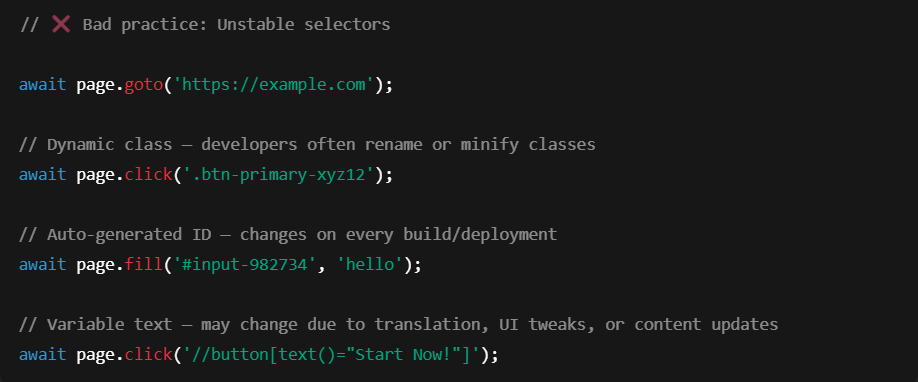
- Unstable selectors: Dynamic classes, auto-generated IDs, or variable text make tests fragile. Prefer stable selectors like
data-testid, roles, or constant text.
- Lack of isolation and inter-test dependencies: Tests sharing state or relying on others fail when run in different order or parallel. Each test should be independent with its own data and browser context.
- Environment differences (local vs CI): CI may have different resources, screen resolution, headless mode, or parallel execution issues, causing failures not seen locally.
- Network and external service dependencies: Tests relying on external APIs or slow networks are prone to random failures unless mocked or isolated.
- Concurrency issues: Parallel tests that share global state or resources may interfere with each other, e.g., simultaneous logins or data deletion.
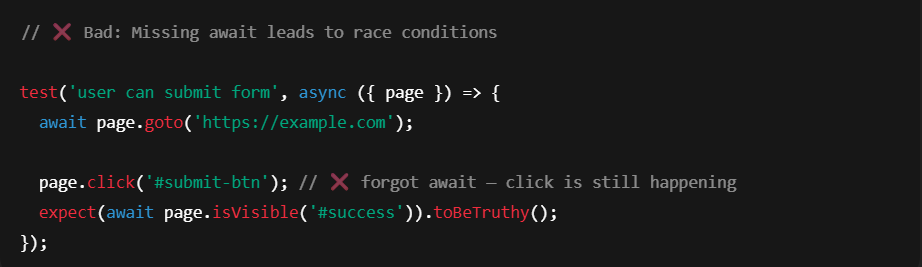
- Missing await in async code: Forgetting
awaitcauses race conditions and inconsistent assertions, a common Playwright/TypeScript mistake.
Beyond these, other factors like uncontrolled randomness, real-time application behavior (tests depending on system time), or nondeterministic operations can also cause flakiness. In general, flaky tests stem from poor testing practices or unstable environments. Understanding these root causes is the first step toward preventing them.
3. Methods and Tools to Detect, Prevent, and Fix Flaky Tests
Minimizing flaky tests requires combining solid test design with supportive tools. Key practices for Playwright + TypeScript include:
- Test Isolation: Each test should be independent, with its own data and browser context. Reset or stub external dependencies to prevent state leakage.
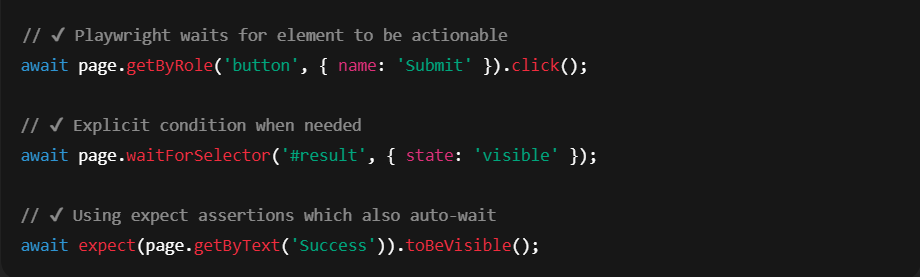
- Dynamic Waiting: Use Playwright’s auto-wait and conditional waits (
waitForSelector,expect(...).toBeVisible()) instead of fixedsleep()calls.
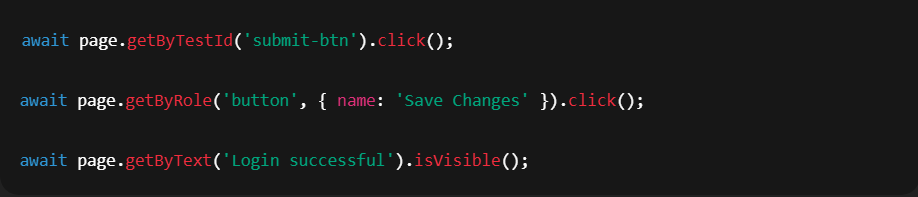
- Stable Locators: Prefer stable selectors like
data-testid, roles, or constant text; avoid fragile CSS or index-based selectors.
- Network & API Handling: Mock or stub external APIs. For real services, implement retries, proper timeouts, and graceful error handling.
- Timeouts & Retries: Adjust test and action timeouts for CI reliability. Use
--retriesand--repeat-eachto catch flaky tests early.

- Quarantine Known Flaky Tests: Tag with
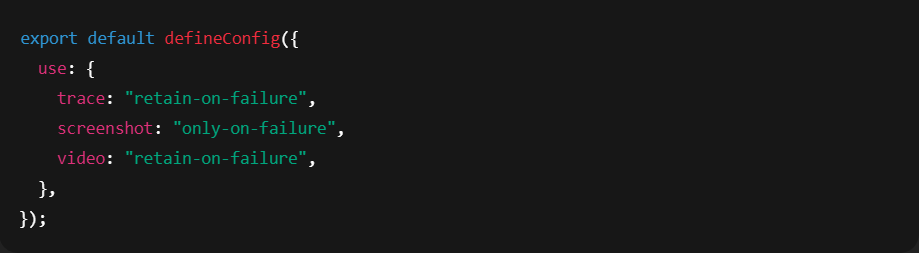
@flakyand run separately to avoid failing main pipelines while tracking them. - Logs, Reports & Debugging: Use Trace Viewer, HTML reports, screenshots, and CI artifacts to investigate failures. Dashboards and AI tools can identify flaky patterns automatically.
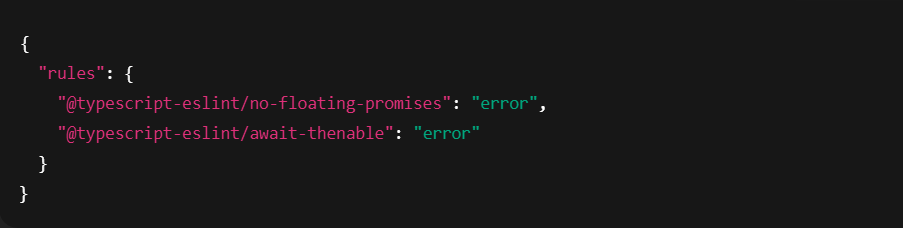
- Linting & Code Review: Enforce rules (
no-floating-promises, missingawait) and review async practices to prevent flakiness.
- Visual Test Stability: Mock data/time, wait for UI stabilization, capture relevant regions, mask external components, and disable animations.
- Consistent CI Environment: Align browser versions, machine settings, and resources with developer environments to reduce environmental flakiness.
Conclusion
Flaky tests waste time, delay releases, and reduce confidence in CI/CD. Combining good testing practices with supporting tools and a quality-focused culture ensures reliable tests, smoother pipelines, and faster, more confident releases.
References
- https://www.stickyminds.com/article/hidden-costs-flaky-tests-deep-dive-test-reliability-0#:~:text=Flaky%20tests%20present%20a%20significant,discusses%20effective%20strategies%20for%20mitigation
- https://www.browserstack.com/guide/playwright-flaky-tests#:~:text=,releases%20and%20disrupts%20development%20flow
- https://semaphore.io/blog/flaky-tests-playwright#:~:text=%2F%2F%20verify%20that%20there%20are,
- https://www.browserstack.com/guide/playwright-flaky-tests#:~:text=1,Confirm%20Flakiness
- https://semaphore.io/blog/flaky-tests-playwright#:~:text=Plawright%20supports%C2%A0test%20retries%2C%20a%20way,number%20of%20attempts%20is%20reached