


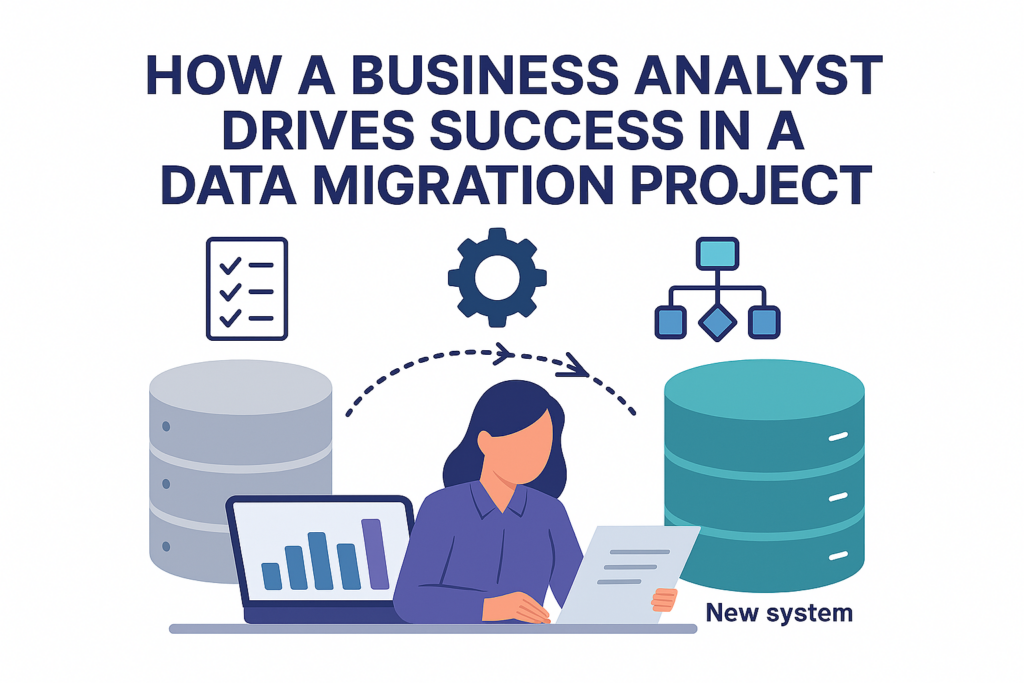
Data migration projects often sound deceptively simple: move data from System A to System B. However, anyone who has been part of one knows the truth — they’re complex, high‑risk, and deeply intertwined with business operations.
That’s exactly where Business Analysts (BA) becomes indispensable.
As the bridge between business needs and technical execution, BA play a critical role at every stage of the migration. Below is a practical look at how BA contribute to a smooth, accurate, and value driven data migration project.
1. Setting the Stage: Understanding Why the Migration Matters and defining the project scope
Every migration starts with a story — usually one involving outdated systems, tangled data structures, and business teams struggling with limitations.
At this stage, BA step in early to uncover:
• Why the business needs this migration now
• What problems must be solved
• What “success” actually looks like
This isn’t just requirements gathering; it’s story listening. It’s connecting the threads across different departments, so the project has a shared purpose.
And to make the picture clearer, BA define the scope and data requirements:
• Which data sets are in-scope vs. out-of-scope
• What historical data is needed and at what granularity
• What the business expects in the new system (e.g., data availability, default values, new structures)
By collaborating with stakeholders, BA ensure the migration covers what is necessary — no more, no less.
2. Untangling the Past: Profiling Legacy Data
Next comes discovery. In one project involving the migration of data from multiple legacy systems into a single unified platform, I found that different systems used various terms to refer to the same entity. If not clarified early, this could cause confusion later.
This is the time that I like the most, when BA transform into curious investigators.
In this second step, BA work closely with data owners and analysts to reveal:
• Data inconsistencies
• Business rule variations
• Risks lurking inside “temporary” fields
• Historical quirks that will break modern systems
This early discovery often saves weeks — or months — of rework later.
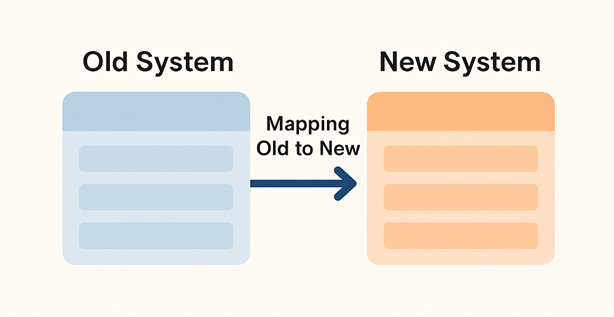
3. The Core Deliverable: Mapping Old to New
Now comes the moment stakeholders see the BA’s value most clearly.
It’s where BA translate business realities into technical clarity:
• How legacy fields map into the new system
• What transformations are needed
• Which fields must be cleansed or redefined
• What new mandatory data the business must provide
4. Connecting People: Facilitating Decisions and Alignment
Data migration projects normally don’t fail because of technology — they fail because of misunderstandings.
That’s why BA become the communication heartbeat. They :
• Clarify business rules
• Manage conflicts or ambiguous requirements
• Run workshops, walkthroughs, and review sessions
• Ensure everyone understands impacts and dependencies
5. Validating What Matters: Testing and Business Assurance
Testing in a data migration project is complex, but BA ensures nothing is overlooked.
By designing thoughtful test scenarios and acceptance criteria, BA ensure:
• Critical business processes are protected
• Edge cases are validated
• Historical data behaves correctly in the new system
• The business can trust the results
6. Go Live: Supporting Cutover Planning
During cutover, even small errors can disrupt business operations.
To reduce risk, BA help prepare by:
• Validating business readiness
• Identifying blackout windows and operational constraints
• Establishing communication flows with business users
• Ensuring reconciliation processes are defined and understood
Their involvement helps reduce uncertainty during this critical go live period.
7. After the Smoke Clears: Supporting Adoption and Improvement
Finally, after going live, BA continue to add value by:
• Collecting user feedback
• Helping teams adjust to new data behaviors
• Documenting improvements for the next iteration
• Ensuring the migrated data truly supports business operations
The migration doesn’t end when the script runs — it ends when people successfully use the new system.
To wrap things up
A data migration project is more than moving information from one place to another. It’s a transformation that affects business operations, reporting, customer experience, and decision-making.
And throughout the journey, BA act as steady guides — part storyteller, part analyst, part problem solver.
With BA, it becomes a successful transition into a better future.
Explore more posts on Data Migration, such as data-migration-testing and data-migration-strategies-for-net-applications. If you’re new to this process, start your journey with this resource: geeksforgeeks or techtarget.