


Introduction
In distributed systems and microservices architectures, failure is inevitable. Networks fail, services become overloaded, dependencies slow down, and cascading failures can bring down an entire system.
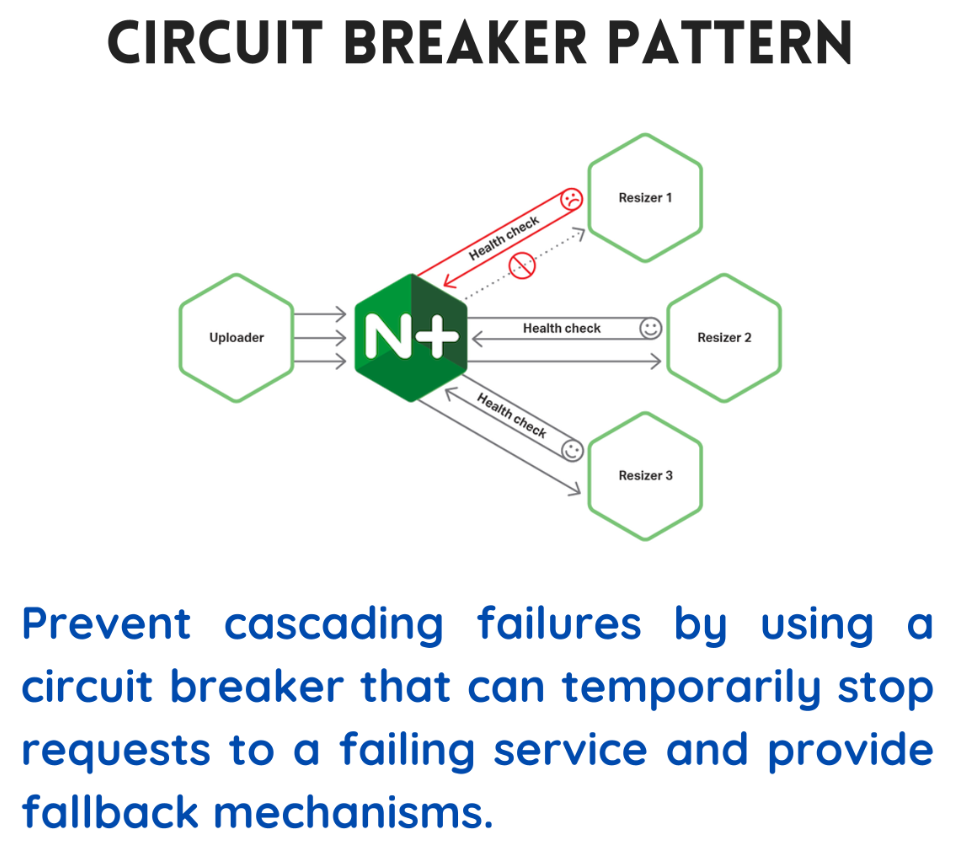
The Circuit Breaker Pattern is a proven resilience pattern that prevents repeated failures from overwhelming a system. Instead of allowing calls to a failing dependency indefinitely, the circuit breaker detects failures, stops requests early, and allows recovery over time.
This pattern is essential for building fault-tolerant, highly available systems.
What Is the Circuit Breaker Pattern?
The Circuit Breaker Pattern wraps calls to external services or remote dependencies and monitors their behavior. When failures exceed a defined threshold, the circuit “opens” and temporarily blocks calls to that dependency.
The concept is inspired by electrical circuit breakers:
- When a circuit overloads, the breaker trips
- Power is stopped to prevent damage
- After some time, the circuit can be tested again
The Problem It Solves
Without a circuit breaker:
- Requests continue to hit a failing service
- Threads and connections are exhausted
- Latency increases across the system
- Failures cascade to unrelated services
This results in:
- Poor user experience
- Increased infrastructure costs
- System-wide outages
The Circuit Breaker Pattern fails fast and protects system resources.
Core States of a Circuit Breaker
A circuit breaker typically has three states:
1. Closed (Normal Operation)
- Requests flow normally
- Failures are monitored
- If failures exceed the threshold → transition to Open
2. Open (Failure Mode)
- All requests fail immediately
- No calls are made to the downstream service
- A fallback response is returned (optional)
- After a timeout → transition to Half-Open
3. Half-Open (Recovery Testing)
- A limited number of test requests are allowed
- If successful → transition back to Closed
- If failures persist → return to Open
How the Circuit Breaker Works (Step-by-Step)
- Service Call
- A service attempts to call a remote dependency
- Failure Detection
- Timeouts, exceptions, or error responses are recorded
- Threshold Evaluation
- If failure rate exceeds a configured threshold, the circuit opens
- Fail Fast
- Requests are blocked immediately
- Optional fallback logic is executed
- Recovery Attempt
- After a cooldown period, limited requests test recovery
Key Configuration Parameters
A well-tuned circuit breaker depends on configuration:
Parameter Description Failure threshold Number or percentage of failures before opening Timeout How long to wait before marking a request as failed Open state duration Time before transitioning to Half-Open Half-open calls Number of test requests allowed Fallback behavior Alternative response or degraded functionality
Benefits of the Circuit Breaker Pattern
- Prevents cascading failures
- Improves system stability
- Reduces resource exhaustion
- Improves response times during outages
- Enables graceful degradation
Trade-offs and Challenges
Challenge Explanation Tuning complexity Incorrect thresholds can cause false positives Masking real issues Overuse of fallbacks can hide failures Added complexity Additional logic and monitoring required Latency spikes Poor configuration may increase retry storms Proper monitoring and metrics are critical to mitigate these risks.
Circuit Breaker vs Retry Pattern
Aspect Circuit Breaker Retry Purpose Stop repeated failures Attempt recovery Behavior Fails fast Reattempts calls Risk Low resource usage Can amplify failures Best Use Unstable dependencies Transient failures Best practice: Use retries inside a circuit breaker with limits.
Common Implementations
Libraries and Frameworks
- Resilience4j (Java)
- Hystrix (legacy, Netflix)
- Polly (.NET)
- Istio / Service Mesh
- Spring Cloud Circuit Breaker
In Kubernetes & Service Mesh
- Circuit breaking is often implemented at the infrastructure level
- Sidecars enforce limits transparently
- Policies are configured centrally
Relationship to Other Resilience Patterns
The Circuit Breaker Pattern works best when combined with:
- Timeout Pattern
- Retry Pattern
- Bulkhead Pattern
- Fallback Pattern
- Rate Limiting
Together, these patterns form a resilience strategy, not isolated solutions.
When to Use the Circuit Breaker Pattern
Use this pattern when:
- Calling remote or third-party services
- Building microservices or distributed systems
- Operating in unreliable network environments
- High availability is a requirement
Avoid it for:
- In-process method calls
- Low-latency, non-critical operations
Real-World Example
An e-commerce service depends on a payment gateway:
- Payment service slows down
- Circuit breaker opens after repeated timeouts
- Checkout returns a “Payment temporarily unavailable” message
- Other parts of the system remain healthy
- Once the gateway recovers, traffic resumes automatically
Conclusion
The Circuit Breaker Pattern is a cornerstone of resilient system design. It acknowledges that failures will happen and ensures they are isolated, controlled, and recoverable.
In modern distributed architectures, not using a circuit breaker is often more dangerous than the added complexity of implementing one.
If your system calls remote services, you need a circuit breaker.