



Introduction
In the world of software development, creating robust and scalable applications is a paramount goal. One of the fundamental architectural patterns used to achieve this goal is the Three-Tier Application Architecture. This architecture divides an application into three distinct layers, each with its specific responsibilities. In this blog, we’ll delve into the Three-Tier Application Architecture, explore its components, benefits, and real-world applications.
What is the Three-Tier Application Architecture?
In today’s digital age, software applications play a pivotal role in various industries and domains. To meet the ever-increasing demand for scalable, maintainable, and efficient software systems, developers often employ architectural patterns that help structure and organize their code. One such pattern is the Three-Tier Application, which has gained immense popularity due to its ability to enhance modularity, scalability, and maintainability. In this blog, we’ll dive deep into the concept of Three-Tier Applications, exploring its architecture, components, advantages, and real-world use cases.
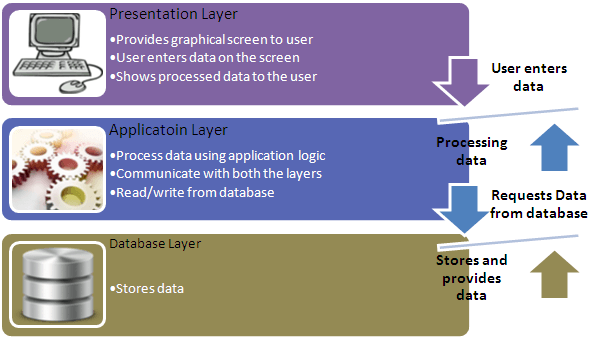
The Three-Tier Application Architecture, often referred to as the three-tier model or three-layer architecture, is a design pattern that separates an application into three interconnected layers:
1. Presentation Tier (Front-end): This is the top layer, responsible for user interaction and interface presentation. It’s the part of the application that users directly interact with. In web applications, this tier is typically implemented using HTML, CSS, and JavaScript. For desktop applications, it includes the graphical user interface (GUI).
2. Application Tier (Middle Tier): The middle layer serves as the bridge between the presentation and data tiers. It contains the application logic, processing requests from the presentation tier and making calls to the data tier. Here, the business rules, workflows, and data processing are managed. This layer can be implemented using various programming languages and frameworks like Java, Python, or Ruby on Rails.
3. Data Tier (Back-end): The bottom layer is responsible for managing data storage, retrieval, and manipulation. It interacts with databases or data storage systems to store and retrieve information. Common technologies used in the data tier include relational databases (e.g., MySQL, PostgreSQL), NoSQL databases (e.g., MongoDB, Cassandra), and file systems.
Advantages of Three-Tier Architecture:
Implementing a Three-Tier Architecture offers several benefits, making it a preferred choice for many software development projects:
1. Modularity: The separation of concerns between the three tiers allows for easier maintenance and updates. Changes made in one tier are less likely to impact the other tiers.
2. Scalability: Each tier can be scaled independently based on demand. For example, if an application experience increased user traffic, you can scale the presentation and application tiers without affecting the data tier.
3. Security: By segregating the layers, you can apply security measures at each level. This ensures that sensitive data remains protected and potential security vulnerabilities are limited to specific tiers.
4. Maintainability: Code is organized and compartmentalized, making it easier to understand and maintain. This is especially important for large and complex applications.
5. Reusability: Components in the application tier, such as business logic, can be reused across multiple interfaces, promoting code reusability and consistency.
6.Reliability: The separation of concerns and clear boundaries between tiers contribute to the overall reliability and fault tolerance of the system.
Best Practices for Three-Tier Applications:
To make the most of the Three-Tier Architecture, consider these best practices:
1. Clear Separation of Concerns: Ensure that each tier has well-defined responsibilities and doesn’t encroach on the responsibilities of the others. This separation enhances maintainability.
2. APIs and Interfaces: Use well-defined APIs and interfaces to facilitate communication between tiers. This promotes interoperability and allows for easier integration of third-party services.
3. Load Balancing: Implement load balancing at the presentation and application tiers to distribute incoming requests evenly. This enhances performance and fault tolerance.
4. Database Optimization: Optimize database queries and indexing for efficient data retrieval. Consider using caching mechanisms to reduce the load on the data tier.
5. Logging and Monitoring: Implement robust logging and monitoring solutions for each tier. This helps in debugging issues and ensuring the application runs smoothly.
6. Security Measures: Implement security measures at each tier, including encryption for data in transit and at rest, proper authentication and authorization mechanisms, and regular security audits.
Real-World Use Cases:
1. E-commerce Platforms: Online shopping websites often employ three-tier architectures to handle user interfaces, product catalog logic, and database operations efficiently.
2. Enterprise Resource Planning (ERP) Systems: ERP systems use this architecture to manage various business processes such as finance, inventory, and human resources.
3. Banking and Finance: Banking applications rely on three-tier architectures to ensure the secure handling of customer data, processing transactions, and managing accounts.
4. Healthcare: Healthcare management systems use this pattern to integrate patient records, appointments, and billing, while ensuring data privacy and security.
5. Social Media: Social media platforms implement three-tier architectures to manage user profiles, content delivery, and data storage.
Conclusion:
The Three-Tier Application Architecture is a robust and versatile design pattern that promotes modularity, scalability, security, and flexibility in software development. Understanding and implementing this architecture can greatly contribute to the success of your projects, whether you’re building web applications, enterprise systems, e-commerce platforms, or mobile apps. By effectively separating the concerns of presentation, application logic, and data management, you can create reliable, maintainable, and high-performing software systems.