



In the ever-evolving landscape of backend development, finding the right framework is crucial for building robust, scalable, and maintainable applications. NestJS, a progressive Node.js framework, revolutionizes backend development with its sophisticated architecture and TypeScript support. Fueled by a modular design and expressive decorators, NestJS enhances code readability and organization. Leveraging a powerful dependency injection system, it promotes modularity and testability, ensuring scalable and maintainable applications. This framework stands as a testament to modern, efficient, and enjoyable backend development practices.
In case you’re not familiar with NestJS, it is a TypeScript Node.js framework that helps you build enterprise-grade efficient and scalable Node.js applications.
In this blog post, we’ll explore the key features and advantages that make NestJS a go-to choose for many developers.
Let’s dive right in!
NestJS Architecture that Speaks Volumes
NestJS adopts a meticulously crafted modular architecture, drawing inspiration from Angular, to empower developers in creating scalable and maintainable server-side applications. Based on TypeScript, it utilizes decorators, modules, and services to organize code seamlessly. The framework’s dependency injection system promotes modularity, enabling the construction of intricate applications with ease. This architecture facilitates expressive and readable code, allowing developers to efficiently manage various elements, from controllers to routes. NestJS stands as a testament to an architectural paradigm that prioritizes flexibility, maintainability, and a delightful development experience in the dynamic landscape of backend development.
Dependency Injection in NestJS
NestJS revolutionizes backend development with its robust Dependency Injection system, a cornerstone of its architecture. Leveraging TypeScript’s metadata reflection, NestJS dynamically manages and injects dependencies, enhancing modularity and testability. This approach promotes the creation of scalable, organized, and maintainable codebases by facilitating the separation of concerns. Developers can effortlessly manage dependencies, making it easier to extend functionalities and create modular, reusable components.
In the example below, Nest will resolve the userService by creating and returning an instance of UserService (or, in the normal case of a singleton, returning the existing instance if it has already been requested elsewhere). This dependency is resolved and passed to your controller’s constructor (or assigned to the indicated property):
constructor(private userService: UserService) {}
For more details on DI, check here.
Support for TypeScript
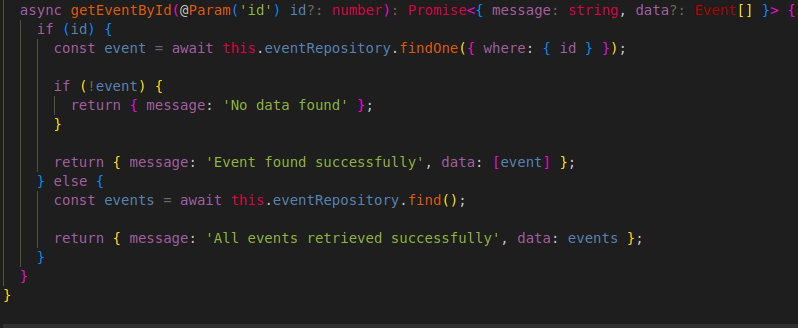
NestJS boasts seamless TypeScript support, aligning with the framework’s commitment to modern development practices. Harnessing TypeScript’s robust static typing, NestJS enhances the developer experience by catching errors at compile-time rather than runtime. This support facilitates better code navigation, autocompletion, and documentation, promoting the creation of more reliable and maintainable server-side applications. Developers can leverage TypeScript’s advanced language features, including interfaces and decorators, fostering expressive and readable code. Embracing TypeScript as a primary language, NestJS empowers developers to build scalable and efficient backend solutions with clarity and confidence in an ever-evolving technological landscape.
Decorators for Expressive Code
NestJS leverages decorators as a powerful tool for crafting expressive and organized server-side applications. These decorators provide a clean and intuitive way to define and configure various elements within the application, including modules, controllers, and routes. Decorators in NestJS act as annotations that convey metadata, facilitating efficient configuration and customization. This feature fosters a declarative and modular coding style, empowering developers to create scalable and maintainable applications with precision and clarity in the dynamic realm of backend development.
For example, either you can use built-in Decorator like @Get to define our Routes and also @Param extracts the params property from the req object and populates the decorated parameter with the value of params, Or You can also make your custom Decorator like @User() decorator and reuse it across all of your controllers. Here’s how you can create one.
import { createParamDecorator, ExecutionContext } from '@nestjs/common';

export const User = createParamDecorator(
  (data: unknown, ctx: ExecutionContext) => {
    const request = ctx.switchToHttp().getRequest();
    return request.user;
  },
);
Built-in Support for Web Sockets
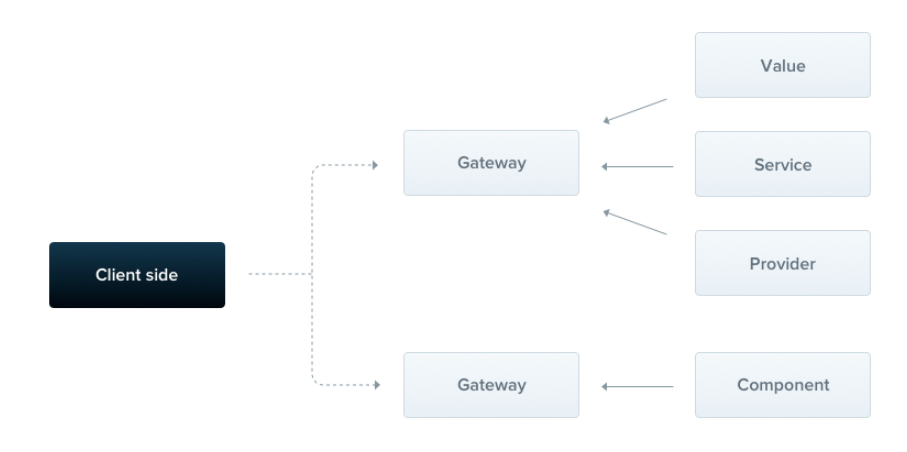
Real-time communication is seamlessly integrated into NestJS with built-in support for WebSocket. This feature is crucial for developing applications requiring instant data updates, such as chat applications and online gaming platforms. NestJS’s WebSocket support enables developers to create responsive and dynamic real-time applications efficiently.
Nest, provide a gateway is a class annotated with @WebSocketGateway(). Gateways are platform-agnostic, compatible with any WebSocket library with a custom adapter. Out-of-the-box support includes socket.io and ws. Choose based on your needs or build a custom adapter using this guide.
Middleware Capabilities
NestJS simplifies the handling of HTTP requests through middleware. Middleware functions have access to the request and response objects, allowing developers to perform tasks like authentication, logging, and data transformation. This middleware architecture enhances flexibility and enables the creation of custom pipelines tailored to specific application needs.
Active Community and Growing Ecosystem
NestJS benefits from an active and vibrant community, contributing to a growing ecosystem of libraries, plugins, and extensions. The support from the community ensures that developers have access to the latest tools and features, fostering innovation and continuous improvement within the framework.
Conclusion
In the realm of Node.js frameworks, NestJS stands out as a powerful and feature-rich option. Its modular architecture, TypeScript support, dependency injection, and other advanced features make it an excellent choice for building scalable and maintainable server-side applications. Whether you’re a seasoned developer or a newcomer to backend development, exploring NestJS could be the key to unlocking a more efficient and enjoyable development experience. The framework’s commitment to innovation and its vibrant community makes it a compelling choice for those looking to stay at the forefront of modern backend development practices.
For more detail checkout the NestJS documentation.
With these thank you if you were there till the end. For more such blogs and updates follow Front-end Competency.
Follow NashTech Blogs for more amazing blogs.