


Hello everyone, as we are aware that Serverless architecture has gained popularity in recent years due to its numerous advantages, including scalability, cost-effectiveness, and lower operational overhead. However, testing serverless applications can be difficult due to the technology’s dynamic nature. This comprehensive guide is intended to help professionals learn the art of serverless testing. It will provide a brief overview of serverless architecture, explain the significance of testing in serverless applications, discuss the challenges associated with serverless testing, and propose effective testing strategies for ensuring serverless application reliability and resilience. Continue reading to learn how to conduct successful serverless testing!
Overview of Serverless Architecture
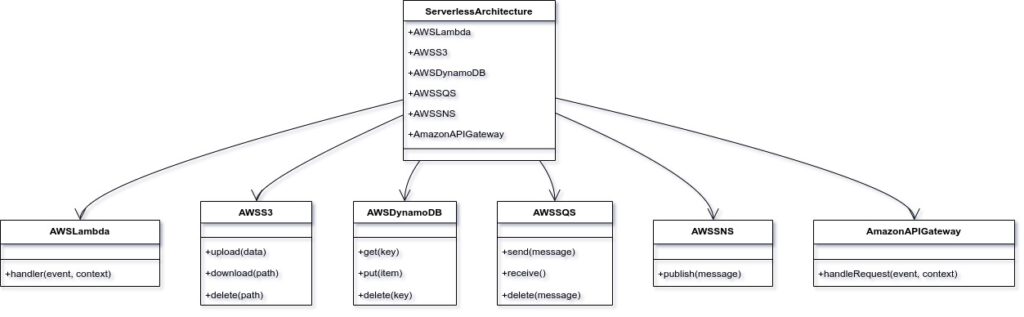
Serverless architecture is a cloud computing model in which the cloud provider manages infrastructure, such as servers, scaling, patching, and availability, freeing developers to focus on application code. In this model, the cloud provider automatically scales the infrastructure based on usage, so users only pay for the resources they use.
The primary feature of serverless architecture is the use of Function-as-a-Service (FaaS) technology, which allows developers to write code that runs in response to specific triggers, or events such as HTTP requests, database operations, or file uploads. When an event triggers a function, the cloud provider dynamically provisioned the required resources, executed the function, and then de-provisioned the resources once the function was complete.
The Components of serverless architecture are (with respect to AWS):
- AWS Lambda: Serverless compute service that enables you to run code without provisioning or managing servers.
- AWS S3 (Simple Storage Service): Object storage service that allows you to store and retrieve any amount of data.
- AWS Dynamo DB: Fully managed NoSQL database service that provides fast and predictable performance with seamless scalability.
- AWS SQS (Simple Queue Service): Fully managed message queuing service that enables decoupling of the components of a cloud application.
- AWS SNS (Simple Notification Service): Fully managed pub/sub messaging service that enables the sending of messages or notifications to a distributed set of recipients via various protocols, including HTTP, SMS and email.
- Amazon API Gateway: Fully managed service that makes it easy to create, publish, and secure APIs at any scale. It handles the tasks involved in accepting and processing up to hundreds of thousands of concurrent API calls, including traffic management and authorization.
However, there are some potential trade-offs to consider when using serverless architecture. These include:
- Debugging complexity: Debugging serverless applications can be difficult because there is little visibility into the underlying infrastructure.
- Cold start issues: In a serverless environment, functions are called in response to events. When a function hasn’t been called in a while, it may need to be “warmed up” before being executed, resulting in a delay in function execution.
- Resource limitations: Serverless architecture may not be appropriate for applications that require long-running processes or a significant amount of computing resources that exceed what FaaS can provide.
- Deployment complexity: Deploying serverless applications can be more complicated than traditional applications, because developers must split the application into smaller, loosely coupled modules.
Importance of Testing in Serverless Applications

Serverless architecture divides applications into small, independent functions that are triggered by events. The dynamic and decentralised nature of serverless architecture makes testing even more important. Professionals can identify and address potential issues before they affect end users by conducting comprehensive tests.
Testing is critical in serverless applications for several reasons:
- Functionality validation: Testing ensures that the functions in a serverless application work properly and respond to events as expected. Whether handling HTTP requests, processing data from a database, or performing calculations, thorough testing ensures that the functions perform their intended functions correctly.
- Integration testing: Serverless applications are typically made up of several functions or services that work together to complete a task. Integration testing enables you to validate the interaction and communication between these components, ensuring that they work together as a cohesive system.
- Performance and scalability evaluation: Serverless architectures use automatic scaling, allowing functions to handle a variety of workloads. Testing the performance and scalability of serverless applications identifies bottlenecks and system limits, allowing you to adjust the configuration for optimal resource allocation.
- Resiliency and fault tolerance: Serverless applications rely on the cloud provider’s underlying infrastructure. Testing validates an application’s resiliency by simulating system failures or disruptions. By intentionally inducing errors in various components or services, you can ensure that the application can gracefully handle failures and recover without losing data or compromising functionality.
- Security and data protection: Testing is essential for detecting vulnerabilities and ensuring the security of a serverless application. It assists in identifying potential security risks, such as data exposure, unauthorised access, or injection attacks, allowing you to address them before they affect your application or compromise sensitive data.
- Versioning and deployment verification: Functions in serverless architectures are typically deployed independently, increasing the likelihood of versioning issues. Regular testing helps to ensure that new deployments do not cause regressions or conflicts with existing functions.
Challenges in Serverless Testing

Testing serverless applications presents some unique challenges compared to traditional testing approaches.
Here are some of the common challenges encountered during serverless testing:
- Testing in an ephemeral environment: Serverless functions are temporary and can be destroyed and recreated on demand. As a result, it becomes difficult to establish a consistent testing environment. Developers must ensure that test environments are properly provisioned and configured before running tests.

- Lack of control over infrastructure: In serverless architectures, the cloud provider manages the underlying infrastructure, limiting developers’ control over it. This lack of control makes it difficult to simulate specific scenarios or reproduce production issues.

- Handling asynchronous workflows: Serverless applications frequently use asynchronous workflows, in which one function triggers another and so on. Validating the sequencing, data flow, and error handling becomes difficult in such cases.

- Cold start issues: When a serverless function is called for the first time or after a period of inactivity, there may be a delay due to resource provisioning, which is referred to as a cold start. Cold starts have an impact on the application’s performance and responsiveness.

- Debugging and observability: Given the distributed nature of serverless applications, debugging can be difficult. Traditional debugging techniques may not be useful in a serverless environment where functions are called in response to events.

- Third-party service dependencies: Serverless applications frequently rely on third-party services like databases, message queues, and authentication services. Testing these integrations is necessary to ensure proper configuration and compatibility with serverless functions. However, coordinating testing with these external dependencies can be difficult.

Testing Strategies for Serverless Applications

Because of their distinct characteristics, such as statelessness, event-driven architecture, and reliance on third-party services, testing serverless applications necessitates careful consideration.
Here are the various testing strategies for serverless applications:
Unit Testing
- Objective: Test the functionality of individual functions or services in isolation.
- Details:
- Focus on the logic behind each function.
- Use mocking frameworks to simulate external dependencies and events.
- Ensure that functions handle inputs and outputs properly.
Integration Testing
- Objective: Validate interactions between various functions or services.
- Details:
- Evaluate the communication and data flow between functions.
- Include tests for event triggers like HTTP requests and message queues.
- Check the proper operation of integrated components.
- Example: Sample Integration Test using Java with TestNG and Mockito
// Service to be tested
public class DataService {

    public int getData() {
        // Some logic to fetch data
        return 42;
    }
}

// Integration Test
public class DataIntegrationTest {

    @Test
    public void testGetData() {
        DataService dataService = Mockito.mock(DataService.class);
        Mockito.when(dataService.getData()).thenReturn(42);

        // Your integration logic
        int result = someIntegrationFunction(dataService);
        Assert.assertEquals(42, result);
    }
}
End-to-End Testing
- Objective: Ensure that the entire serverless application performs as expected.
- Details:
- Test the entire workflow, from event trigger to final output.
- Validate the integration of multiple services and components.
- Check for proper handling of real-world scenarios.
- Example: Using Serverless framework and Jest, assuming you have a serverless application with a function to handle HTTP requests.
// handler.js
module.exports.endpointHandler = async (event) => {
    // Some serverless logic
    const response = {
        statusCode: 200,
        body: JSON.stringify({ message: 'Serverless function executed successfully' }),
    };
    return response;
};

// e2e.test.js
const axios = require('axios');
describe('End-to-End Test for Serverless App', () => {
    it('Should handle HTTP request and return expected response', async () => {
        // Trigger the serverless function by making an HTTP request
        const response = await axios.get('https://your-serverless-app-url/api/endpoint');

        // Validate the response
        expect(response.status).toEqual(200);
        expect(response.data).toEqual({ message: 'Serverless function executed successfully' });
    });
});
Performance Testing
- Objective: Evaluate the scalability and responsiveness of the serverless application.
- Details:
- Test the application with varying workloads and traffic conditions.
- Identify bottlenecks and improve resource utilisation.
- Determine response times, particularly for functions triggered by events.
- Example: Sample Jmeter (.jmx) script for load testing.
Thread Group:
  Number of Threads (users): 100
  Ramp-Up Period: 10 seconds
  Loop Count: 1

HTTP Request:
  Name: Send Request to Serverless Endpoint
  Method: GET
  Server Name or IP: your-serverless-app.com
  Port Number: 443
  Protocol: HTTPS
  Path: /endpoint

View Results Tree:
  Configure this listener as needed for result analysis.
Chaos Testing
- Objective: Determine the system’s resilience to failures and unexpected events.
- Details:
- Introduce failures (such as network issues or service outages) to observe system behaviour.
- Ensure that the system recovers gracefully from failures.
- Identify and address any weaknesses in the application’s architecture.
- Example: Assuming your serverless architecture is an AWS lambda function. Choas Monkey can be configured via its properties file.
//chaos.properties
chaos.monkey.assaults.network.enabled=true
chaos.monkey.assaults.network.cutoff.start.time=09:00
chaos.monkey.assaults.network.cutoff.end.time=18:00

//Execute Chaos Monkey
chaos-monkey-aws --properties-file /path/to/chaos.properties
Dependency Testing
- Objective: Validate interactions with external dependencies like databases and third-party services.
- Details:
- Test scenarios for dependencies that may be slow, unavailable, or return errors.
- Maintain proper error handling and recovery mechanisms.
Conclusion
As organisations increasingly use serverless architectures to create scalable and efficient applications, the need for strong testing strategies grows. The Introduction to Serverless Testing blog has shed light on a variety of testing dimensions, each tailored to the specific challenges and opportunities presented by serverless computing.
From foundational unit testing that ensures the correctness of individual functions to comprehensive end-to-end testing that validates the entire application workflow, every testing strategy is critical in ensuring the reliability, security, and performance of serverless applications. The real-world business implications of these testing practices, including cost management, scalability, and user experience, underline the strategic importance of a well-crafted testing approach.