


In today’s fast-paced digital landscape, APIs (Application Programming Interfaces) play a pivotal role in facilitating seamless communication and data exchange between various systems and applications. As APIs become increasingly central to software development and integration, the need for robust testing methodologies to ensure their reliability, scalability, and security becomes paramount. Traditional API testing methodologies often involve sending requests to endpoints and verifying responses. While this approach is effective in validating API functionality, it may fall short in testing real-time data exchange scenarios. This is where webhooks come into play. Webhooks enable real-time communication between systems by allowing applications to send automatic notifications or data updates to predefined URLs.
In this blog post, we’ll explore how integrating webhooks into API testing architecture can enhance real-time data exchange and accelerate the testing process. We’ll delve into the fundamentals of webhooks, discuss their benefits, and provide insights into incorporating them into our API testing strategy.
Understanding Webhooks
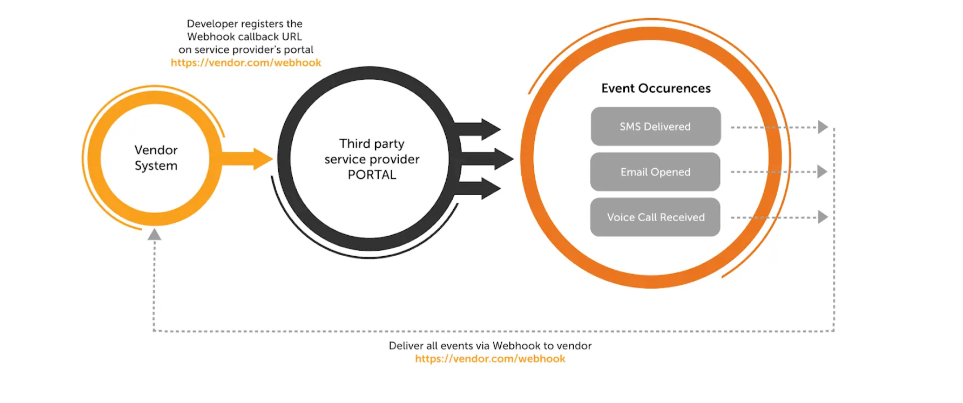
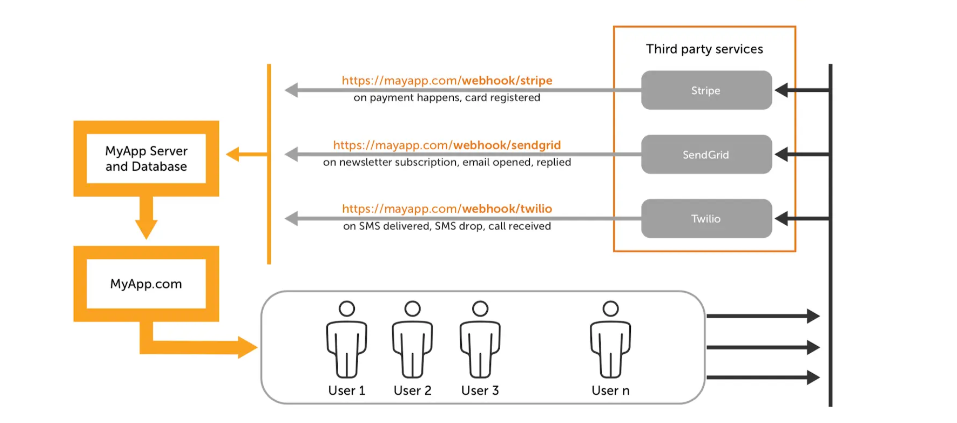
Webhooks are user-defined HTTP callbacks that enable applications to notify other systems or services about specific events or updates. Unlike traditional polling mechanisms where applications continuously query for updates, webhooks push data to predefined endpoints as soon as an event occurs.
The webhook workflow typically involves the following steps:
- Registration: The subscribing application registers a URL with the provider or publisher of the webhook.
- Trigger Event: When a specific event occurs, such as a data update or a user action, the provider sends an HTTP POST request to the registered URL.
- Handling Payload: The receiving application processes the payload sent by the webhook and performs the necessary actions.
Benefits of Webhooks in API Testing
Integrating webhooks into API testing architecture offers several benefits:
- Real-time Data Exchange: Webhooks enable immediate notification of events, allowing testers to validate real-time data exchange scenarios efficiently.
- Enhanced Test Coverage: By simulating real-world scenarios with dynamic data updates, webhooks facilitate comprehensive test coverage.
- Faster Feedback Loop: Instant notifications provided by webhooks accelerate the feedback loop, enabling quick identification and resolution of issues.
- Reduced Resource Consumption: Unlike polling mechanisms, webhooks reduce unnecessary resource consumption by eliminating the need for continuous polling requests.
Incorporating Webhooks into API Testing Architecture
Let’s outline how we can integrate webhooks into our API testing architecture:
1. Define Webhook Endpoints
Identify the endpoints where our application will receive webhook notifications. These endpoints should be capable of handling incoming HTTP POST requests.
2. Implement Webhook Subscription
Develop mechanisms within our application to subscribe to relevant webhook events. This may involve sending subscription requests to the provider’s API and registering callback URLs.
3. Handle Webhook Payloads
Implement logic to parse and handle incoming webhook payloads. Process the data sent by webhooks and trigger corresponding test scenarios or validations.
4. Verify Data Exchange
Design test cases to verify the accuracy and integrity of data exchanged via webhooks. Ensure that data updates are propagated correctly and reflect expected changes.
5. Monitor Webhook Performance
Set up monitoring and logging mechanisms to track webhook performance and detect any anomalies or failures in real-time.
Java Code Example
@RestController
public class WebhookController {
@PostMapping(“/webhook”)
public void handleWebhook(@RequestBody String payload) {
// Process webhook payload
System.out.println(“Received webhook payload: ” + payload);
// Perform necessary actions
}
}
Architecture Diagram
Conclusion
Webhooks offer a powerful mechanism for facilitating real-time data exchange between applications, thereby enhancing API testing capabilities. By integrating webhooks into our API testing architecture, We can ensure faster feedback loops, comprehensive test coverage, and improved reliability of our APIs.
In this blog post, we’ve explored the fundamentals of webhooks, discussed their benefits in API testing, and provided insights into incorporating them into our testing strategy. With the right implementation and integration, webhooks can significantly accelerate API testing processes and improve overall software quality.
Remember to consider security implications and handle webhook failures gracefully to build a robust and reliable testing infrastructure. Embrace the power of webhooks and elevate our API testing to new heights of efficiency and effectiveness.
Reference link
https://medium.com/@learnwithwhiteboard_digest/what-are-webhooks-and-how-to-use-them-2fb65605d323