



Introduction
In recent years, the landscape of software development has undergone significant transformations, driven by evolving technologies, changing business needs, and shifting developer preferences. Amidst these changes, the .NET framework has been on a journey of adaptation and evolution, positioning itself as a versatile and future-ready platform for building modern applications.
In the dynamic realm of software development, staying ahead of the curve is imperative. As technologies evolve and business landscapes shift, developers need platforms that not only keep pace but also empower them to innovate and adapt. Enter .NET, Microsoft’s versatile framework that has been on a transformative journey, gearing up for the challenges and opportunities of tomorrow.
Basic Principle’s that shaping the future of .NET
1. Unifying the Ecosystem: .NET 6 and Beyond
With the release of .NET 6, Microsoft marked a significant milestone in the unification of the .NET ecosystem. This long-awaited convergence brings together disparate elements under one roof, offering developers improved compatibility, streamlined workflows, and enhanced performance. Whether you’re building web applications, mobile apps, desktop software, or cloud-native solutions, .NET 6 provides a cohesive foundation for your projects.
Real-Life Example:
Imagine you’re a developer working on a project that needs to run seamlessly across various devices and platforms. With .NET 6, you have a unified framework that allows you to write code once and deploy it anywhere, whether it’s a Windows desktop app, a macOS application, or a Linux server backend. This unification streamlines your development process, saving you time and effort while ensuring consistent performance and user experience across different platforms.
2. Cross-Platform Capabilities: Embracing Diversity
Gone are the days of platform-specific development. With .NET’s embrace of cross-platform capabilities, developers can target a multitude of operating systems with ease. Whether it’s Windows, macOS, or Linux, .NET empowers you to reach a broader audience without compromising on functionality or user experience. Frameworks like Xamarin and .NET MAUI further extend this cross-platform prowess, enabling seamless development of mobile and multi-platform applications.
Real-Life Example:
Consider a scenario where you’re building a mobile app for a client who wants it to run on both iOS and Android devices. By leveraging Xamarin, a cross-platform development framework built on .NET, you can create a single codebase that powers the app on both platforms. This not only speeds up development but also simplifies maintenance, as you only need to update one codebase whenever changes are made.
3. Containerization and Microservices: Scaling and Agility
In today’s fast-paced world, scalability and agility are paramount. That’s where containerization and microservices enter the picture. By containerizing .NET applications with Docker and Kubernetes, developers can achieve unparalleled scalability, resilience, and efficiency. Microservices architectures, supported by frameworks like ASP.NET Core, allow for modular, independently deployable components, enabling teams to iterate rapidly and respond to changing requirements with ease.
Real-Life Example:
Think about a popular e-commerce website that experiences a surge in traffic during holiday seasons. By containerizing their .NET-based web application with Docker and Kubernetes, the website can automatically scale up or down based on demand, ensuring a smooth shopping experience for customers without over-provisioning resources or incurring unnecessary costs.
4. Cloud-Native Paradigm: Harnessing the Power of the Cloud
Cloud computing has revolutionized the way we build and deploy applications, and .NET is at the forefront of this revolution. With deep integration with Microsoft Azure, .NET developers have access to a vast array of cloud services, from AI and machine learning to serverless computing and DevOps tools. By harnessing the power of the cloud, developers can focus on innovation rather than infrastructure, accelerating time to market and driving business value.
Real-Life Example:
Suppose you’re a startup founder looking to launch a new software-as-a-service (SaaS) platform. By leveraging .NET’s integration with Microsoft Azure, you can quickly spin up cloud resources like virtual machines, databases, and AI services to power your application. This allows you to focus on building features and acquiring customers without worrying about managing infrastructure or scalability.
5. Performance Optimization: Driving Efficiency
In the quest for efficiency, performance optimization is key. .NET’s just-in-time (JIT) compiler, runtime optimizations, and support for ahead-of-time (AOT) compilation ensure that your applications run smoothly and responsively, even under heavy load. By following best practices and leveraging the latest performance tuning techniques, developers can squeeze every last drop of performance out of their .NET applications, delivering a seamless user experience that keeps users coming back for more.
Real-Life Example:
Consider a scenario where you’re a junior developer working on your first .NET project. Thanks to the supportive community surrounding .NET, you have access to online forums, local meetups, and open-source projects where you can learn from experienced developers, ask questions, and contribute to shared codebases. This sense of community fosters collaboration and mentorship, helping you grow as a developer and advance your career.
6. Community and Collaboration: The Heart of .NET
At the heart of the .NET ecosystem lies a vibrant and thriving community of developers, enthusiasts, and contributors. From open-source projects to community forums and events, collaboration is the lifeblood of .NET development. Whether you’re seeking help with a tricky bug, sharing your latest project, or contributing to the evolution of the platform itself, the .NET community is there to support you every step of the way.
Real-Life Example:
Consider a scenario where you’re a junior developer working on your first .NET project. Thanks to the supportive community surrounding .NET, you have access to online forums, local meetups, and open-source projects where you can learn from experienced developers, ask questions, and contribute to shared codebases. This sense of community fosters collaboration and mentorship, helping you grow as a developer and advance your career.
7. Embracing Emerging Technologies: AI and Beyond
As we look to the future, emerging technologies like AI and machine learning are poised to play an increasingly significant role in .NET development. With frameworks like ML.NET, developers can harness the power of AI to add intelligence and insight to their applications, from predictive analytics to natural language processing and beyond. By embracing these technologies, .NET developers can unlock new possibilities and create truly innovative solutions that push the boundaries of what’s possible.
Real-Life Example:
Picture a smart home device that uses voice recognition to control various appliances and services in your home. Behind the scenes, ML.NET, a machine learning framework for .NET, processes your voice commands, understands your preferences, and adapts its behaviour over time based on your interactions. This seamless integration of AI enhances the functionality of the device, making your daily life more convenient and efficient.
Some Code Examples for Above Concepts:
1. Unifying the Ecosystem: .NET 6 and Beyond
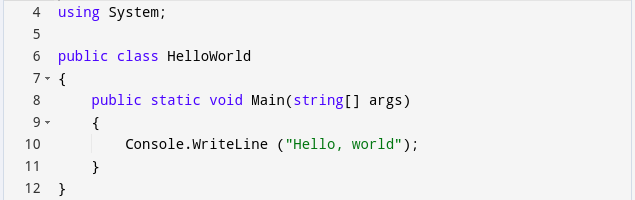
In this example, we have a simple C# console application that prints “Hello, world!” to the console. This code can be run on any platform supported by .NET, including Windows, macOS, and Linux, thanks to the unified nature of .NET 6.
2. Cross-Platform Capabilities: Embracing Diversity
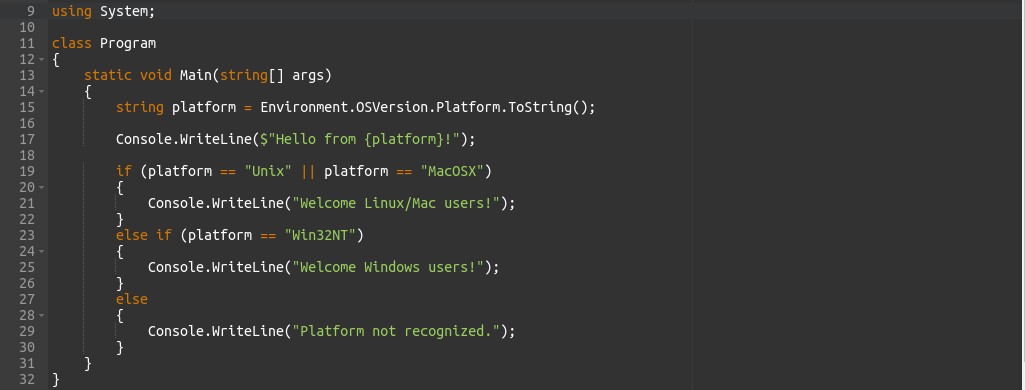
This showcases cross-platform capabilities by detecting the operating system it’s running on and adjusting its behavior accordingly. By accessing the Environment.OSVersion.Platform property, the program identifies whether it’s running on Windows, Linux, or macOS. Based on this information, it displays platform-specific messages, demonstrating how .NET Core enables developers to write code that functions seamlessly across different operating systems.
3. Containerization and Microservices: Scaling with Agility
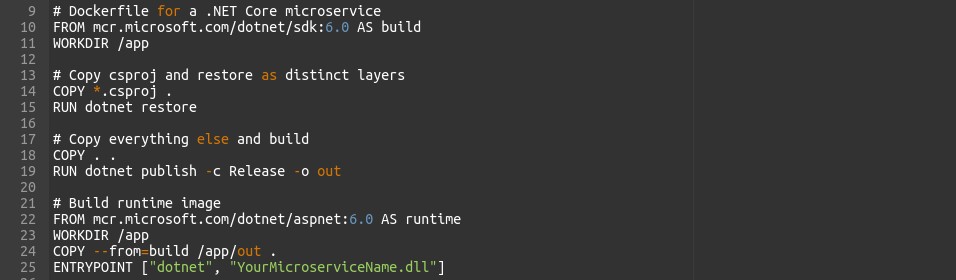
This Dockerfile demonstrates how to containerize a .NET Core application for deployment using Docker. By containerizing your application, you can easily scale it with Kubernetes or other container orchestration tools, ensuring optimal performance and resource utilization.
4. Cloud-Native Paradigm: Harnessing the Power of the Cloud
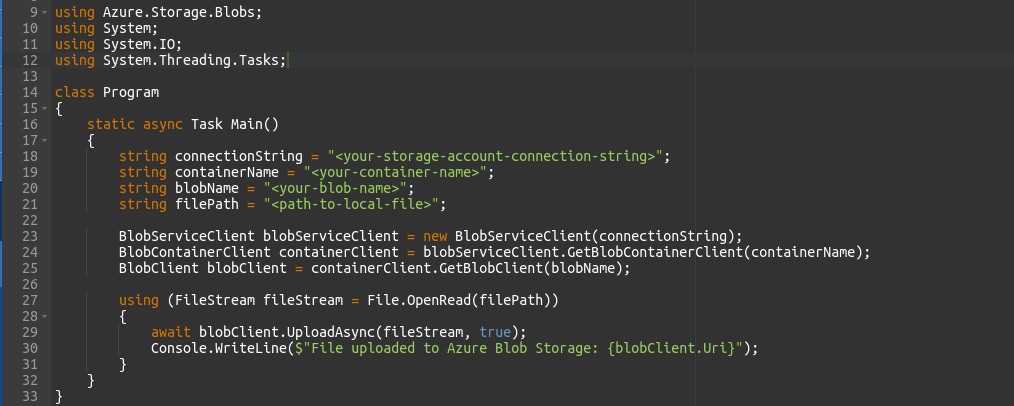
This C# code demonstrates how to upload a file to Azure Blob Storage using the Azure.Storage.Blobs client library. By leveraging Azure services like Blob Storage, .NET developers can build scalable, cloud-native applications that store and manage data in the cloud.
These code examples showcase how .NET enables developers to write cross-platform applications, containerize them for deployment, leverage cloud services like Azure, and more. By combining these capabilities, developers can build robust, scalable, and efficient solutions that meet the demands of today’s dynamic software landscape.
Conclusion
In conclusion, .NET isn’t just a framework for building software—it’s a toolkit that empowers developers to solve real-world problems and enhance people’s lives in meaningful ways. Whether you’re building cross-platform apps, scaling cloud services, optimizing performance, or leveraging AI, .NET provides the tools and resources you need to succeed in today’s fast-paced world. So, roll up your sleeves and start building the next generation of innovative solutions with .NET!