


Introduction to AI TRiSM
Integrating AI into appliances and services has revolutionized our lives, offering a level of accessibility and convenience that was previously unimaginable. The applications of AI are vast, from smart home devices to mobile phones, toys, and machinery. Not only does AI provide numerous benefits that keep businesses competitive and enhance processes, but it also significantly reduces operational costs. Within this realm of technological advancement, a concept emerges AI TRiSM.
What is AI TRiSM?
AI TRiSM, also known as Artificial Intelligence Trust, Risk, and Security Management, is a revolutionary discipline and framework that serves as a backbone for AI Model governance, reliability, fairness, efficacy, privacy, data protection, and trustworthiness.
According to Gartner, AI TRiSM is projected to be a cutting-edge technology in the years ahead. It is estimated that by 2026, organizations that embrace AI transparency, trust, and security will experience a remarkable 50% increase in efficiency in terms of AI Model adoption, business objectives, and user acceptance.
The reasons we need to build AI TRiSM into AI models
- Proactive Risk Mitigation
AI TRiSM empowers organizations to preemptively recognize and address the risks linked with AI models and applications, guaranteeing compliance, fairness, and reliability while safeguarding data privacy.
- Trustworthiness and Reliability
Through the integration of AI TRiSM, organizations can solidify the trustworthiness, reliability, and transparency of AI systems, cultivating user trust and confidence in both the AI models and applications.
- Compliance and Governance
AI TRiSM streamlines the incorporation of essential governance measures from the outset, guaranteeing that AI systems adhere to regulations, standards, and ethical guidelines. This approach effectively diminishes the likelihood of encountering legal and ethical challenges down the line.
- Security and Data Protection
The framework aids in establishing robust security protocols and measures to shield AI models from cyber threats, thereby ensuring the security and protection of AI data while upholding individuals’ privacy rights.
- Efficiency and Adoption
Businesses integrating AI TRiSM into their operations can experience a 50% enhancement in adoption rates, attributed to the model’s heightened accuracy. This improvement translates into increased efficiency and enhanced customer experiences.
- Future Preparedness
With AI and automation poised to shoulder a substantial workload and bolster the economy, AI TRiSM positions organizations for the future by guaranteeing the reliability, security, and trustworthiness of AI models and applications.
Popular AI TRiSM foundations
- Microsoft Responsible AI Framework
This framework provides guidance for how to develop and deploy AI systems that are ethical, fair, and accountable. It covers a wide range of topics, including bias, fairness, transparency, and privacy. Microsoft-Responsible-AI-Standard-v2-General-Requirements-3.pdf
- Google AI Principles
These guidelines for AI development and deployment emphasize the importance of fairness, privacy, and security in AI systems. Google AI Principles – Google AI
- IBM AI Ethics
The Principles for Trust and Transparency are the guiding values that distinguish IBM’s approach to AI ethics. AI Ethics | IBM
- EU – Ethics guidelines for trustworthy AI
The Guidelines put forward a set of 7 key requirements that AI systems should meet to be deemed trustworthy. Ethics guidelines for trustworthy AI | Shaping Europe’s digital future (europa.eu)
- Gartner Trust, Risk and Security Management
Gartner’s TRiSM framework provides a set of guidelines and best practices that organizations can adopt to ensure the AI systems they use are ethical, fair, reliable, and secure. AI TRiSM: Tackling Trust, Risk and Security in AI Models (gartner.com)
When to implement AI TRiSM models
- If AI systems make impactful decisions
Absolutely, the well-being of individuals, communities, and society at large can indeed hinge on the outputs of AI models. Ensuring transparency, accountability, fairness, and privacy within AI systems is paramount in such cases. Harnessing the capabilities of AI TRiSM is instrumental in managing sensitive data, guiding crucial decisions, mitigating potential harm, and optimizing positive outcomes.
- If the business has stringent compliance regulations
AI TRiSM holds value for regulated industries or jurisdictions where compliance with ethical and legal standards is obligatory. Embracing its principles enables organizations to showcase their dedication to responsible AI practices, fostering trust with stakeholders while mitigating potential legal and reputational risks linked with AI implementation.
- If we handle sensitive data
As data volumes continue to expand and data privacy takes on heightened importance, integrating AI TRiSM models becomes imperative to safeguard this data and uphold privacy standards. By implementing data protection measures, businesses can uphold the confidentiality and integrity of user information, adhere to privacy regulations, and cultivate trust with their customers.
- If business specifics prioritize ethics and fairness
AI TRiSM models furnish businesses with a structured approach to tackle fairness and ethical considerations linked with AI technology. By integrating AI TRiSM, organizations ensure that their AI systems uphold human values, steer clear of harm, render unbiased decisions, and align with societal norms. Consequently, they can adeptly navigate intricate ethical dilemmas and make responsible choices regarding AI deployment.
- If we want to adopt AI technology without uncertain about its pitfalls
Despite AI’s widespread integration across industries and domains, its successful global implementation encounters several challenges. Doubts persist regarding algorithms’ capacity to safeguard data privacy, their impartiality, and the level of trustworthiness necessary to delegate crucial decisions to AI algorithms. Consequently, the momentum behind AI TRiSM is growing, as it enhances trustworthiness, security, and various other critical factors associated with AI deployment.
AI TRiSM examples and applications
- Healthcare
The health sector appears to encompass all the elements that make the implementation of AI TRiSM essential. For example, treatment recommendations and diagnostic assessments are significantly improved when combined with ethical decision-making and bias mitigation. Companies such as IBM Watson Health have adopted AI TRiSM to aid healthcare professionals in making informed and ethical choices. Additionally, researchers at Stanford University have employed AI TRiSM techniques to identify and reduce bias in algorithms used for predicting medical outcomes.
Furthermore, ensuring data privacy is crucial, as healthcare data typically consists of highly sensitive patient information. This concern is particularly highlighted by companies using predictive analytics and chatbots to better manage information and enhance customer service. Therefore, appropriate security measures, such as enhanced compliance monitoring and access controls, are implemented to maintain privacy.
- Finance & banking
Financial AI systems can greatly improve their interpretability and transparency with advanced algorithms. For instance, Goldman Sachs has implemented AI TRiSM practices to provide clear explanations and justifications, thereby automating and enhancing their financial decision-making processes. The loan application process in banks has also benefited from smart automation. Companies like FICO employ bias detection and mitigation systems to identify and correct biases in credit scoring algorithms, promoting fair lending practices.
The finance sector is subject to stringent compliance regulations. AI TRiSM proves invaluable here by minimizing human error and ensuring strict adherence to regulatory rules. JPMorgan Chase, for instance, has utilized AI TRiSM to comply with regulations such as anti-money laundering (AML) guidelines and Know Your Customer (KYC) automation processes. Additionally, the importance of data security and the risks of cyber-attacks in banking cannot be overstated. Wells Fargo addresses these concerns with an AI-powered threat detection and response platform at the core of its cybersecurity strategy. This platform uses advanced algorithms to analyze and process large volumes of data, detect anomalies, and identify malicious activities.
- Retail & E-commerce
AI TRiSM and machine learning in business analytics enable retail and e-commerce businesses to personalize recommendations and customer experiences. For example, Amazon employs AI models to enhance personalization in product recommendations while avoiding discriminatory practices. Additionally, this technology is valuable for safety and risk management in retail. Companies like Walmart use AI TRiSM to improve product safety by detecting and recalling potentially unsafe products.
The technology is also immensely beneficial for sellers in marketing analytics and predictive analytics. By gaining insights into future market trends and understanding the underlying reasons, sellers can develop effective strategies and achieve significant profit increases.
- Education
Bias has always been a significant concern in education. To address this issue, companies have integrated AI TRiSM models. A notable example is Coursera, which employs AI TRiSM techniques to mitigate potential biases in automated grading systems. This ensures fair assessments and helps reduce discrimination.
Additionally, quality learning involves providing clear explanations. AI TRiSM enhances these aspects by increasing the transparency and interpretability of educational AI systems. A notable example is Knewton, a U.S.-based educational company, which has developed AI-powered educational platforms. These platforms offer explanations for their recommendations, helping students understand the reasoning behind personalized learning suggestions.
- Energy, power generation, and utilities
This sector requires advanced AI technologies, along with constant monitoring, high data protection, and adherence to strict regulatory standards. Consequently, many companies adopt AI TRiSM Risk Management solutions to optimize maintenance plans, reduce downtime, forecast energy load, and efficiently manage grid operations. A notable example is a Chinese company that deployed such a system, achieving outstanding results in fault detection.
In addition, AI TRiSM enables effective management and optimization of energy sources, improves energy consumption patterns, and reduces peak loads. These systems allow businesses to monitor grid operations in real-time and predict power outages, ensuring stability and reliable power distribution.
How NashTech can help
We can observe a rising need for AI TRiSM algorithms entailed by increasing data security, privacy standards requirements, and expectations from AI systems. Prioritizing safety, transparency, and accountability, AI TRiSM is the key to addressing numerous AI-related concerns.
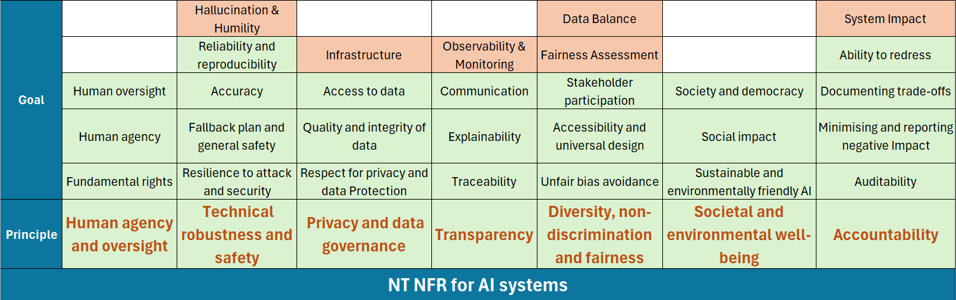
NashTech Non-functional Requirements for AI systems (TBD)
NashTech integrates technology standards from Microsoft, Google, and IBM, legal standards from the EU, and community standards from Gartner to deliver comprehensive AI solutions. We focus on non-functional requirements, including AI TRiSM, to standardize risk and security aspects. By applying tools like Microsoft’s Responsible AI Toolbox and IBM’s AI Toolkits, we can propose AI solutions that comply with AI TRiSM and legislation such as the EU AI Act, which is expected to come into force in mid-2024 and become fully applicable within 24 months of that date. This phased approach will ensure that our AI systems meet the highest standards of safety and compliance.
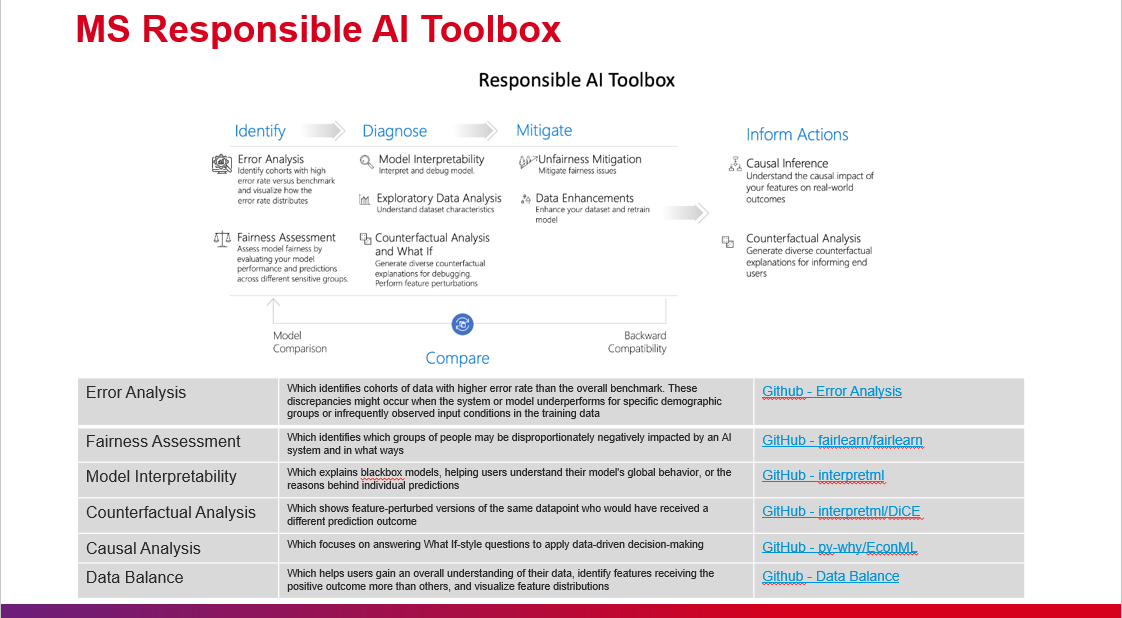
Microsoft Responsible AI Toolbox
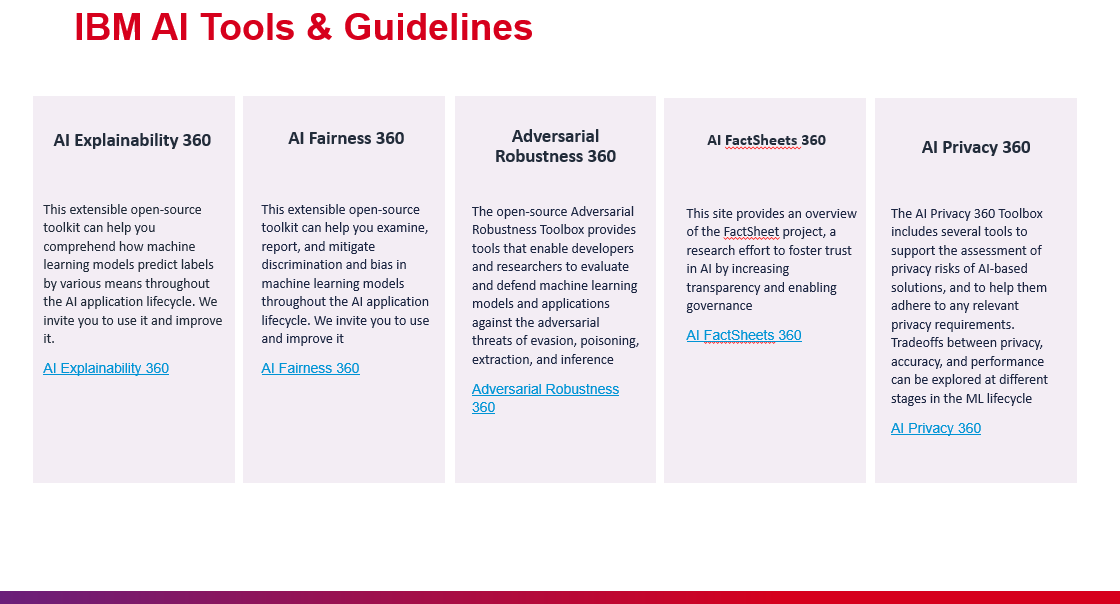
IBM AI Toolkits