


Software testing is an important part of the software development lifecycle. It ensures that the software satisfies the specific requirements, needs, and expectations of the customer. Nevertheless, even we with experience can make mistakes that can compromise testing efforts’ effectiveness. In this blog, we will investigate some common software testing mistakes and suggest solutions to avoid them.
1. Execute the test with similar test data
In case the testing needs to be performed with multiple types of test data, we should try to keep them as varied as possible in terms of attributes. And if we are trying to find new problems with the software, there is no value addition in repeating the same test cases with the same kind of input test data again and again. Repeating test cases with the same kind of test data is good for regression but not for exploration.
Solutions:
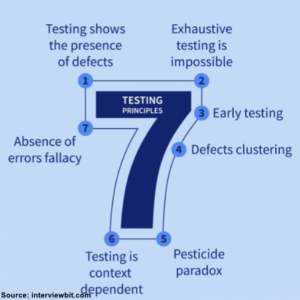
To assess the behavior of software in real-world situations, we should consider a wide range of inputs that reflect actual scenarios. Repeating the same data, which is common in regression testing, can lead to the pesticide paradox. This paradox arises when new defects go unnoticed, leaving us unaware of potential issues.
2. Have no plan for regression test
Regression testing ensures that recent code changes have not adversely affected existing functionalities. But, sometimes when we overlook regression testing, assuming that new features will not impact the existing system. This oversight can lead to regression bugs slipping into the release.
Not every test case in the test plan needs to be executed for regression testing. Therefore, it is important to finalize the plan for regression that can provide maximum code coverage with the least set of test cases.
End-to-end workflow tests that can cover maximum interactions among software components are a good fit for regression testing. It is good to first strive for the automation of these tests.
Solutions:
To avoid this mistake, we should always include regression testing as part of our test strategy, especially after making code changes.
3. Concentrating solely on functional testing
When functional testing is prioritized exclusively without addressing non-functional elements that contribute to high software quality, such as performance, security, and usability, the resulting software may excel in controlled environments but stutter in real-world conditions.
| Functional testing | Non-functional testing |
| Verify how an application works and what it does | Verify how an application behaves |
| It improves application behavior | It improves application performance |
| It involves evaluating the capabilities of the software | It examines how a product performs |
| It is based on customer needs | It is based on customer expectations |
Solutions:
Develop a well-rounded test strategy containing non-functional and functional testing, ensuring a thorough software evaluation.
Evaluate the software’s performance under diverse loads and conditions to identify and rectify bottlenecks that might impact its functionality.
Examine the software’s user interface and overall user experience, ensuring alignment with usability standards for optimal user satisfaction.
Conduct security assessments, including vulnerability scanning and penetration testing, to pinpoint and address potential security risks within the software.
Enhancing our testing process to involve both functional and non-functional aspects substantially heightens the quality and reliability of software, thereby ensuring the success of our software testing goals.
4. Insufficient or no documentation
Documentation is a crucial aspect of the testing technique in software testing. However, sometimes we end up ignoring this step, causing several issues at the end of the day.
Poor test analysis: Test documents, when not prepared properly can lead to a poor analysis of the testing process. This can limit our understanding of challenges and opportunities.
Delayed feedback: Poor documentation also leads to late feedback, impacting overall testing quality. Such delays make it difficult to avoid doing any mistake in software testing.
Diluted internal coordination: Skipping on test documentation can also dilute internal coordination. Limited knowledge sharing via different test documents restricts visibility and impacts the quality of the end product.
Solutions:
Ensure documentation from the start. To enable accurate and high-quality documentation, you must engage in the practice from the start of the test project. Follow a standard structure and format and encourage all team members to review and update the document as the project progresses.
5. Not communicating effectively
In the hybrid work model, we can work from different locations and time zones. Working in silos and not interacting on a frequent basis can impact software quality and timelines, leading to
Poor requirements understanding: Sporadic and ineffective communication can lead to a weak foundation. It results in a poor understanding of requirements. It also makes it difficult for us to unearth the risks and challenges facing the project.
Conflicting priorities: Testers who don’t communicate regularly tend to work on conflicting priorities. This causes several hurdles in testing while causing the overall testing project to derail.
Poor conflict management: Communication is an essential testing technique in software testing as it helps convey ideas, manage projects, formulate strategies, or offer feedback. Lack of communication makes it difficult for everyone to be on the same page. It leads to poor visibility into project progress and eventually poor conflict management.
Solutions:
Communication is key to the success of any testing team. Frequent and effective communication helps different members stay updated with the latest changes. It helps in improving visibility into the test project. It also helps build trust and understanding between stakeholders and ensures the testing process runs smoothly.
Conclusion
Avoiding common software testing mistakes requires diligence, attention to detail, and a proactive approach to testing. By addressing these mistakes and implementing best practices, we can enhance the quality of testing efforts and contribute to the successful delivery of high-quality software products. Remember, thorough testing is not just about finding bugs but about delivering reliable, user-friendly software that meets or exceeds expectations, and there will be no end to the list of common testing mistakes that can be made when we work in the field of software testing. It varies from person to person, software to software. It’s important that mistakes aren’t repeated, and they don’t hold us from learning and trying new things.
References:
https://www.trbo.com/blog/the-five-most-common-mistakes-in-testing/
https://www.interviewbit.com/blog/principles-of-software-testing/