NashTech Blog

Introduction to TinyML and Edge Computing

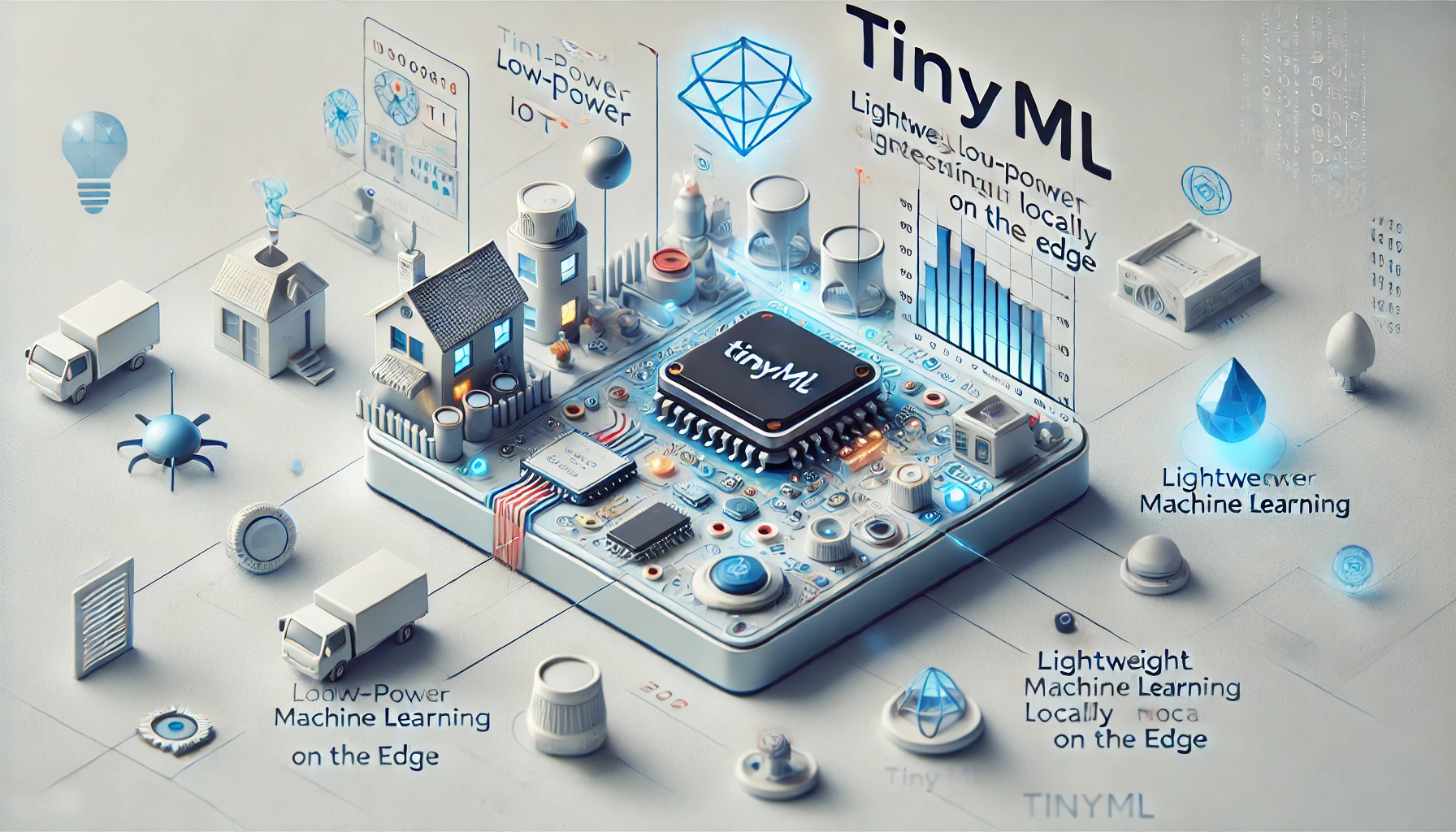
In today’s tech landscape, integrating TinyML in IoT with edge computing represents a leap toward smarter, more efficient systems by enabling real-time processing at the data source. This blog explores the synergy of TinyML in IoT and edge computing, their benefits, practical applications, and includes illustrative images.
Why TinyML Matters for IoT

TinyML refers to the practice of running machine learning algorithms on low-power, resource-constrained edge devices such as microcontrollers. These devices have extremely limited memory (in KBs), processing power, and energy consumption, making them ideal for environments where power efficiency is critical, such as wearables, smart homes, and remote sensors.

What is Edge Computing?

Edge computing moves the computation and data storage closer to the source of data, typically IoT devices, instead of relying on centralized cloud servers. This reduces latency, bandwidth use, and improves response times for critical tasks.

Importance of TinyML in IOT

Traditional cloud-based machine learning demands high computational resources and constant connectivity, but TinyML in IoT enables efficient, on-device processing for real-world applications. Here’s why TinyML is crucial:

  • Energy Efficiency: TinyML enables running ML algorithms on small, battery-powered devices with minimal energy consumption.
  • Cost-Effective: TinyML models can be deployed on affordable microcontrollers, reducing the need for expensive hardware.
  • Low Latency: By running models on the device, TinyML reduces the time spent communicating with cloud servers, ensuring real-time decision-making.

This aligns perfectly with the goals of IoT, where devices often operate in constrained environments with limited resources.

Enhanced Efficiency

By integrating TinyML models with edge devices, you can reduce the load on centralized cloud infrastructure. Processing data on the device reduces bandwidth usage and response times, enabling real-time decisions without a constant internet connection. This is critical for scenarios like autonomous vehicles and industrial machinery monitoring.

Scalability

When more IoT devices are added, the pressure on a centralized cloud increases. TinyML at the edge allows each device to operate independently, making the entire system more scalable. Multiple devices can perform machine learning tasks locally without relying on cloud servers, distributing the computational load efficiently.

Privacy and Security

One major concern in IoT systems is data privacy. Since edge computing with TinyML processes data locally, there is less need to send sensitive information to cloud servers, reducing the risk of data breaches and exposure. This makes it especially useful for healthcare or surveillance applications where data sensitivity is high.

Reduced Operational Costs

Running computations in the cloud incurs ongoing costs in terms of storage, processing, and data transfers. Integrating TinyML with edge computing reduces these operational costs as data processing happens locally. Moreover, it minimizes the use of network bandwidth and cloud storage, contributing to long-term savings.

Power Optimization

TinyML models are designed to be lightweight and optimized for low-power devices. When deployed in combination with edge computing, they ensure power-efficient systems, which is crucial for battery-powered IoT applications such as remote monitoring devices in agriculture or smartwatches.

Real-World Applications

Smart Homes

In a smart home, sensors and cameras can use TinyML to detect patterns such as movement or voice commands without sending data to the cloud. This allows faster, real-time response in applications like smart lighting, thermostats, and security systems.

Healthcare Monitoring

Wearable devices equipped with TinyML models can analyze heart rate, temperature, and movement patterns at the edge. In healthcare, reducing latency in detecting abnormal patterns could lead to life-saving interventions. These devices also offer privacy since sensitive health data is processed locally rather than in the cloud.

Agriculture

TinyML on edge devices can help monitor soil moisture, temperature, and other environmental factors to optimize irrigation and fertilization processes. These solutions can operate in remote areas with limited or no internet connectivity, making farming more efficient and sustainable.


Industrial Automation

In manufacturing, real-time monitoring of machinery is critical to avoid downtime. TinyML enables predictive maintenance on edge devices by analyzing vibration, temperature, or other sensor data, detecting potential failures before they occur.


Future Directions

Hardware Improvements

As edge devices become more powerful, we can expect larger and more sophisticated TinyML models to run efficiently. Advances in microcontroller technology will lead to faster, more energy-efficient processing, further pushing the boundaries of what can be achieved on the edge.

5G Integration

The rollout of 5G networks could enhance edge computing capabilities by providing ultra-low-latency connections. TinyML models could leverage this to work in more collaborative edge environments, where edge devices coordinate with each other for even more efficient operation.

AI Model Evolution

With the rise of AutoML (automated machine learning), we could soon see AI models that are automatically optimized for specific hardware configurations, including TinyML models tailored for edge devices.

Conclusion

The integration of TinyML with Edge Computing marks a pivotal shift in the design and deployment of IoT systems. By leveraging the strengths of both technologies, businesses can create smarter, faster, and more efficient systems that operate reliably in real-world, resource-constrained environments.

Scroll to Top