


What is Serverless Architecture?

Serverless architecture is a cloud-based model that allows developers to build and run applications without managing the underlying infrastructure. Unlike traditional architectures, where servers must be provisioned, configured, and maintained serverless architectures let developers focus on writing code, with the cloud provider automatically handling scaling, provisioning, and maintenance. This setup is cost-effective because users only pay for compute resources consumed during execution, avoiding charges for idle server time.
For instance, using a serverless service like AWS Lambda, a developer could create a microservice to process uploaded images, incurring charges only when an image is processed. In contrast, a traditional architecture would require a dedicated server running continuously to perform the same task, regardless of usage. Serverless offers enhanced scalability, reduced operational overhead, and faster time-to-market, making it especially suitable for event-driven and microservices-based applications.
Benefits of Serverless Architecture
- No Server Management: Developers can focus on code rather than server management, as the cloud provider handles infrastructure provisioning and maintenance.
- Cost Efficiency: The pay-as-you-go model charges only for the time used, reducing costs, especially for applications with variable workloads.
- Automatic Scaling: Serverless architectures scale up or down automatically based on demand, ensuring consistent performance for all traffic levels.
- Reduced Operational Complexity: Offloading infrastructure management minimizes operational tasks, allowing faster development and deployment.
- Event-driven Execution: Serverless architectures are ideal for event-driven applications that need to respond automatically to triggers like file uploads or database changes.
- Improved Resilience: Serverless applications are typically distributed across data centers, enhancing reliability and availability.
- Faster Development and Deployment: Serverless integrates well with DevOps practices, enabling quick deployment and updates for individual functions without impacting the entire application.
- Granular Cost Management: Detailed resource usage tracking helps allocate costs to specific features or customers, aligning costs with business growth.
- Enhanced Security: Cloud providers manage infrastructure security, including patches and updates, reducing vulnerabilities and allowing focus on application-level security.
- Environmental Efficiency: Serverless allocates resources only as needed, leading to lower energy consumption compared to continuously running servers, making it a more sustainable choice.
Considerations Before Moving to Serverless Architecture
Migrating to serverless often involves moving existing applications or integrating new serverless components with legacy systems. The strangler pattern is a common approach for refactoring complex applications, where monolithic systems are gradually broken down into event-driven microservices. When planning a migration, it’s crucial to understand the application’s business purpose and component structure to facilitate domain-driven design. Clearly defining each microservice’s role and ensuring it has a dedicated data store allows for independent scalability and optimized performance.
Following patterns like CQRS (Command Query Responsibility Segregation) helps decouple transactional and query operations, enabling efficient scaling based on data access needs. Serverless tools such as AWS Lambda, CloudWatch Events, and Amazon SQS can replace traditional cron jobs and worker queues, reducing code dependencies. For seamless integration, services like API Gateway and Application Load Balancer offer flexible traffic management and security features, allowing you to enhance functionality with minimal disruption to existing systems. Lastly, evaluating costs—from infrastructure to operational effort—can highlight serverless benefits such as agility and granular cost management, aligning with business growth.
Migration Questions to Address
- What does this application do, and how are its components organized?
- How can you structure data needs based on the CQRS pattern?
- How does the application scale, and which components drive capacity needs?
- Do you have schedule-based tasks?
- Are there workers listening to a queue?
- Where can you refactor or enhance functionality without impacting the current implementation?
Migration Patterns
Leapfrog Pattern
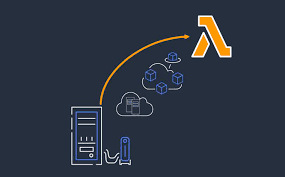
The leapfrog pattern involves bypassing incremental steps and moving directly from an on-premises legacy architecture to a serverless cloud solution. This swift transition modernizes the entire infrastructure and enables faster adoption of serverless benefits.
Organic Pattern

The organic pattern is a gradual “lift-and-shift” approach where on-premises applications are moved to the cloud with minimal changes. Initially, developers may use AWS Lambda for low-risk tasks, such as log processing or scheduled jobs. As serverless capabilities prove effective, they can be applied to more complex tasks. Over time, teams recognize how serverless and microservices align with business goals like agility, developer productivity, and cost savings. This leads to a strategic focus on broader serverless adoption.
Strangler Pattern
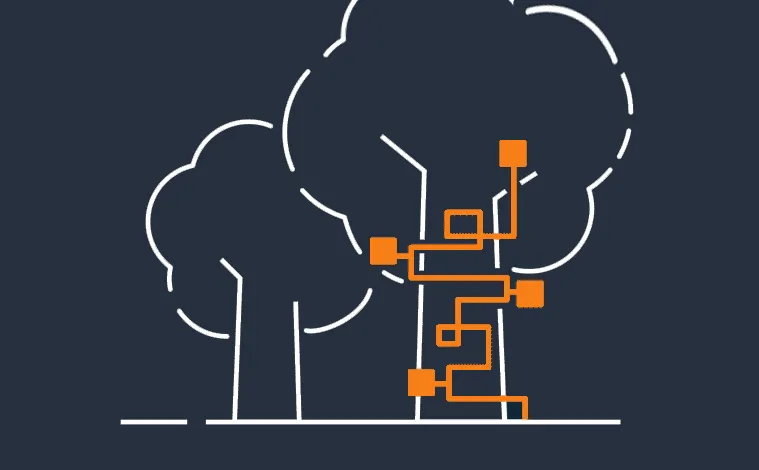
The strangler pattern involves breaking down a monolithic application by creating APIs and event-driven components that gradually replace existing functionality. New API endpoints can direct traffic to legacy or new components, enabling low-risk deployment strategies like canary releases. This approach provides a controlled transition to serverless, allowing for targeted improvements with minimal disruption compared to the leapfrog pattern.
Conclusion
Serverless architecture is a powerful alternative to traditional infrastructures, providing a scalable, cost-effective, and flexible approach to building modern applications. By choosing the right migration pattern—whether it’s leapfrogging, a gradual lift-and-shift, or a controlled strangler approach—organizations can unlock the full potential of serverless, optimizing application performance while minimizing operational overhead. Although serverless may not be the perfect fit for every application, its benefits in scalability, agility, and cost management make it a valuable option for many businesses looking to modernize their IT infrastructure.