



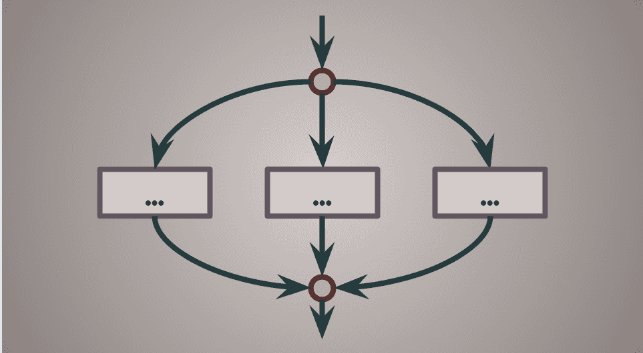
Structured concurrency is a programming paradigm that treats concurrent operations as structured units, similar to how structured programming treats control flow constructs. The main goal is to make concurrent code easier to reason about by properly scoping and managing tasks.
Concurrency is a fundamental aspect of modern software development, enabling applications to handle multiple tasks simultaneously. However, traditional concurrency models often come with complexities that make them challenging to use and maintain. Enter Project Loom, an initiative by the OpenJDK community aimed at reimagining Java’s concurrency model to make it simpler and more efficient.
What is Project Loom?
Project Loom is an effort to introduce lightweight, user-mode threads to the Java platform. We refer to these as “fibers” or “virtual threads,” which aim to simplify writing, maintaining, and observing concurrent applications. By offering a more straightforward concurrency model, Project Loom seeks to make it easier for developers to write high-throughput, low-latency applications.
Key Principles of Structured Concurrency:
Scope-Bound Tasks: Tasks are bound by the scope in which they are created. When the scope exits, it either completes or cancels all tasks within that scope.
Hierarchical Task Management: Organizing tasks in a hierarchy makes it easier to manage dependencies and the lifecycle. 4o mini
Error Propagation: Errors in child tasks propagate to the parent scope, which allows for more robust error handling.
Resource Management: The system allocates and releases resources in a structured manner, reducing the risk of resource leaks.
How Project Loom Implements Structured Concurrency
Project Loom introduces structured concurrency constructs that allow developers to write more intuitive and maintainable concurrent code. Here’s how it achieves this:
Virtual Threads
The Java runtime manages virtual threads as lightweight threads, not the operating system. They are cheap to create and manage, allowing applications to scale with a large number of concurrent tasks without the overhead associated with traditional threads.
Scoped Executors
Scoped executors manage a group of tasks within a specific scope. When the scope exits, the executor ensures that it completes or properly cancels all tasks. This aligns with the principle of scope-bound tasks.
try (ExecutorService executor = Executors.newWorkStealingPool()) {
    executor.submit(() -> {
        // Task 1: Simulate some work
        System.out.println("Task 1 is running");
        try {
            Thread.sleep(2000); // Simulate 2 seconds of work
        } catch (InterruptedException e) {
            Thread.currentThread().interrupt();
            System.out.println("Task 1 was interrupted");
        }
        System.out.println("Task 1 completed");
    });

    executor.submit(() -> {
        // Task 2: Simulate some work
        System.out.println("Task 2 is running");
        try {
            Thread.sleep(3000); // Simulate 3 seconds of work
        } catch (InterruptedException e) {
            Thread.currentThread().interrupt();
            System.out.println("Task 2 was interrupted");
        }
        System.out.println("Task 2 completed");
    });

    // Both tasks will be completed or canceled when the scope exits
}
In this example, Executors.newWorkStealingPool() is used to create a scoped executor. Within the try-with-resources block, two tasks are submitted to the executor. Each task simulates some work by sleeping for a certain duration. When the scope exits, the executor ensures that it completes or properly cancels both tasks, maintaining the principle of scope-bound tasks.
Structured Task Handling
With structured concurrency, tasks are handled in a hierarchical manner. This makes it easier to manage complex workflows and dependencies between tasks.
// Using a hypothetical `newScopedExecutor` which represents a structured concurrency executor
try (ExecutorService executor = Executors.newWorkStealingPool()) {
    // Submit tasks to the executor
    Future<String> task1 = executor.submit(() -> {
        // Perform some operation
        System.out.println("Task 1 is running");
        try {
            Thread.sleep(2000); // Simulate 2 seconds of work
        } catch (InterruptedException e) {
            Thread.currentThread().interrupt();
            System.out.println("Task 1 was interrupted");
        }
        return "Result from task1";
    });
    Future<String> task2 = executor.submit(() -> {
        // Perform some operation
        System.out.println("Task 2 is running");
        try {
            Thread.sleep(3000); // Simulate 3 seconds of work
        } catch (InterruptedException e) {
            Thread.currentThread().interrupt();
            System.out.println("Task 2 was interrupted");
        }
        return "Result from task2";
    });
    // Use the results of task1 and task2
    try {
        String result1 = task1.get();
        String result2 = task2.get();
        System.out.println(result1);
        System.out.println(result2);
    } catch (InterruptedException | ExecutionException e) {
        e.printStackTrace();
    }
    // Both tasks will be completed or canceled when the scope exits
}
Benefits of Structured Concurrency with Project Loom
1. Simplified Code
Structured concurrency leads to simpler and more readable code. Managing tasks within specific scopes and handling them hierarchically significantly reduces the complexity of thread management.
2. Improved Resource Management
With structured concurrency, resources are allocated and released in a structured manner. This reduces the risk of resource leaks and makes it easier to manage resource lifecycles.
3. Robust Error Handling
Error propagation is a critical aspect of structured concurrency. When a task fails, it propagates the error to the parent scope, enabling more robust and centralized error handling.
4. Scalability
Virtual threads introduced by Project Loom are lightweight and efficient, allowing applications to scale with a large number of concurrent tasks without the overhead of traditional threads.
Example: Structured Concurrency in Action
Here’s a practical example demonstrating structured concurrency with Project Loom. We’ll create a simple application that fetches data from two different sources concurrently and processes the results.
import java.util.concurrent.Executors;
import java.util.concurrent.ExecutorService;
import java.util.concurrent.Future;
import java.util.concurrent.ExecutionException;

public class StructuredConcurrencyExample {
    public static void main(String[] args) {
        // Use a fixed thread pool to simulate a scoped executor
        try (ExecutorService executor = Executors.newFixedThreadPool(2)) {
            // Submit tasks to fetch data from different sources
            Future<String> data1 = executor.submit(() -> fetchDataFromSource1());
            Future<String> data2 = executor.submit(() -> fetchDataFromSource2());

            try {
                // Process the results of the tasks
                String result1 = data1.get();
                String result2 = data2.get();

                processResults(result1, result2);
            } catch (InterruptedException | ExecutionException e) {
                e.printStackTrace();
            }

            // Both tasks will be completed or canceled when the scope exits
        }
    }

    private static String fetchDataFromSource1() {
        // Simulate fetching data from source 1
        System.out.println("Fetching data from source 1...");
        try {
            Thread.sleep(1000); // Simulate 1 second of work
        } catch (InterruptedException e) {
            Thread.currentThread().interrupt();
            System.out.println("Fetching data from source 1 was interrupted");
        }
        return "Data from source 1";
    }

    private static String fetchDataFromSource2() {
        // Simulate fetching data from source 2
        System.out.println("Fetching data from source 2...");
        try {
            Thread.sleep(1500); // Simulate 1.5 seconds of work
        } catch (InterruptedException e) {
            Thread.currentThread().interrupt();
            System.out.println("Fetching data from source 2 was interrupted");
        }
        return "Data from source 2";
    }

    private static void processResults(String result1, String result2) {
        // Process the combined results
        System.out.println("Result 1: " + result1);
        System.out.println("Result 2: " + result2);
    }
}
Conclusion
Project Loom’s structured concurrency model will revolutionize our approach to concurrent programming in Java. By introducing virtual threads and scoped executors, it simplifies the development of high-throughput, low-latency applications. The principles of structured concurrency, such as scope-bound tasks, hierarchical task management, and robust error propagation, make it easier to write, maintain, and reason about concurrent code.