


Introduction
In today’s rapidly evolving data landscape, selecting the appropriate data integration strategy is crucial for organizations aiming to leverage their data effectively. ETL (Extract, Transform, Load) and ELT (Extract, Load, Transform) represent two primary approaches to data integration. While ETL processes data before it is loaded into a data warehouse, ELT first loads raw data and subsequently transforms it, capitalizing on modern cloud architectures. Consequently, understanding these methodologies and their implications is essential for organizations striving to maximize their data’s value.
Understanding ETL
Definition and Process:
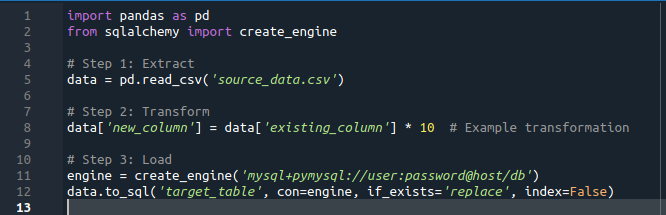
- Extract: First, data is gathered from various source systems, including databases, CRM systems, and other applications.
- Transform: Next, the extracted data is cleaned, enriched, and transformed into a suitable format for analysis.
- Load: Finally, the transformed data is loaded into a data warehouse for storage and querying.
ETL Code (Python using Pandas)
Advantages
- Data Quality and Consistency: ETL processes ensure high data quality through thorough transformations, which are critical for compliance and reporting.
- Suitable for Structured Data: This approach is particularly effective for structured data, where predefined schemas are essential.
Disadvantages
- Slower Processing Times: The transformation process can be time-consuming, resulting in longer data integration cycles.
- Requires Upfront Data Transformation: Organizations must define transformation rules in advance, potentially delaying data availability.
Understanding ELT
Definition and Process
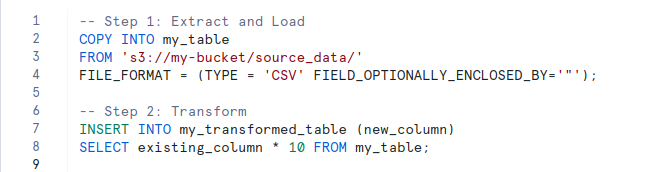
- Extract: Initially, data is extracted from source systems.
- Load: Subsequently, raw, unprocessed data is loaded directly into a data warehouse.
- Transform: Finally, data transformation occurs post-loading, as required for analysis.
ELT Code (SQL in a Data Warehouse)
Advantages
- Faster Processing and Agility: ELT facilitates quicker data loading, allowing organizations to access and utilize data more rapidly.
- Ability to Handle Large Volumes of Unstructured Data: This approach efficiently manages diverse data types, including unstructured and semi-structured data.
Disadvantages
- Potentially Lower Data Quality: As transformation occurs after loading, data quality may vary until the transformation is completed.
- Requires More Storage and Processing Power: ELT generally demands additional cloud storage and processing resources, which can increase operational costs.
Key Differences Between ETL and ELT
- Data Transformation Timing: In the ETL process, data is transformed before it is loaded into the warehouse, whereas, in ELT, data is loaded first and transformed later as needed.
- Architecture: ETL typically follows a traditional approach, often using dedicated ETL tools for integration. In contrast, ELT embraces a cloud-native architecture, leveraging scalable data warehouses like Snowflake and BigQuery.
- Performance: ETL may struggle with large datasets due to its upfront transformation requirements, while ELT can efficiently handle large datasets by utilizing the processing power of modern cloud infrastructures.
Diagram: ETL vs. ELT Workflows
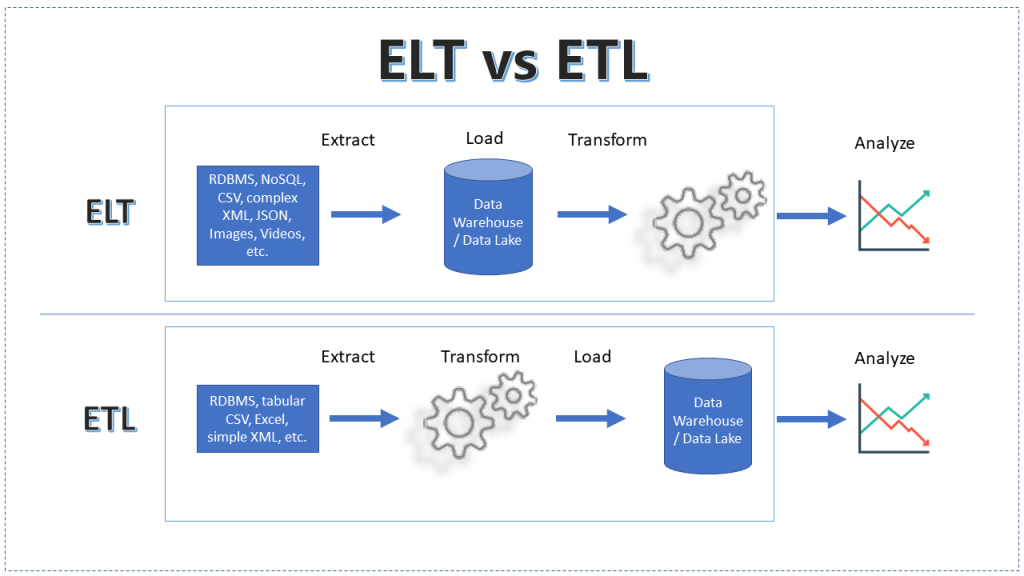
The diagram above illustrates the sequential steps involved in both ELT and ETL processes.
Choosing the Right Strategy
Considerations
- Data Volume and Variety: Organizations should evaluate the types and quantities of data they are processing to determine the most efficient approach.
- Business Intelligence Needs: It is vital to consider how quickly insights are required and the complexity of the analysis.
- Infrastructure and Resources: Assessing existing technology and resources is crucial to support the chosen strategy effectively.
Use Cases
- When to Choose ETL: This approach is ideal for scenarios requiring high data quality and regulatory compliance, such as financial reporting or structured data analysis.
- When to Choose ELT: ELT is best suited for big data applications and real-time analytics, where agility and the capability to manage diverse data types are paramount.
Conclusion
In summary, both ETL and ELT possess distinct advantages and disadvantages that render them suitable for different data integration needs. Therefore, organizations should thoroughly evaluate their specific requirements—such as data volume, analysis needs, and existing infrastructure—before making a decision on an integration strategy. By choosing wisely, businesses can unlock the full potential of their data, ultimately gaining valuable insights that drive informed decision-making.