


1. Introduction
In software development, managing test environments is key to ensuring quality. These environments replicate real-world settings, helping to make sure applications are free of bugs, scalable, and reliable before they go live. However, managing them can be tricky, especially with complex setups involving tools like Selenium, Cucumber, and TestNG. AI-based Test Environment Management helps solve these problems by optimizing resources and making test execution more efficient.
2. Understanding Test Environment
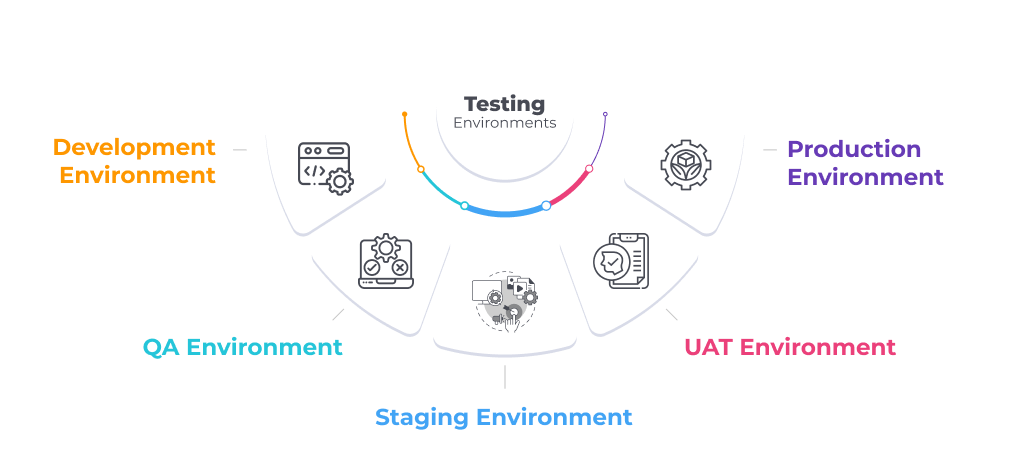
Common types of Testing Environments are:
a. Development Environment
It is used by developers to write and test code allowing code-level debugging and unit testing. It includes IDEs (Integrated Development Environments), local databases and development tools.
b. QA Environment
The primary environment for functional testing, integration testing, regression testing, and other types of manual and automated testing. It closely mimics the production environment, with test databases, application servers, and third-party services set up similarly to production.
c. Staging Environment
It is an environment that simulates the production environment as much closely as possible. This is the final testing ground before deployment to production which contains a replica of the production environment, including the same hardware, software, and configurations, but without live production data.
d. User Acceptance Testing Environment
UAT is a special environment where end-users or stakeholders test the application to validate whether it meets business requirements or not. A simplified version of the staging environment, with sanitized production data, is used for the final round of validation before going live.
e. Production Environment
In this environment, end users access the application directly. It is fully operational and contains real, live data.
Test Environment Management involves configuring, maintaining, and updating these environments as the software develops. It is a key process for detecting and resolving bugs, enhancing software quality, and ensuring a seamless user experience.
3. Need for Optimized Resource Allocation
Before diving into AI’s role, it’s crucial to understand the challenges posed by test environment management, especially in resource allocation:
- Scalability: Handling multiple test environments simultaneously is a complex task, particularly when dealing with a large number of test cases or high concurrency.
- Resource Utilization: Inefficient resource allocation often leads to bottlenecks. Over-allocated resources lead to wastage, while under-allocation can delay testing or cause false negatives.
- Parallel Test Execution: Tools like Selenium, Cucumber, and TestNG allow for parallel test execution, but proper resource distribution (e.g., memory, CPU, network bandwidth) is crucial to avoid slowdowns or crashes.
- Test Environment Setup & Maintenance: Setting up different environments for various stages of testing (dev, staging, production) can consume significant resources, and maintaining them adds an additional layer of complexity.
4. AI-Driven Solutions for Test Environment Management
1. Predictive Analytics: Leverage analysis of historical data to predict future resource needs, ensuring that resources are allocated efficiently. For instance, it can predict periods of high testing activity and allocate extra resources as needed.
2. Automated Configuration: AI-driven tools can automate the setup and maintenance of test environments, reducing the risk of human error and ensuring consistency. This includes automating the deployment of environments, configuration of settings, and installation of necessary software.
3. Dynamic Scaling: Can dynamically allocate resources based on real-time demand, such as during peak testing periods. It can also provide additional virtual machines or containers to handle the increased load.
4. Anomaly Detection: AI can monitor test environments for unusual patterns or anomalies, such as unexpected spikes in resource usage, and take corrective actions automatically.
5. Implementing AI-Driven Test Environment Management
To implement AI-driven test environment management, follow these steps:
5.1 Data Collection
Start by collecting data related to your testing process. This includes information such as:
- Resource Usage: How much CPU, memory, or disk space is being used during tests.
- Test Execution Times: How long each test takes to run.
- Environment Configurations: Settings and configurations of your testing environment.
5.2 AI Model Development and Training
Next, develop or use existing AI models that can analyze the collected data.
- Train Your Model: The AI model needs to be trained using collected data. This training process helps the model learn how to predict future needs, detect unusual activity, and suggest better configurations for your testing environment.
- Choose a Machine Learning Library: Libraries like Weka make it easy to create AI models. These models can learn from your data and help you make smart decisions.
5.3 Environment Configuration Optimization
Once you have your AI model ready, the next step is to optimize your test environments:
- Utilize Cloud Service SDKs: If using cloud services, their SDKs (Software Development Kits) can make it easy to manage resources and environments automatically.
- Use Configuration Management Tools: Tools like Ansible help automate the setup of test environments. This means you can quickly create, update, or remove test environments without doing everything manually.
5.4 Anomaly Detection
Finally, integrate a basic anomaly detection system into the testing process:
- Monitor for Unusual Patterns: Anomaly detection helps identify when something goes wrong. For example, if a test starts using a lot more resources than usual, this system will alert you.
- Automatic Corrections: With the right setup, the system can even take action automatically, like reallocating resources or alerting your team.
6. Conclusion
AI-driven test environment management is the next big step in improving software testing. By using AI to better manage resources in tools like Selenium, Cucumber, and TestNG, teams can test more effectively while saving time and money. As AI technology keeps getting better, we can expect even smarter ways to manage testing, transforming how we approach software testing.