



Introduction
In today’s competitive software industry, ensuring high product quality and alignment with user expectations is crucial. A product released with critical defects—such as crashes or unstable behavior—not only degrades user experience but also damages brand reputation. To prevent such risks, Alpha Testing and Beta Testing serve as pivotal stages in the software development lifecycle.
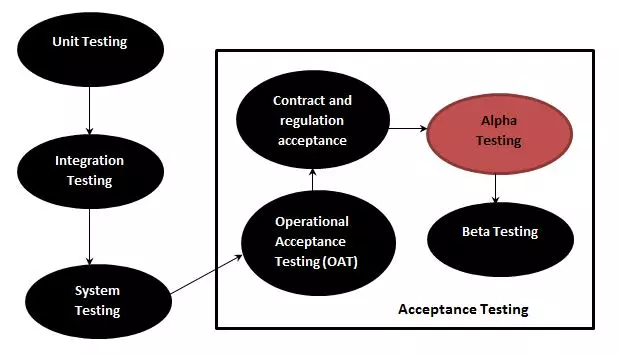
Alpha Testing acts as an internal validation mechanism conducted by developers and QA teams to detect foundational issues and refine functionalities within a controlled environment. In contrast, Beta Testing extends this process into real-world settings by involving external users, allowing teams to gather empirical feedback on usability, compatibility, and performance before the product’s public release. This article critically examines both testing methods, comparing their methodologies, objectives, and contributions to software quality assurance.
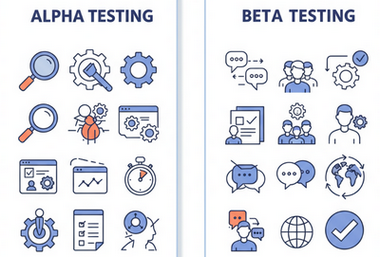
Definition and Key Objectives
What is Alpha Testing and Beta Testing?
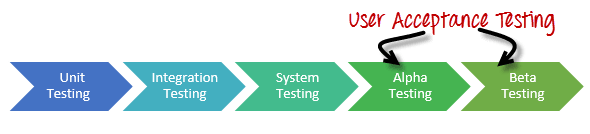
Alpha Testing is an internal form of acceptance testing that follows earlier testing stages such as unit, integration, and system testing. Conducted by developers, QA engineers, and occasionally internal stakeholders, Alpha Testing verifies the stability, functionality, and usability of the product in a controlled environment. It is the final internal checkpoint before exposing the software to external users.
Beta Testing is the external validation phase, executed after Alpha Testing. It involves a selected group of real users operating in diverse, real-world environments. The primary aim is to uncover latent issues that were not identified internally and gather feedback on usability, performance, and overall user satisfaction. This feedback is essential to refine the product before its public release.
Objectives
Alpha Testing:
- Validate System Stability: Confirm the system operates consistently without crashes or degradation under standard conditions.
- Detect Critical Functional Defects: Identify bugs that impede essential operations.
- Verify Compliance with Specifications: Ensure the software adheres to design and functional requirements.
- Assess Feature Implementation: Test the behavior and completeness of all major features.
- Refine Usability Internally: Improve user interface elements and workflows before external exposure.
Beta Testing:
- Identify User-Specific Issues: Detect environment-dependent bugs and interaction anomalies.
- Collect Real-World Feedback: Gather qualitative and quantitative input from external users.
- Assess Operational Readiness: Validate software performance in uncontrolled environments.
- Evaluate Market Fit: Determine whether the product meets user expectations.
- Enable Iterative Improvement: Inform refinements based on user-driven feedback.
Comparing Alpha and Beta Testing: Key Differences.
Despite their distinct operational methodologies and primary objectives, Alpha and Beta Testing share fundamental commonalities that underscore their synergistic contribution to software quality:
- Both methodologies constitute integral forms of User Acceptance Testing (UAT), strategically aimed at identifying and rectifying defects prior to a product’s final commercial release.
- They are both instrumental in collectively ensuring that the end-product consistently meets and often surpasses predefined quality benchmarks and functional requirements. Furthermore, robust feedback mechanisms are intrinsically vital in both phases: internal team feedback is paramount for Alpha Testing to refine core components, while diverse external user feedback is crucial for Beta Testing to validate real-world applicability and user satisfaction.
- Both phases are characterized by iterative testing cycles, wherein identified issues are systematically addressed, and subsequent retesting is conducted to validate the efficacy of fixes and maintain quality standards
- Lastly, meticulous documentation of all identified issues, received feedback, and resolution strategies is critically important in both phases, serving as a comprehensive audit trail for defect tracking and guiding subsequent development efforts.

Key Differences
| Aspect | Alpha Testing | Beta Testing |
| Performed by/at | Internal development team, QA engineers, and sometimes internal users; conducted at the developer’s-controlled environment. | External end-users (beta testers); conducted in real-world, uncontrolled environments. |
| Objective | To ensure a stable and functionally sound build, eliminating major roadblocks before progression to the Beta Testing phase. | To confirm product readiness for public release, incorporating user-centric refinements and validating market acceptance. |
| Focus | Ensuring internal stability, core functionality, and identifying major system-level bugs before external exposure. | Gathering real-world user feedback, validating usability, and uncovering latent issues across diverse environments. |
| Reliability & Security | Initial assessment: not exhaustively tested due to controlled environment, but critical vulnerabilities are addressed. | Rigorously evaluated for reliability, security vulnerabilities (e.g., cross-site scripting, injection flaws), and robustness under varied user conditions. |
| Testing Techniques | Employs both white-box (structural testing, based on internal code knowledge) and black-box (functional testing, based on specifications) methodologies. | Primarily utilizes black box testing techniques, focusing on user interaction and observable behavior without internal code knowledge. |
| Environment | Requires a simulated or controlled laboratory environment with specific configurations and dedicated testing tools. | No dedicated lab environment; conducted in the authentic, diverse computing environments (e.g., personal computers, mobile devices, various browsers) of end-users. |
| Execution Cycle | May involve a relatively longer, more intensive cycle due to foundational bug detection and internal refinement, often lasting several weeks to months. | Typically completed within a shorter timeframe, ranging from a few weeks to a few months, focusing on actionable user feedback and quick iterations. |
| Issue Handling | Critical and severe issues are fixed immediately by the development team, often leading to rapid software builds. | Most identified issues, particularly minor bugs, compatibility problems, or usability suggestions, are systematically prioritized and typically addressed in future updates or subsequent versions. |
The Impact of Alpha Testing and Beta Testing on Product Quality.
Enhancing Stability and Core Functionality During Internal Testing
Alpha Testing plays a critical role in early software quality assurance by focusing on internal stability and foundational integrity. Its key impacts include:
- Identification of Critical Bugs: Proactively intercepts major systemic defects (crashes, data corruption, performance bottlenecks) to reduce remediation costs.
- Ensuring Core Functionality: Confirms all indispensable features operate precisely as stipulated, establishing a reliable operational baseline.
- Improvement of System Stability: Cultivates a robust application through comprehensive testing in controlled environments, minimizing post-release incidents.
- Facilitating Internal Feedback: Fosters agile iteration via close collaboration between development and QA for rapid issue resolution.
- Mandatory Documentation: Ensures meticulous tracking of issues and resolutions for effective bug management and future development efficiency.
Boosting User Satisfaction and Readiness with User Feedback
Beta Testing is essential for acquiring authentic, empirical feedback from real-world users, ensuring software aligns with user expectations. Its key impacts include:
- Real-World Usage Validation: Exposes software to diverse live conditions, uncovering latent issues (e.g., compatibility, environmental dependencies) missed internally.
- Comprehensive User Feedback Acquisition: Systematically collects qualitative and quantitative insights on usability, design, and feature efficacy from actual users for market fit.
- Detection of User-Reported Anomalies: Unearths subtle usability issues, compatibility conflicts, or performance inconsistencies unique to real-world usage.
- Enhancement of User Experience (UX): Translates aggregated feedback into improved navigation, streamlined workflows, and refined aesthetics for higher user retention.
- Validation of Product Readiness: Confirms the software meets user expectations and performs reliably in unpredictable scenarios, mitigating post-launch risks.
- Iterative Refinement: Guides continuous adjustments and improvements based on empirical data, ensuring a highly polished final product for market launch.
Following are some real-life scenarios that show how both Alpha testing and Beta testing have their own uses and functions.
Alpha Testing: Ensuring Stability Before External Exposure
Case Study 1: High-Security Banking Application
- Scenario: A financial services firm developed a mobile banking application requiring high reliability and security.
- Approach: Internal teams simulated real-life banking scenarios, including fund transfers and secure logins.
- Outcome: Identified and patched critical security vulnerabilities (e.g., handshake weaknesses) and optimized transaction speed by 30%, ensuring a stable and secure build.
This case highlights Alpha Testing’s ability to mitigate security and performance risks early, preventing high-cost failures in production.
Case Study 2: New Feature in a Photo Editing App
- Scenario: A software company added a complex new AI-powered filter to its popular photo editing application.
- Approach: Internal QA and a small group of developers extensively tested the filter’s functionality, performance, and integration with existing features on various internal test devices.
- Outcome: Discovered significant memory leaks and rendering inconsistencies that caused app crashes on specific older devices, which were then resolved before broader testing.
This case highlights Alpha Testing’s effectiveness in detecting hidden defects in complex features, ensuring system stability before external exposure.
Beta Testing: Refining Usability and Performance Through Diverse User Feedback
Case Study 1: Global Mobile Gaming Application
- Scenario: A gaming studio launched a multiplayer mobile game targeting a global audience.
- Approach: External beta testers explored gameplay, providing feedback on usability, performance across various devices and networks.
- Outcome: Resolved navigation issues, optimized server infrastructure, and improved user satisfaction by incorporating player feedback on tutorial clarity and difficulty.
This case highlights Beta Testing’s role in uncovering usability and performance issues across varied user environments, enhancing overall user satisfaction pre-launch.
Case Study 2: Cloud-Based Collaborative Document Editor
- Scenario: A tech company developed a new cloud-based collaborative document editing tool.
- Approach: External users tested compatibility across multiple browsers and operating systems, reporting workflow inefficiencies and collaboration friction.
- Outcome: Led to significant improvements in real-time collaboration features, streamlined UI/UX flows, and enhanced cross-platform compatibility, directly addressing diverse user needs and usage patterns
This case highlights Beta Testing’s capacity to reveal cross-platform and workflow inefficiencies, enabling refinement for real-world user needs.
Key Insights
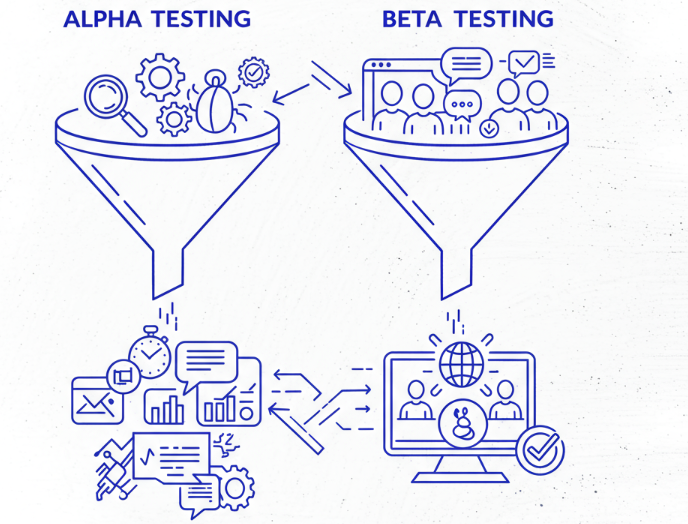
Alpha and Beta Testing collectively underpin software quality assurance. While Alpha Testing strengthens the foundation by resolving internal defects and ensuring technical compliance, Beta Testing ensures the product resonates with user expectations through empirical validation. Together, these practices form a robust, complementary framework for delivering high-quality, market-ready software. Organizations that implement comprehensive Alpha and Beta Testing processes are better equipped to release stable, secure, and user-validated products that drive long-term success and customer trust.
Reference
ISTQB® (2023). Certified Tester – Foundation Level Syllabus v4.0.
Retrieved from: https://www.istqb.org/downloads
Guru99. (n.d.). Alpha and Beta Testing Demystified.
Retrieved from: https://www.guru99.com/alpha-beta-testing-demystified.html
Software Testing Help. (n.d.). What is Alpha Testing? Beta Testing Explained with Examples.
Retrieved from: https://www.softwaretestinghelp.com/what-is-alpha-testing-beta-testing/
Various online resources reviewed during research (general browsing across educational blogs, documentation, and QA discussion forums).