


1. Introduction
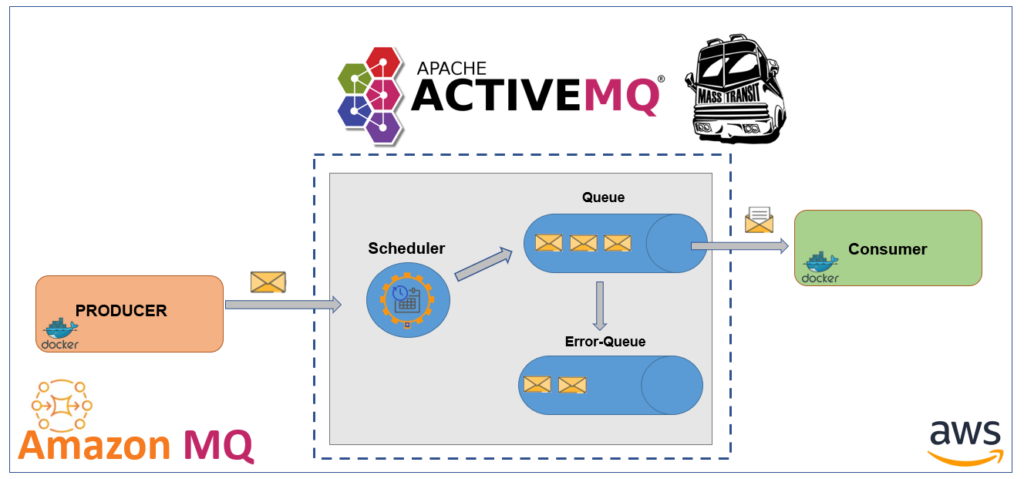
1.1 What is ActiveMQ?
ActiveMQ is an open-source message broker developed by Apache, designed to facilitate communication between different components of a distributed system. ActiveMQ’s flexibility, ease of use, and scalability make it an ideal choice for many enterprise systems that require reliable message delivery.
In message-driven architectures, where applications send and receive messages in a decoupled manner, ActiveMQ acts as a central hub that coordinates the flow of data. It ensures that messages are reliably transmitted from producers to consumers, even under load or in case of failures.
1.2 Why automate testing for ActiveMQ?
Automated testing of message-driven systems like ActiveMQ is essential for several reasons:
- Reliability: Automated tests help to ensure that the ActiveMQ broker delivers messages correctly and consistently across different environments, reducing the risk of errors that could impact the performance of the system.
- Efficiency: Manual testing of message-driven systems can be time-consuming, especially as the complexity of the messaging logic grows. By automating the testing process, you can quickly verify that the message flow is functioning as expected and catch issues early in the development cycle.
- Scalability Testing: Automated tests can simulate high volumes of messages and stress test the broker’s performance under different conditions. This ensures that the system can handle large message loads without degradation in performance.
- Continuous Integration (CI): Integrating automated message testing into your CI/CD pipeline ensures that any changes to the system do not break the message flow or introduce regressions. This fosters confidence in deploying updates to production systems.
2.Understanding ActiveMQ Message Testing
2.1 What is Message Testing in ActiveMQ?
Message testing in ActiveMQ focuses on verifying the flow and integrity of messages from the point they are produced (sent) to the moment they are consumed (received) and processed. Since ActiveMQ is a message broker that facilitates asynchronous communication between different parts of a distributed system, testing the message flow is critical to ensure data consistency and system reliability.
ActiveMQ messages can be classified into several types, such as queues (point-to-point messaging) or topics (publish-subscribe model). Testing ensures that these messages are handled correctly under different circumstances, from simple message dispatch to more complex scenarios such as message persistence, delivery guarantees, and transaction management.
2.2 Challenges in Testing ActiveMQ Message
- System Complexity: Message-driven systems often involve multiple components, making it challenging to isolate and test individual functionalities.
- Synchronization Issues: Ensuring that messages are processed in the correct order and within expected time frames requires careful planning.
- High Loads and Latency: Testing under real-world conditions, such as handling large message volumes or network delays, can reveal performance bottlenecks.
3.Main flow of testing ActiveMQ Messages
Automated testing of ActiveMQ messages involves three key aspects: Sending, Receiving, and Validating. Let’s dive deeper into each process and best practices for ensuring reliability.
3.1 Sending Message
Sending messages is the first step in the ActiveMQ message flow. Ensuring that messages are successfully sent from the producer to the broker is critical for confirming that the communication channel is functional.
- Purpose: Ensure that the message producer sends messages correctly to the intended destination (queue or topic).
- Key Scenarios to Test:
- Successful message dispatch to the correct queue/topic.
- Handling of failures, such as network issues or broker unavailability.
- Compliance with message format or schema requirements (e.g., headers, payload structure).
- Best Practices:
- Simulate various scenarios, such as empty messages or oversized payloads.
- Test rate limits and ensure the producer handles throttling gracefully.
3.2 Receiving Message
Once messages are sent to the broker, it’s essential to ensure that consumers can correctly receive and process them. This step confirms that the ActiveMQ consumer components are functioning properly.
- Purpose: Validate that the consumer retrieves and processes messages from the broker as expected.
- Key Scenarios to Test:
- Messages are consumed in the correct order (if required).
- Proper handling of duplicate or expired messages.
- Consumer resilience when dealing with high message throughput.
- Best Practices:
- Simulate consumer downtime and ensure messages persist in the queue until they are processed.
- Test multiple consumers in a load-balanced setup to confirm efficient message distribution.
3.3 Validating Messages
Message validation is necessary to ensure that the content, format, and integrity of the message meet expected criteria. Validation tests help detect issues early and ensure that messages comply with schema rules, business logic, and other predefined conditions.
- Purpose: Verify that messages meet the expected structure, content, and processing logic.
- Key Scenarios to Test:
- Messages adhere to the defined schema or protocol.
- Validations like required fields, data type correctness, or length constraints pass.
- Invalid messages are appropriately logged or rejected.
Conclusion
Automating ActiveMQ message testing is crucial for ensuring the reliability, performance, and scalability of your messaging system. By validating aspects like message delivery, persistence, and error handling, you can catch issues early and ensure smooth message flow in production.
In next article, I’ll share more about the tools and best practices we can apply in ActiveMQ message testing.
Reference:
- https://darshanadinushal.medium.com/schedule-message-delivery-using-awsmq-activemq-and-masstransit-3-8c9ad14016b9
- https://vmssoftware.com/products/activemq/