


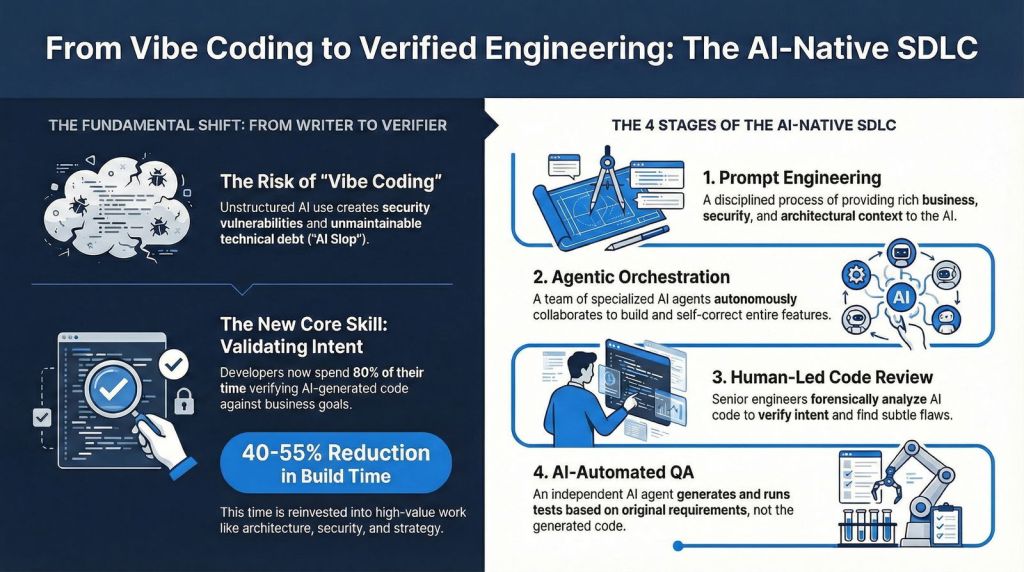
In recent years, we’ve become accustomed to using AI as a programming assistant: suggesting code, auto-completing functions, even writing test cases. But AI-DLC (AI-Driven Development Lifecycle) goes far beyond assistance – it completely reimagines the entire software development lifecycle, where AI becomes the primary orchestrator, and humans shift to the role of oversight, validation, and strategic decision-making.
This approach was introduced and rapidly evolved by AWS starting in 2025, especially through tools like Amazon Q Developer. Let’s explore what AI-DLC really is, why it differs fundamentally from traditional Agile, and how it’s transforming the way we build software.
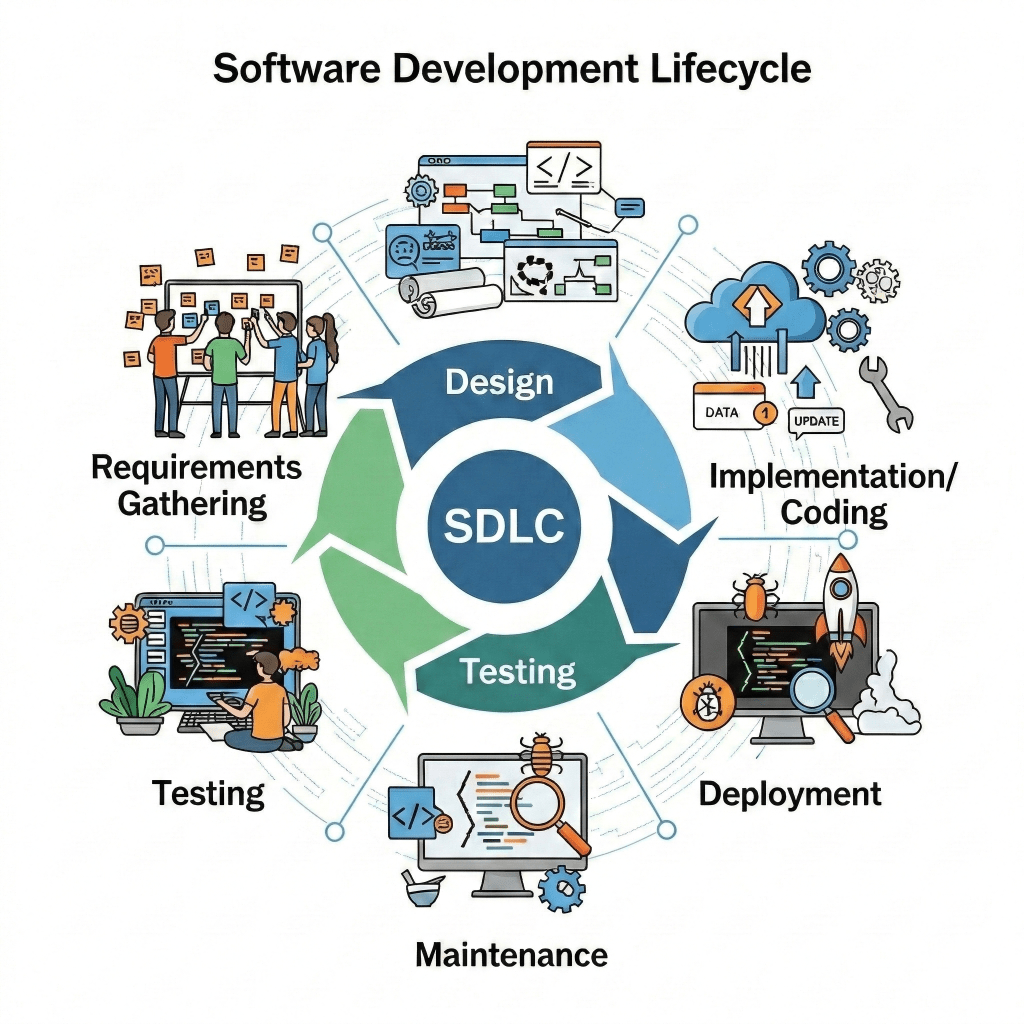
1. What is AI-DLC? Not Agile + AI, but a Brand-New Paradigm
AI-DLC is not simply patching AI into Scrum or Kanban. It is a native-AI software development methodology built from the ground up, guided by these core principles:
- AI initiates and leads workflows (reverse conversation direction)
- Ultra-short cycles: Bolts instead of Sprints – measured in hours or days
- Technical design (Domain-Driven Design – DDD) is embedded as mandatory from the start
- Humans focus on validation, risk management, trade-offs, and creativity
- Rich, traceable artifacts serve as the “contract” between humans and A
The 10 core principles of AI-DLC emphasize: Reimagine rather than retrofit – we don’t keep the old SDLC/Agile and bolt on AI; we rebuild the entire process for the AI era.
2. The AI-DLC Process: 3 Main Phases
AI-DLC is structured into three clear phases, each with distinctive collaborative rituals:
Inception (Initialization)
- Goal: Transform high-level business Intent into feasible Units
- Key Ritual: Mob Elaboration – a collaborative session where AI asks clarifying questions, proposes User Stories, Acceptance Criteria, NFRs, Risks, and groups them into Units. The team (Product Owner, Developers, QA) validates and refines in real time.
- Duration: Often just a few hours instead of weeks.

Construction (Building)
- Turn Units into fully tested Deployment Units
- Rituals: Mob Construction and Mob Testing
- AI handles: Domain Design → Logical Design (applying patterns, ADRs) → Code Generation → Testing (unit, integration, security, performance)
- Especially powerful for brown-field projects: AI reverse-engineers legacy codebases to build rich context.
Operations (Running)
- Deployment, monitoring, and incident handling
- AI automatically analyzes telemetry, predicts issues, and suggests fixes → humans approve actions.
3. AI-DLC vs Agile: The Core DifferencesYour Attractive Heading
| Criterion | Agile (Scrum/Kanban) | AI-DLC |
|---|---|---|
| Who Leads | Humans | AI leads, humans oversee |
| Cycle Length | 1–4 weeks | Hours/days (Bolts) |
| Planning | Humans estimate, plan | AI proposes detailed plan → validate |
| Design | Optional | Mandatory (DDD, patterns from day one) |
| Testing | Humans write + CI/CD | AI generates & runs tests, humans validate |
| Human Role | Handles most intellectual work | Validation, risk, creativity |
| Time from Idea to Product | Weeks/months | Hours/days |
AI-DLC retains some Agile spirit (user stories, continuous validation) but reverses the roles and dramatically accelerates speed.
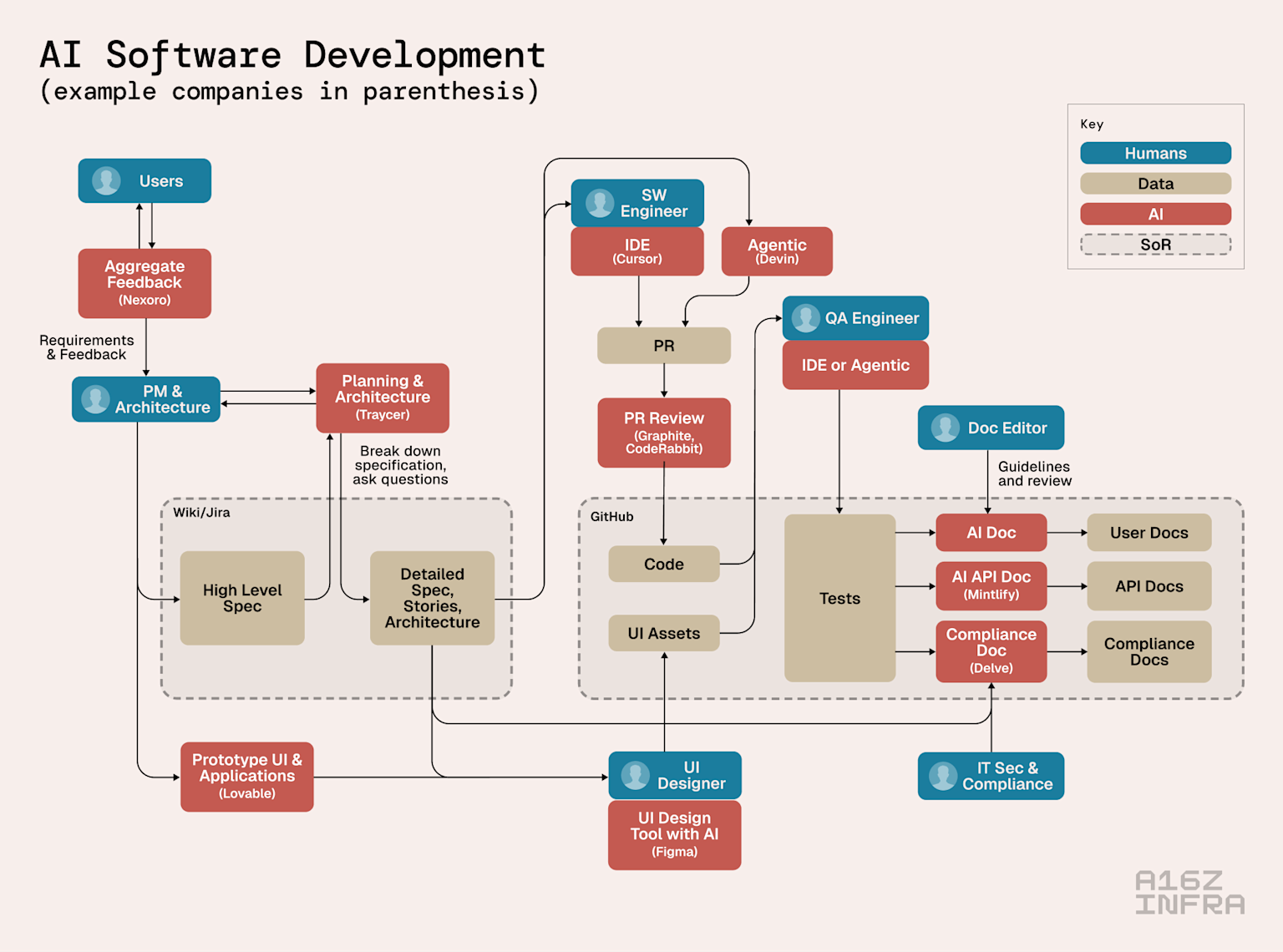
4. Real-World Benefits of AI-DLC
- Speed: Reduces time from idea to product from weeks to hours/days
- Quality: Minimises technical debt with strong upfront design and automated testing
- Efficiency: Reduces silos and handoffs; developers focus on high-value work
- Adaptability: Flexible workflows for green-field, brown-field, and refactoring projects
- Risk Reduction: Humans retain control at critical decision points
5. Mob Elaboration – The Key Ritual of AI-DLC
This is the most important collaborative ritual in the Inception phase:
- AI asks clarifying questions about the Intent
- AI proposes User Stories, Units, NFRs, Risks
- Team validates and refines in real time
- Output: PRFAQ, Suggested Bolts, Measurement Criteria
Mob Elaboration perfectly embodies AI-driven collaboration: AI initiates, humans guide.
Conclusion: The Future Has Already Begun
AI-DLC is not just a trend – it is the next evolution in software engineering, much like Agile replaced Waterfall. With tools like Amazon Q Developer, Kiro, FlowSource, and others, large enterprise teams are gradually adopting this model to build complex systems faster, with higher quality and less technical debt.
If you’re working on large codebases, enterprise projects, or want to fully leverage AI in development – AI-DLC is the answer.
Are you ready to try a Bolt that delivers in just a few hours?
(References: AWS documentation, official AI-DLC blog, and real-world practices from 2025–2026)