


Image from Copilot
Overview
Data migration testing is a crucial aspect of any data migration project, ensuring that data is accurately and securely transferred from one system to another. Post-migration, it is essential to verify data integrity, ensure no data loss, and confirm that all functional and non-functional aspects of the application are met.
Why is data migration important?

Data migration is critical because it ensures the successful and safe transfer of data to a new storage system. Despite potential risks and costs, migrating data to a different platform offers numerous benefits, such as upgraded services and applications, reduced storage costs, and increased productivity.
Data migration strategy

- Formation of a specialized team: Assemble a team with specific experience and knowledge, including testers and developers. Provide training related to the system being migrated, if necessary.
- Business risk analysis and identification of possible errors: identify potential risks and implement mitigations. Include scenarios to uncover risks and verify proper mitigations. Conduct a possible error analysis.
- Analyze and define the scope of the migration: Clearly define the scope, including what and when to test. Prepare a data migration test plan and a checklist.
- Choosing the right tool for the migration: identify the appropriate tools for the migration, such as automated tools to compare source and target data.
- Identify an appropriate test environment for the migration: Ensure separate test environments for pre- and post-migration testing. Document the technical aspects of both systems to set up the test environment properly.
- Migrate Test Specification document and review: Prepare a detailed Migration Test Specification document, including testing methods (automated, manual), testing methodology (black box, white box), test cycles, schedule, environment, and tester qualifications.
- System launch after migration: Analyze and document a checklist for system migration to ensure the system operates correctly in the new environment.
Different phases of migration testing
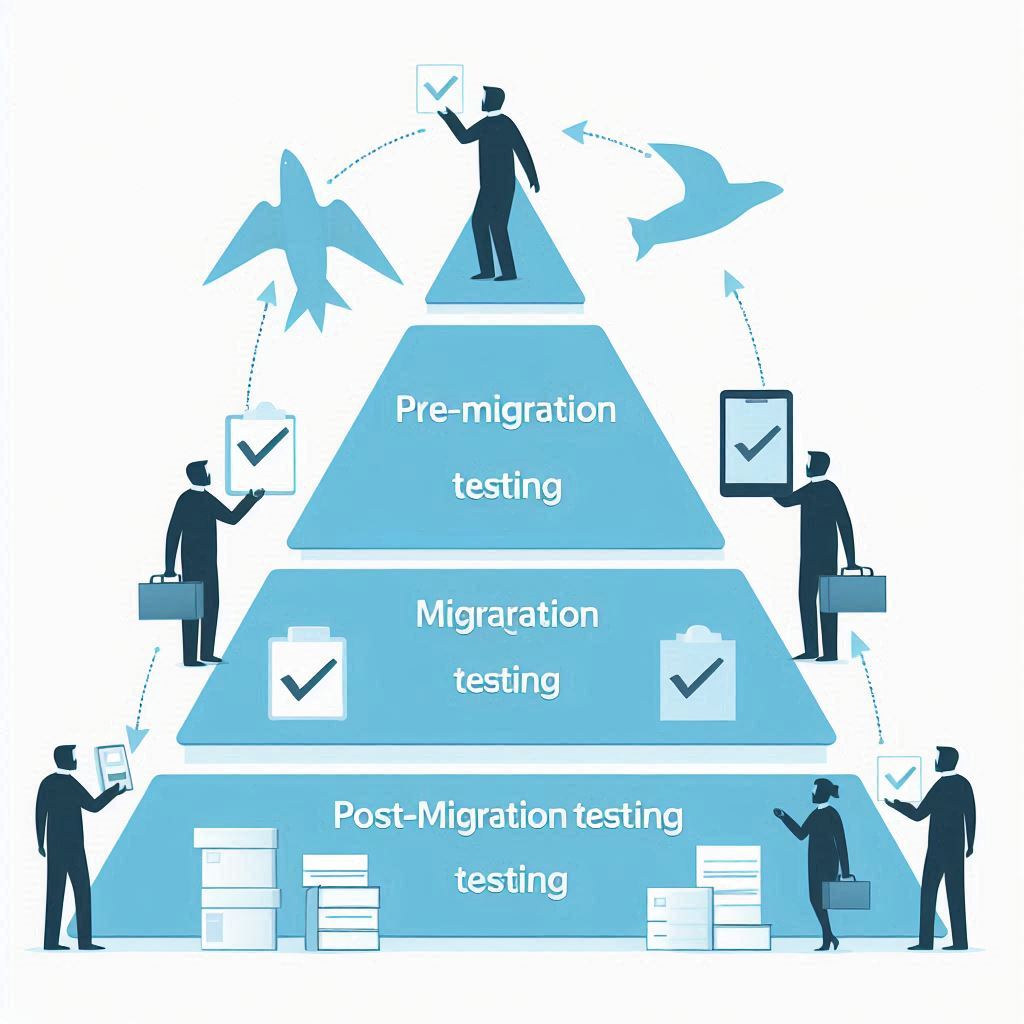
Pre-Migration testing
- Define the scope of the data migration, including data to be included, excluded, and any necessary transformations or conversions.
- Backup system data to ensure it is not affected by the migration.
- Prepare test cases, scenarios, and use cases for data migration.
- Ensure both the current and new systems comply with all security and compliance requirements.
Migration testing
- Validate the integrity, accuracy and completeness of migrated data.
- Ensure the new system functions correctly with the migrated data.
- Ensure data security and privacy during and after migration.
- Test the functionality of the new system for defects.
Post – Migration testing
- Ensure the migrated data works correctly in the new environment.
- Identify and correct any issues that may occur after migration.
- Perform regression testing to ensure all functionalities work as expected.
- Monitor system performance and stability.
Challenges of Data Migration
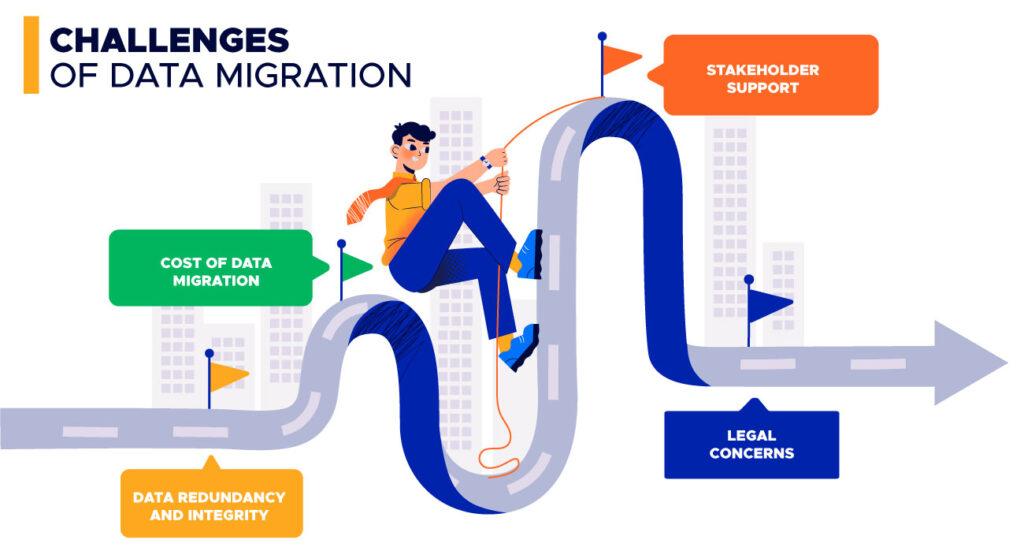
There are several challenges that come with starting a big data migrate. Some challenges include:
- Maintaining data quality and integrity.
- Avoiding data loss and corruption.
- Preventing system and application malfunctions or downtime.
- Completing testing simulations.
- Finding and training experts for your data migration team.
- Using data migration tools and resources effectively.
Best practice for data migration

- Define a clear scope and objective: Clearly outline the goals, scope, and requirements of the data migration. Evaluate which data needs to be migrated, why and how it will be used in the new system to avoid migrating unnecessary or redundant data.
- Develop a detailed project plan: Create a detailed project plan with timelines, milestones, resources, responsibilities and potential issues.
- Cleansing data before migration: cleanse the data to remove duplicates, correct inaccuracies and standardize formats.
- Risk assessment: identify potential risk such as data lost, downtime and compatibility issues.
- Check regulatory compliance requirements: Ensure compliance with data protection laws and industry regulations during migration.
Conclusion
Data migration testing is crucial to ensure the safe and accurate transfer of data between systems. By following a structured strategy that includes thorough planning, risk assessment, and comprehensive testing phases, organizations can minimize risks and ensure data integrity. Adopting best practices and involving specialized teams enhances the success of the migration, ensuring that the new system functions correctly and meets all requirements. Effective data migration testing ultimately supports seamless transitions and maintains the reliability and usability of data.
Sources
Data Migration Testing Tutorial: A Complete Guide (softwaretestinghelp.com)
Data Migration Testing – Strategy, Types and Best Practices (winwire.com)
Data Migration Testing: Advanced Approaches and Best Practices (luxequality.com)
Effective data migration testing: A comprehensive guide (techrepublic.com)Data Migration Testing | Data Migration Testing Strategy | ITechBrand.com