
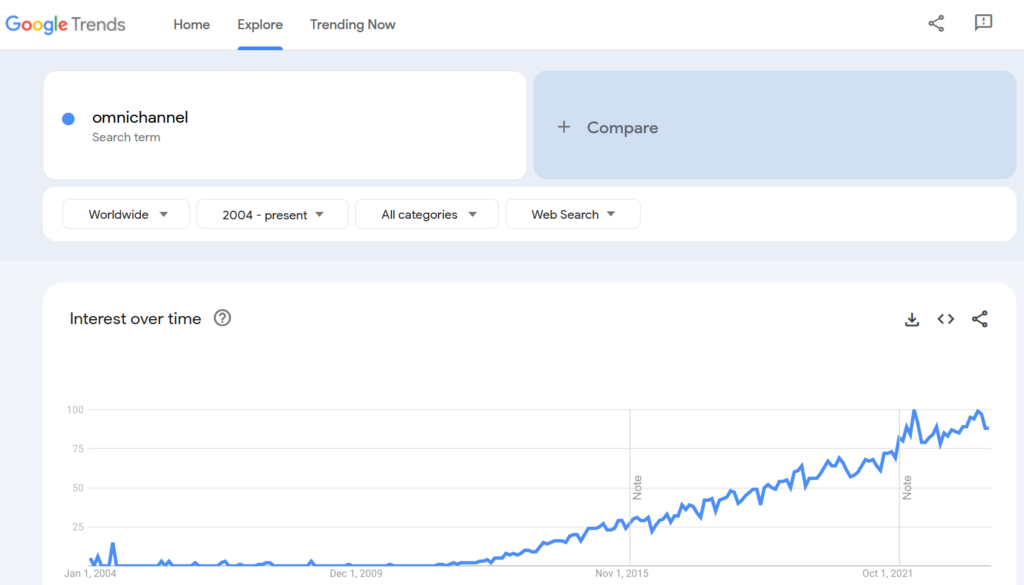
In today’s highly competitive market, whether you’re selling a cup of coffee or a luxury car, the challenge lies in standing out among a multitude of competitors. Success involves emphasizing unique qualities and values that connect with customer experience (CX). Enter the recent buzzword – Omnichannel (refer to the statistics from Google trends below), a strategic approach designed to transform customer experience. This blog will explore the concept of Omnichannel CX, examining how it operates and explaining the advantages it can offer to businesses.
Understanding the Evolution: From Single to Omnichannel
Let’s start with a journey through the evolution of customer interaction channels:
- Single Channel: In a single-channel selling approach, all selling activities occur through a singular distribution option. This basic sales operation simplifies the process by focusing on one method, whether it is online, catalog, mail-order, face-to-face selling, or traditional retail. While straightforward, this model limits reach to a single avenue.
- Multi-Channel (Multiple but Separated): To broaden opportunities, businesses adopt a multi-channel strategy, establishing different channels to reach diverse customer segments. For example, a brick-and-mortar store expands its presence online, creating distinct channels for promotion, inventory, and marketing. However, the downside is the isolated focus on each expansion, resulting in limited communication between channels. This separation leads to duplicated efforts and, in some cases, an unsatisfactory customer experience.
- Crosschannel (Multiple and Centralized): Cross-channel refers to the integration and coordination of different channels to provide a consistent experience for customers. In this approach, customer interactions are not isolated within a single channel but are centralized. For example, a customer might research a product online and make the purchase in a physical store, with the information seamlessly transferring between those channels.
- Omnichannel (Multiple and Connected & Interactive): The customer takes center stage, effortlessly connecting with every channel, and each channel can seamlessly interact with others. The omnichannel concept not only acknowledges the various channels available to consumers for transactions but also considers the diverse interactions in the shopping process that consumers engage in before, during, and after a purchase. Omnichannel isn’t solely focused on transactions; it also incorporates the needs, communications, and interactions between the customer, brand, and retailer. Therefore, it’s crucial that websites, email campaigns, social media messaging, and physical stores consistently convey messages, offers, and products.

An example of an Omnichannel CX strategy through customer journey.
- Imagine a customer named Alex who is looking to purchase a new laptop. Alex starts the shopping journey by browsing the retailer’s website on his computer at home. While exploring various options, Alex adds a laptop to the online shopping cart but decides to visit the physical store to test it on before making the final decision.
- Here’s how an omnichannel experience unfolds for Alex:
- Online Exploration: Alex begins the journey by exploring the retailer’s website. The website provides detailed information about different laptop models, including customer reviews, specifications, and available stock. After finding a suitable laptop, Alex adds the laptop to the online shopping cart.
- Saved Cart and Account Integration: The retailer’s website is equipped with account integration features. Alex, logged into the account created earlier, finds the shopping cart saved with the selected laptop. This ensures continuity and convenience, allowing Alex to resume the online shopping experience seamlessly.
- In-Store Visit: Despite finding a preferred laptop online, Alex decides to visit the physical store to test the laptop and evaluate it in person. The retailer’s physical store is equipped with technology that allows store associates to access Alex’s online shopping cart and purchase history.
- Assisted Purchase in Store: At the store, a knowledgeable associate assists Alex based on the online shopping history. The associate uses a tablet to check the saved shopping cart, understand Alex’s preferences, and provide recommendations for similar products available in the store.
- Purchase Flexibility: After try with different models, Alex decides on a different color of the laptop. The store associate seamlessly updates the shopping cart on the tablet, ensuring that the preferred item is readily available for purchase.
- Unified Checkout Experience: At the checkout counter, Alex decides to make the purchase using a combination of a gift card and a credit card. The omnichannel system integrates both online and offline payment options, creating a smooth and unified checkout experience.
- Post-Purchase Engagement: After the purchase, Alex receives a digital receipt via email. The receipt includes information about the in-store purchase and offers personalized recommendations for related products, encouraging future online engagement.
- This example illustrates how an omnichannel approach enables a seamless and integrated shopping experience for the customer, combining online and offline channels to cater to their preferences and needs at different touchpoints in the buyer’s journey. The flow below is about to visualize the journey of that process in a more complex situation for your reference.

Summary – Omnichannel CX Strategy
Omnichannel CX is a smart strategy that smoothly combines different channels and touchpoints to give customers a seamless and connected journey. Whether they’re online, in a store, or “phygital” platforms, this approach ensures a personalized experience that stays the same. Knowing that customers like to switch between channels, the omnichannel strategy aims to break down barriers and create a connected environment. At NashTech, by using technology and data, businesses can offer an all-around experience, making customers happy and loyal across all interactions. Choosing omnichannel isn’t just an option; it’s a promise to give customers a great experience and a strategic move to stay competitive. In the upcoming blogs, we’ll talk more about the ways NashTech’s Business Analyst team is making omnichannel excellence strategies work seamlessly. Stay tuned for useful tips, case studies, and insights on how your business can do well in the omnichannel era.