


Generative AI – Part 2: How Machines Learn
In the last post, we explored what Generative AI is and why it’s different from traditional AI.
Today, we’re going a step deeper: how machines actually learn. Don’t worry – no pages of math here. Instead, we’ll focus on the logic behind how AI moves from recognizing patterns to creating new content.
1. Machines Learn from Examples
Machine learning is all about learning by example rather than following strict rules.
Think back to when you learned to recognize cats as a child. Nobody handed you a checklist like:
- Has two pointy ears
- Has whiskers
- Meows
Instead, you saw lots of cats, and your brain gradually figured out the patterns.
Machines work the same way. The difference? Instead of neurons, they have mathematical functions that adjust themselves based on the data they see.

2. Supervised Learning: Learning With a Teacher
The most common type of machine learning is supervised learning. Here’s the cycle in simple terms:
- Show examples: Input data paired with the correct answer (label).
- Make a guess: The model predicts based on its current understanding.
- Check the error: Compare the guess with the correct answer.
- Adjust: Update the model to reduce mistakes next time.
Repeat this thousands or millions of times, and the model gets better at predicting.
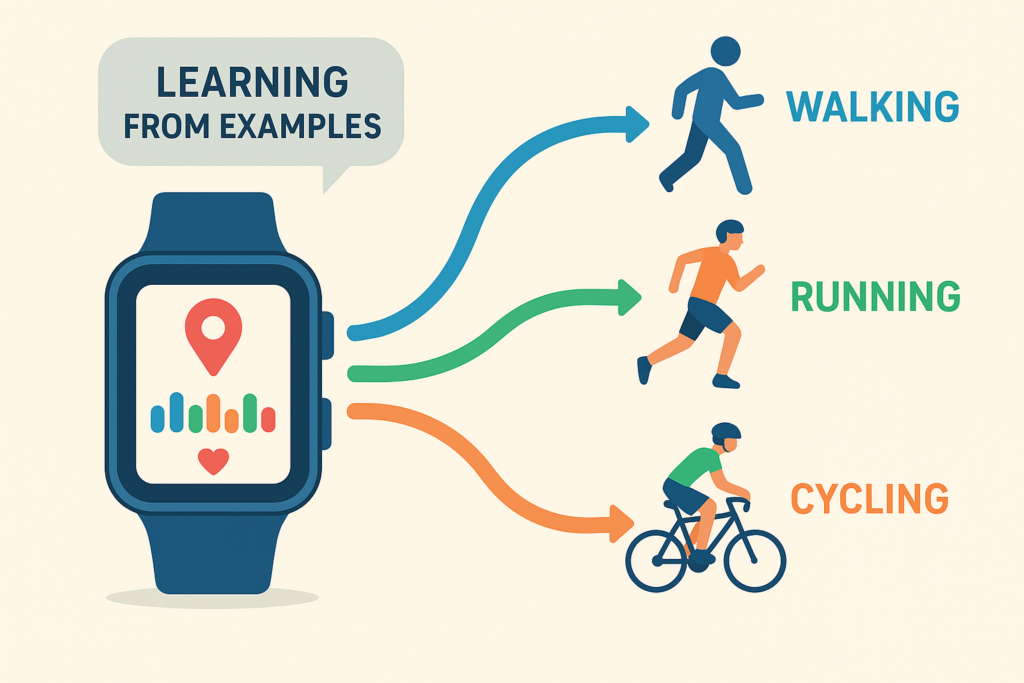
Example for developers: Your smartwatch tracks your movement. You provide labeled examples like:
- “This movement is walking”
- “This is running”
- “This is cycling”
After enough data, the watch can classify new movements it hasn’t seen before. Similarly, supervised learning is how many AI tools, from spam filters to code completion models, learn patterns from examples.
3. Beyond Labels: Unsupervised and Reinforcement Learning
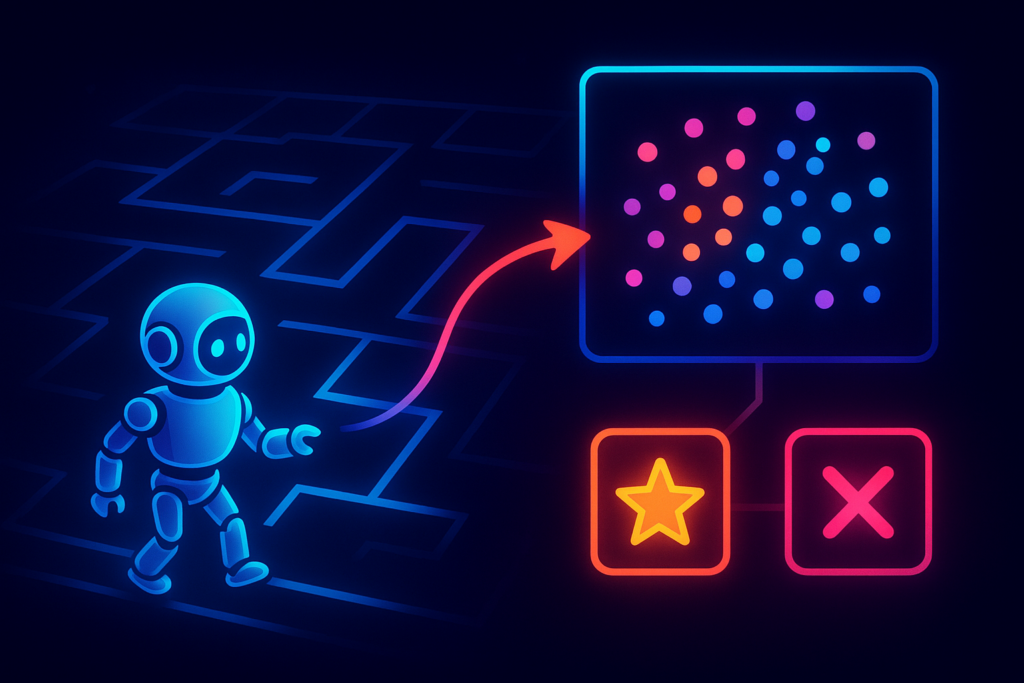
Real-world data isn’t always neatly labeled. That’s where unsupervised learning and reinforcement learning (RL) come in.
- Unsupervised learning doesn’t use labels. The AI tries to group or cluster similar data.
Example: Identifying customer segments in sales data without prior knowledge. - Reinforcement learning (RL) is trial and error. The AI receives rewards for good decisions and penalties for mistakes.
Example: Training a robot to walk or teaching AlphaGo to play Go.
Many Generative AI systems combine supervised learning with reinforcement learning. A popular method is Reinforcement Learning from Human Feedback (RLHF), which helps AI give answers that feel more helpful and human-like.

4. From Recognition to Creation
Traditional AI predicts categories or labels:
“Is this review positive or negative?”
Generative AI predicts the next piece of content:
“Given this sentence so far, what word comes next?”
By predicting the next word, image pixel, or musical note repeatedly, the AI can generate entire essays, images, or even code. Imagine it like a tiny digital brain building something new, step by step.
Developer angle: This is how tools like GitHub Copilot can suggest code lines or entire functions, learning from patterns in millions of open-source projects.
5. What’s Next
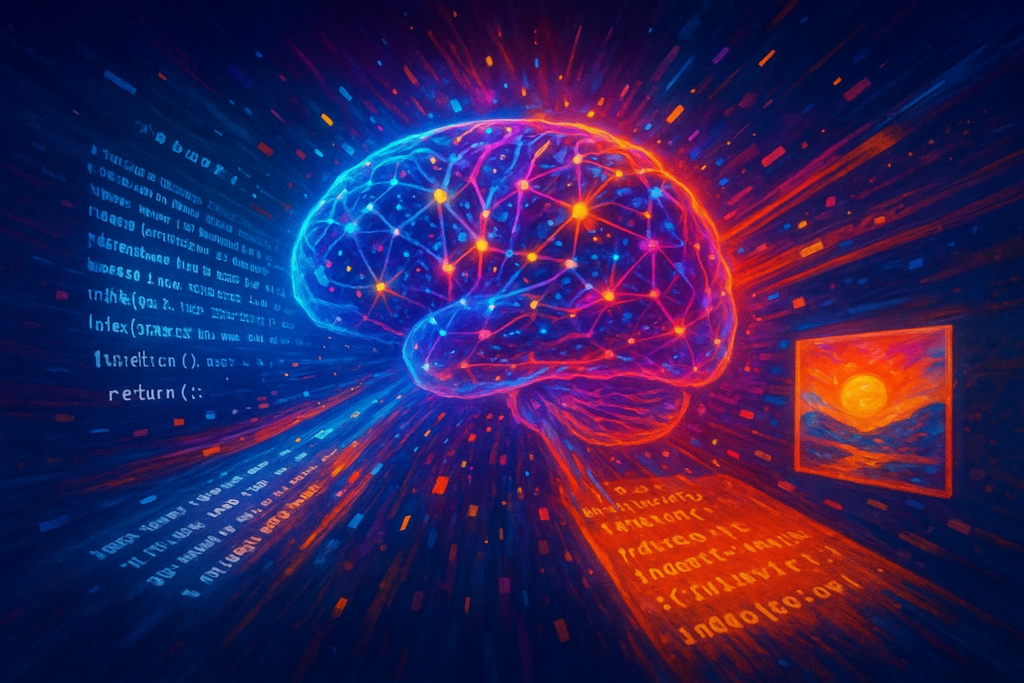
Large Language Models (LLMs) are the engines behind modern Generative AI for text and code. They learn statistical patterns from huge amounts of text and code, enabling them to predict the next token in a sequence.
In Part 3, we’ll peek under the hood of LLMs and explore the Transformer architecture — the secret sauce that lets AI remember context across an entire conversation instead of forgetting after a few words.