



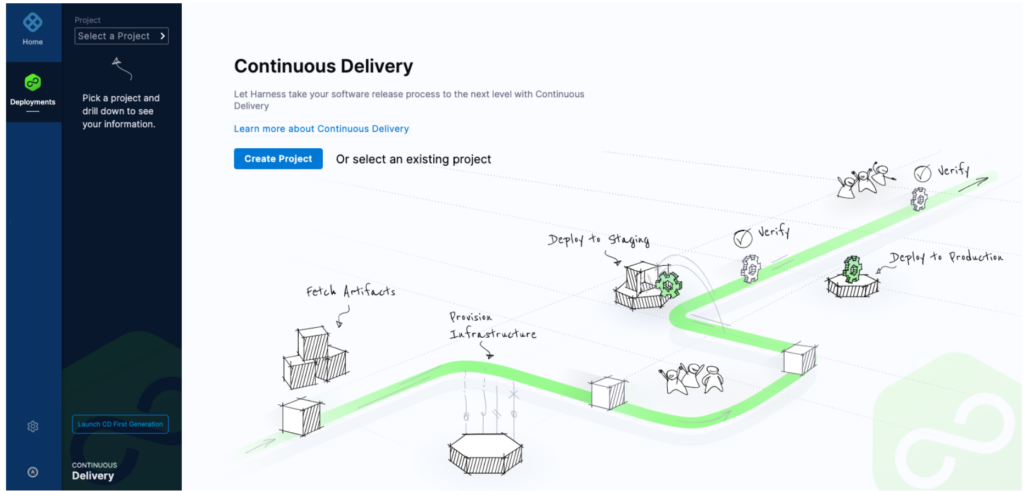
Introduction:
In the fast-paced world of software development and DevOps, efficient testing is crucial to ensure the quality, reliability, and performance of software applications. Harness is a powerful DevOps tool, has emerged as a game-changer in the domain of automated testing and continuous delivery. In this blog, we’ll delve into the world of Harness, exploring its key features, benefits, and its role in the DevOps landscape.
Understanding Harness:
Harness is a comprehensive DevOps testing and automation platform designed to streamline and automate the software delivery pipeline. It plays a pivotal role in ensuring that software applications meet performance and reliability standards. This tool primarily focuses on continuous verification, automated testing, and orchestration. Let’s take a closer look at what makes Harness an indispensable tool in the DevOps toolkit.
Key Features of Harness_Tool:
1. Continuous Verification
Continuous Verification is at the core of Harness. It enables real-time validation of software changes to catch issues early in the development process. This feature leverages machine learning to assess changes, compare them to baselines, and identify anomalies, reducing the risk of introducing defects into production.
2. Automated Testing
Harness provides robust support for various types of testing, including unit testing, integration testing, and end-to-end testing. It allows teams to automate tests, ensuring consistency and reliability. Integration with popular testing frameworks makes test creation and execution straightforward.
3. Test Orchestration
Test orchestration is crucial in complex DevOps pipelines. Harness enables the coordination and sequencing of tests, ensuring that they run at the right time and in the correct order. This capability simplifies complex testing scenarios and helps identify dependencies between tests.
4. CI/CD Integration
Harness seamlessly integrates with popular CI/CD tools, such as Jenkins, Travis CI, and CircleCI. This integration enables the automatic execution of tests at different stages of the CI/CD pipeline, allowing for early detection and resolution of issues.
5. Environment Management
Managing test environments can be a challenging task. Harness simplifies this by providing the ability to define and manage different test environments, ensuring the correct configurations and data are available for testing.
6. Logging and Reporting
Harness offers extensive logging and reporting capabilities. It allows teams to monitor and analyze test results, making it easier to track issues, review historical data, and collaborate effectively across teams.
Benefits of Harness:
Harness brings a myriad of benefits to DevOps teams, making it an indispensable tool in the software development process.
1. Increased Efficiency
By automating testing processes, it reduces manual effort, saving time and resources. This efficiency allows teams to focus on more critical tasks and accelerates the software delivery process.
2. Enhanced Quality
Automated testing ensures that software changes are rigorously validated, leading to higher-quality software. Defects are caught early, reducing the chances of issues surfacing in production.
3. Continuous Improvement
Continuous Verification allows teams to gather data and insights, facilitating continuous improvement in software development processes. It helps in identifying areas for enhancement and optimization.
4. Collaboration
Harness fosters collaboration among development, testing, and operations teams. Its reporting and logging features enable teams to work together efficiently to address issues and drive improvements.
5. Scalability
The flexibility and scalability of Harness make it suitable for both small and large organizations. It can adapt to the testing needs of complex and extensive software applications.
Conclusion
In the ever-evolving DevOps landscape, Harness emerges as a versatile tool that empowers teams to automate and streamline their testing and delivery processes. With its continuous verification, automated testing, and orchestration capabilities, it enhances software quality, reduces time-to-market, and fosters collaboration across teams. It’s a tool that is well worth considering for any organization aiming to achieve excellence in DevOps practices and software delivery.