



The web has evolved tremendously over the past decade. We’ve gone from static HTML pages to highly interactive, single-page applications powered by frameworks like React, Vue, and Svelte. While these tools revolutionized the developer experience, they also introduced a major problem: bloat.
Many websites today — even simple blogs and documentation sites — are shipping megabytes of unnecessary JavaScript to users. This slows down page loads, hurts SEO, and frustrates visitors, especially on mobile or slow connections.
Enter Astro — a modern web framework designed to take us back to what made the web great: fast, content-first experiences.
Astro’s philosophy is simple yet radical:
“Build faster websites with less client-side JavaScript.”
Let’s explore how Astro achieves this — and why it’s quickly becoming a favorite among developers who care about speed, flexibility, and simplicity.

What Exactly Is Astro?
Astro is a front-end meta-framework created by the team at The Astro Technology Company (formerly Snowpack). It’s designed to build content-rich, performance-optimized websites — such as blogs, documentation, portfolios, and marketing sites.
Unlike traditional JavaScript frameworks, Astro doesn’t aim to make everything interactive by default. Instead, it focuses on server-first rendering and HTML-first output, ensuring that users receive a fully-rendered page instantly — without waiting for JavaScript to load and hydrate.
The Core Concept: Ship Less JavaScript
Astro follows a key principle:
“The fastest site is the one that ships the least JavaScript.”
By default, Astro renders everything on the server and sends static HTML to the browser. Only the parts of your site that truly need interactivity — like carousels, dropdown menus, or search bars — receive JavaScript.
This approach drastically reduces the amount of code sent to the client and eliminates unnecessary re-renders.
How Astro Works Under the Hood
Astro’s architecture is based on what’s known as the Islands Architecture — a powerful concept that merges static site generation (SSG) with selective interactivity.
Islands of Interactivity
Imagine your website as an island chain. Most of it — text, images, static components — is just HTML. But scattered across that static landscape are interactive islands — independent components that run client-side JavaScript only where necessary.
For example:
---
import Header from '../components/Header.astro'
import Gallery from '../components/Gallery.jsx'
import Footer from '../components/Footer.astro'
---

<Header />
<Gallery client:load />
<Footer />
In this code:
<Header>and<Footer>are rendered statically on the server.<Gallery>is hydrated only when needed (client:loadtells Astro to hydrate that component in the browser).
Astro gives you several hydration directives, including:
client:load– Hydrate as soon as the page loads.client:idle– Wait until the browser is idle.client:visible– Hydrate only when the component enters the viewport.client:media– Hydrate based on media queries.
This granular control gives you unmatched performance tuning power.
Framework-Agnostic by Design
Astro is framework-agnostic, meaning you can use components from React, Vue, Svelte, SolidJS, Preact, Lit, and even plain HTML — all in the same project.
That’s right — no lock-in.
This interoperability allows teams to reuse existing components or gradually migrate from other ecosystems without rewriting everything.
Example:
---
import Navbar from '../components/Navbar.jsx'     // React
import Hero from '../components/Hero.svelte'      // Svelte
import Footer from '../components/Footer.vue'     // Vue
---

<Navbar client:idle />
<Hero />
<Footer />
Astro seamlessly compiles and bundles these components into a single, unified build.
Astro’s Built-In Features for Content-Driven Sites
Astro isn’t just about performance — it’s also built around content creation. Whether you’re building a blog, a marketing page, or technical documentation, Astro provides everything you need out of the box.
Markdown and MDX Support
You can write your content in Markdown or MDX (Markdown + React components). Astro automatically converts these files into pages or reusable components.
Example:
---
import Layout from '../layouts/BaseLayout.astro'
import { getCollection } from 'astro:content'
const posts = await getCollection('blog')
---

<Layout title="My Blog">
  <ul>
    {posts.map(post => (
      <li><a href={post.slug}>{post.data.title}</a></li>
    ))}
  </ul>
</Layout>
Content Collections API
Astro 2.0 introduced the Content Collections API, making content management type-safe and structured.
You can define content schemas using TypeScript, ensuring consistency and reducing runtime errors.
// src/content/config.ts
import { defineCollection, z } from 'astro:content'

const blog = defineCollection({
  schema: z.object({
    title: z.string(),
    date: z.date(),
    description: z.string(),
    tags: z.array(z.string())
  })
})

export const collections = { blog }
This brings CMS-like organization directly into your codebase.
Performance That Speaks for Itself
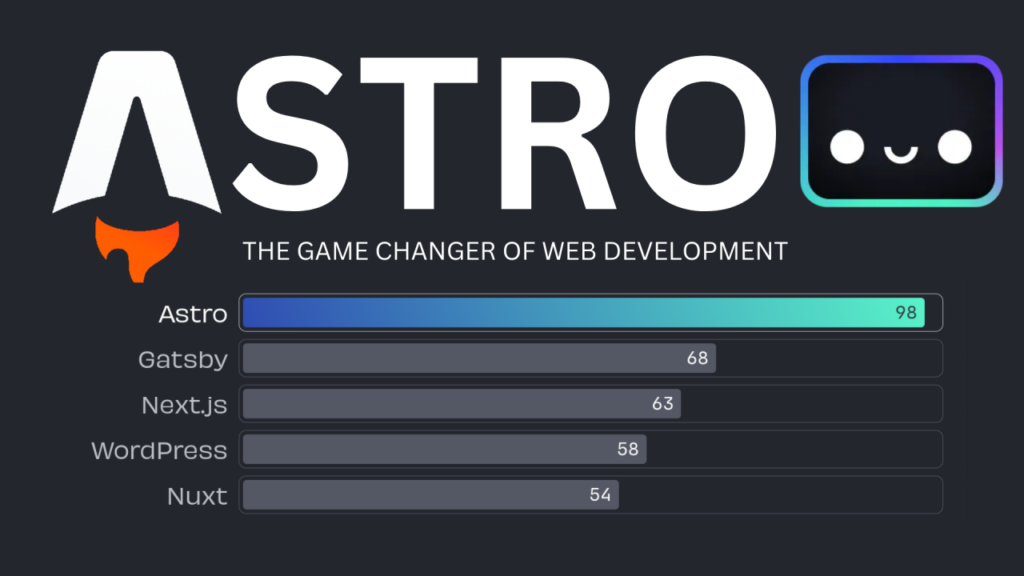
Astro sites are blazing fast because of one simple fact: they ship almost zero JavaScript by default.
Here’s how that impacts real-world performance:
| Metric | Astro Average | Traditional SPA |
|---|---|---|
| Time to First Byte (TTFB) | < 100ms | 300–800ms |
| First Contentful Paint | < 1s | 2–4s |
| JavaScript Bundle Size | ~10KB | 300KB+ |
| Lighthouse Performance Score | 98–100 | 70–90 |
In practical terms, Astro websites load almost instantly, even on slow 3G networks. That translates into better user retention, accessibility, and SEO ranking.
Integrations and Ecosystem
Astro offers a rich ecosystem of official and community integrations that make setup effortless.
You can add features with a single command:
npx astro add tailwind
npx astro add sitemap
npx astro add mdx
npx astro add vercel
Available integrations include:
- Styling: TailwindCSS, Sass, UnoCSS
- CMS: Contentful, Sanity, Strapi, Notion, WordPress
- Deployment: Vercel, Netlify, Cloudflare, Deno
- Analytics: Google Analytics, Plausible, Umami
- UI frameworks: React, Vue, Svelte, Solid, Preact
Astro’s plugin system is modular and easy to extend, so you can customize your build pipeline without complexity.
Developer Experience
Astro’s developer experience (DX) is top-tier.
It includes:
- Hot Module Reloading (HMR) for instant updates.
- Built-in TypeScript support.
- File-based routing (
src/pages/about.astro→/about). - Partial builds and incremental hydration.
- Zero-config static deployment to Vercel, Netlify, or GitHub Pages.
Developers often describe Astro projects as “fun to build again” — simple, fast, and free of boilerplate.
Who Should Use Astro?
Astro is perfect for:
- Content-focused websites: blogs, documentation, news sites.
- Marketing and landing pages needing top performance and SEO.
- Portfolios and personal sites built for long-term stability.
- Agencies and startups delivering multiple microsites efficiently.
However, Astro may not be ideal for:
- Heavy web applications (e.g., dashboards, SaaS tools) that rely on continuous real-time interactivity.
For those cases, frameworks like Next.js, Remix, or SolidStart may still be better fits.
Real-World Success Stories
Many organizations have adopted Astro and seen immediate performance improvements:
- The Guardian Engineering Blog reduced load time by 67%.
- Skypack.dev improved Lighthouse scores to a perfect 100.
- Astro Docs themselves are built using Astro — serving thousands of daily visitors seamlessly.
These case studies show that Astro isn’t just theory — it’s production-proven.
Getting Started with Astro
Ready to try Astro yourself? You can get started in less than a minute:
# 1. Create a new project
npm create astro@latest my-astro-site

# 2. Move into your project
cd my-astro-site

# 3. Install dependencies
npm install

# 4. Start the dev server
npm run dev
Your site will be available at http://localhost:4321 — and it’s blazing fast from the start.
Conclusion: The Future of the Web Is Lighter
Astro represents a paradigm shift in modern web development.
It challenges the “JavaScript-heavy” mindset of the past decade and returns to the web’s original strengths: speed, accessibility, and content-first design.
By combining:
- Server-side rendering,
- Islands of interactivity,
- Framework flexibility, and
- Exceptional developer experience,
Astro empowers developers to build websites that are simpler, faster, and future-ready.
If you care about performance, SEO, and maintainability — Astro is the framework you’ll want to explore next.
🌍 Learn more at: https://astro.build