


Image from https://www.headspin.io/blog/regression-testing-a-complete-guide
In today’s fast-paced software development world, the need for high-quality, stable, and reliable software is greater than ever. As technology evolves and applications become more complex, developers frequently add new features, update code, and improve performance. However, these changes can introduce unexpected issues.
Think of it like a Domino game: each new piece or move risks disrupting the entire setup. Similarly, changes in software can cause problems in other parts of the application. This is why regular checks are crucial, and that’s where regression testing comes in.
Regression testing acts as a safety net, detecting issues or bugs that may arise after changes. It’s a vital part of the software testing process, ensuring the application remains reliable and performs as expected, even as it evolves.
In this blog, we will explore what regression testing is, why it’s important, its types, benefits, challenges, and how to perform it effectively.
What is Regression Testing?
Regression testing is a type of software testing that involves re-running previously executed test cases on a new version of the software to ensure that recent changes, such as code modifications, bug fixes, or new feature additions, have not adversely impacted the existing functionality. The goal is to detect any unintended side effects or bugs introduced by the changes, thereby maintaining the software’s overall quality and stability.
Unlike other types of testing that focus on specific areas or features, regression testing takes a holistic approach. It ensures that the entire application, including previously tested components, continues to work as expected after any modification. This process is critical in identifying issues that may not be immediately apparent but could have far-reaching consequences if left unchecked.
Why is Regression Testing Important?
Regression testing is a critical component of the software development process, offering numerous benefits. Based on my experience, I’ve identified several key reasons why it is crucial software development :
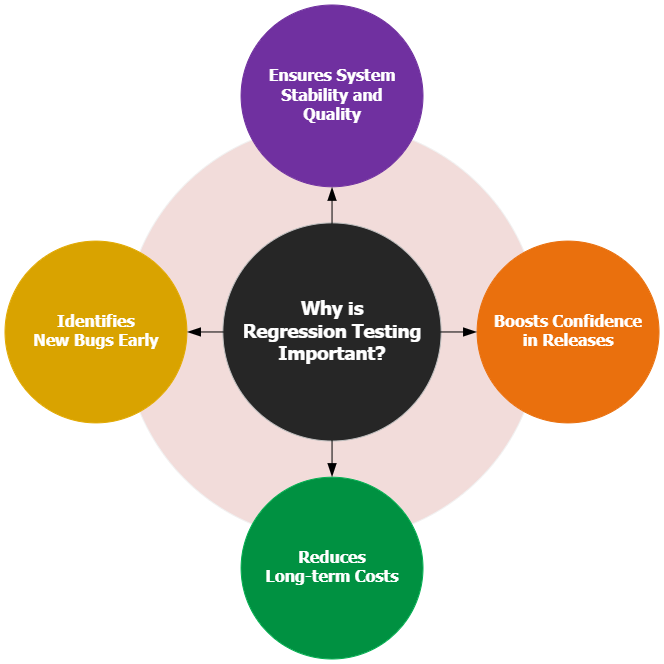
Maintain Software Stability and Quality
Regression testing ensures software stability by detecting issues from code changes early, preventing unintended consequences, and maintaining reliability. It also preserves software quality by verifying that existing functionalities work correctly, preventing degradation as the application evolves.
Identifies New Bugs Early
Regression testing reduces the risk of new bugs by thoroughly checking all functionalities after changes, especially in complex systems where even small tweaks can have unexpected effects.
Reduces Long-term Costs
Although Regression Testing requires time and resources initially, it becomes cost-effective in the long run. Early defect detection is cheaper than post-deployment fixes, helping avoid costly issues and ensuring high-quality software.
Boosts confidence in releases
egression testing boosts confidence in the development team and stakeholders by ensuring the software functions correctly after each change. This confidence is crucial for releasing new features, updates, or patches, ensuring stability, and reducing the risk of production issues.
When Should Regression Testing be Performed, and What Type Should be Used?
QA should perform regression testing whenever there is a change or update to the codebase to ensure existing functionality remains unaffected. Additionally, selecting the appropriate type of regression testing will lead to more effective testing outcomes. Here are the situations where you should conduct regression testing:

Depending on the context and scope of changes in each project, the QC team selects the most appropriate type of regression testing. Based on my experience, two commonly employed methods are Partial Regression Testing and Complete Regression Testing. Additionally, the QC team may also consider other approaches like Corrective Regression Testing, Retest-All Regression Testing, Selective Regression Testing, Progressive Regression Testing, and Unit Regression Testing, depending on the specific context and purpose.
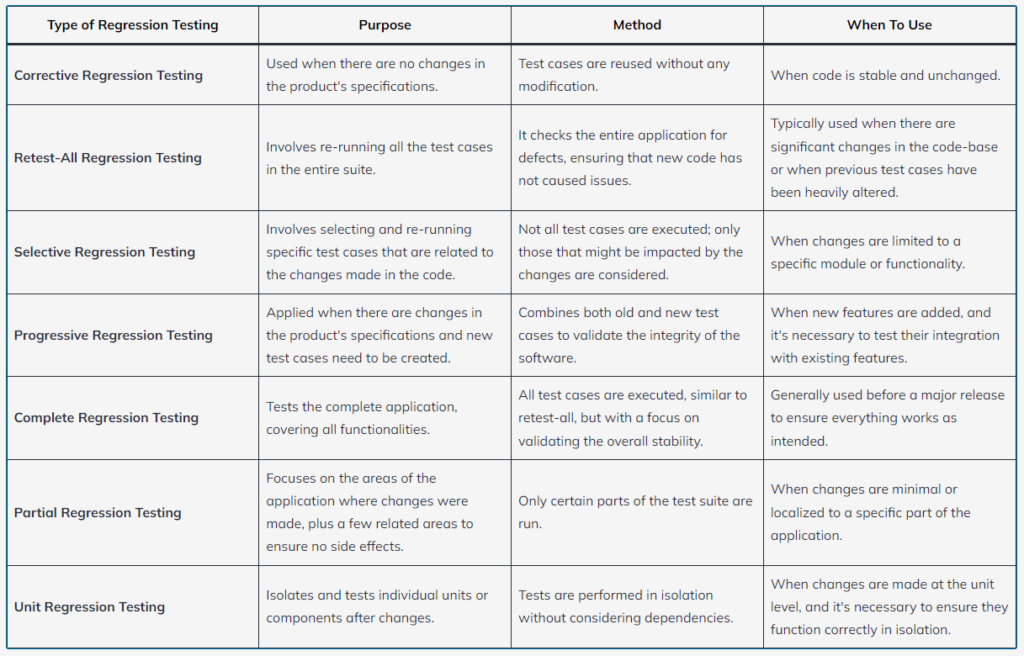
These types of regression testing help ensure that both new and existing code work together harmoniously after any updates or changes.
Benefits and Challenges of Regression Testing
Regression testing provides significant benefits in the software development process. However, it also presents several challenges that must address:
| Benefits | Challenges |
|---|---|
| Improved Test Coverage: Ensures all parts of the application, including those not directly changed, are tested, helping to catch potential issues. Risk Mitigation: Continuously tests after every change, reducing the risk of defects reaching production and affecting users. Better Resource Allocation: Automation frees up teams to focus on more complex testing and new feature development. Enhanced Collaboration: Promotes collaboration among teams by providing a shared understanding of the software’s quality and stability. | Time-Consuming: Running extensive test suites, especially in large applications, can slow down development. Resource-Intensive: Requires significant computing power, storage, and manpower. Automation helps but needs expertise and maintenance. Test Suite Maintenance: Test suites can become bloated with obsolete or redundant cases, requiring regular upkeep. Flaky Tests: Inconsistent test results due to issues like timing or environment configurations can undermine reliability. |
Tips to Perform Regression Testing Effectively
Based on my experience in Regression Testing, I have some tips to prepare and perform testing better:
- Understand the context and purpose of changes: Clearly identify the specific context and objectives of the changes in the system.
- Estimate effort required for regression testing: Assess the resources and time needed to effectively execute regression testing.
- Select the appropriate regression testing type: Choose the most suitable type of regression testing based on the nature of the changes.
- Prepare an effective test suite: Utilize relevant test cases from user stories or create new ones to cover end-to-end workflows.
- Choose Environments and Platforms: Based on the testing scope, the QC team determines the necessary environments, platforms, and browsers required for test execution. This involves running tests across diverse environments, browsers, and devices to ensure consistent functionality and performance across all configurations.
- Use Realistic Test Data (special UAT environment): Employ diverse and realistic test data to cover a wide range of scenarios and edge cases, ensuring comprehensive test coverage.
- Review and Improve: Regularly evaluate and refine the regression testing strategy based on feedback and test results to continuously enhance its effectiveness and efficiency.
Conclusion
In conclusion, regression testing is vital for maintaining software stability and quality as it evolves. By identifying and fixing bugs early and supporting continuous integration, it helps ensure successful software delivery. While challenging, best practices like automation and test suite maintenance can maximize its benefits. For any organization focused on high-quality software, prioritizing regression testing is essential.
Refer to: https://www.headspin.io/blog/regression-testing-a-complete-guide and https://blog.nashtechglobal.com/regression-testing-a-comprehensive-guide/