


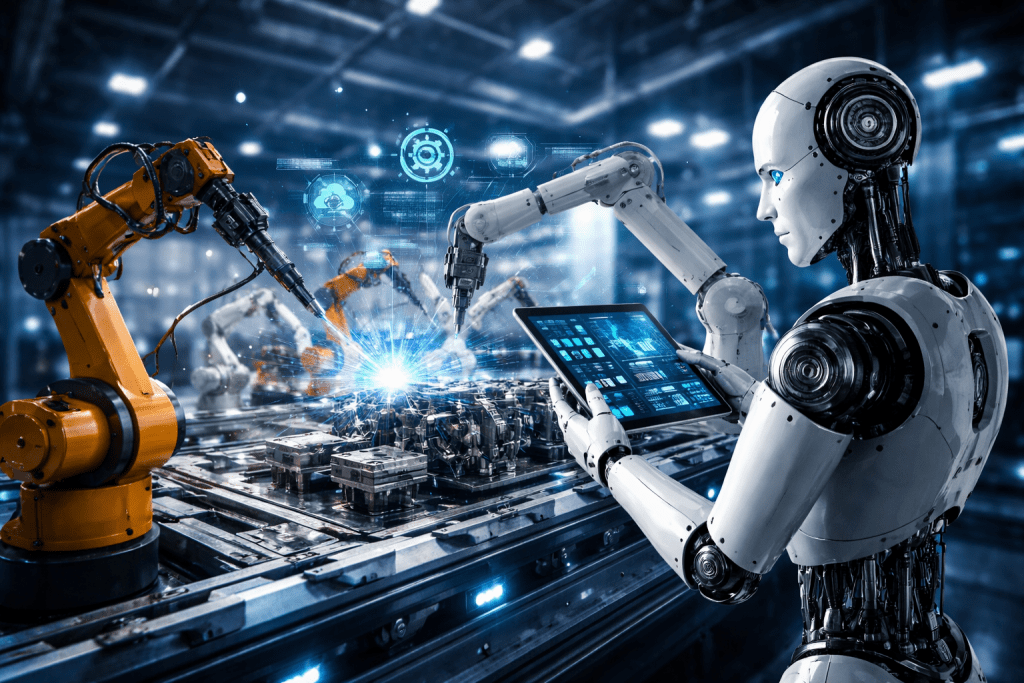
Introduction to Robotics and Automation
Robotics and Automation are transforming the way businesses operate across multiple industries. From manufacturing plants and warehouses to healthcare facilities and corporate offices, intelligent machines and automated systems are driving higher efficiency, accuracy, and scalability. As technology continues to evolve, organizations are adopting robotics and automation not to replace humans, but to enhance productivity, innovation, and operational excellence.
What Is Intelligent Automation and Robotics?
Robotics is the field of designing, building, and using programmable machines (robots) that can perform tasks automatically or semi-automatically with precision and consistency.
Automation refers to the use of software, machines, and control systems to execute repetitive or rule-based processes with minimal human intervention.
When robotics and automation work together, they create smart systems capable of sensing their environment, making decisions, and taking action efficiently.
Why Intelligent Automation and Robotics Matter for Businesses
1. Increased Efficiency
Automated systems operate continuously with high speed and consistency, significantly reducing delays and improving overall productivity.
2. Cost Reduction
Although automation requires an initial investment, it reduces long-term costs by minimizing errors, operational waste, and dependence on manual labor.
3. Improved Quality & Accuracy
Robots deliver high precision and repeatability, ensuring consistent product quality—especially important in manufacturing, healthcare, and electronics industries.
4. Enhanced Workplace Safety
Robotics and automation reduce human exposure to hazardous, heavy, or repetitive tasks, leading to fewer workplace injuries and safer environments.
5. Business Scalability
Automation allows organizations to scale operations rapidly without a proportional increase in workforce, making growth more sustainable.
Key Areas Where Robotics are Used
1. Manufacturing
- Automated assembly lines
- Robotic quality inspection
- Welding, packaging, and material handling
2. Healthcare
- Robotic-assisted surgery
- Automated diagnostics and imaging
- Medication dispensing systems
3. Logistics & Warehousing
- Automated picking and sorting systems
- Autonomous mobile robots (AMRs)
- Inventory tracking and management
4. Agriculture and Farming
- Automated harvesting systems
- Precision farming solutions
- Crop monitoring using robots and drones
5. IT & Business Operations
- Robotic Process Automation (RPA)
- Automated reporting and analytics
- Workflow and process automation
Robotics + AI: The Next Evolution
When robotics is combined with Artificial Intelligence (AI) and Machine Learning, systems become more intelligent and adaptive. AI-powered robots can:
- Learn from data and experience
- Adapt to changing environments
- Make intelligent, real-time decisions
This convergence enables smart factories, autonomous vehicles, predictive maintenance, and intelligent supply chains.
Future of Robotics and Automation
The future of robotics and automation is focused on innovation and accessibility. Key trends include:
- Collaborative robots (Cobots) working safely alongside humans
- Fully autonomous supply chains and warehouses
- AI-powered decision-making systems
- Growing adoption by small and medium-sized businesses
Automation technologies are becoming more affordable, intelligent, and easier to implement
Conclusion
Robotics and Automation are no longer optional technologies—they are essential for organizations aiming to stay competitive in a rapidly changing digital world. Businesses that invest in robotics and automation today will achieve higher efficiency, better quality, improved safety, and long-term sustainable growth.
For more Tech related blogs refer to Nashtech blogs