


Rust and C++ are two powerful, high-performance systems programming languages, but they differ significantly in their approach to memory safety and ease of use. While C++ has been the industry standard for decades, Rust is quickly gaining popularity due to its modern design and focus on safety without sacrificing performance.
Memory Management
C++ offers manual memory management with features like pointers and smart pointers, which can lead to memory leaks or undefined behavior if not handled correctly. Rust, on the other hand, introduces an innovative ownership and borrowing model that guarantees memory safety at compile time. This eliminates common issues like null pointer dereferencing and data races, making it easier to write robust, error-free code.
In C++, memory management is manual. Consider the following C++ code: Here, accessing ptr after deletion leads to undefined behaviour and can crash the program. C++ gives developers control but also opens the door to memory leaks and segmentation faults.
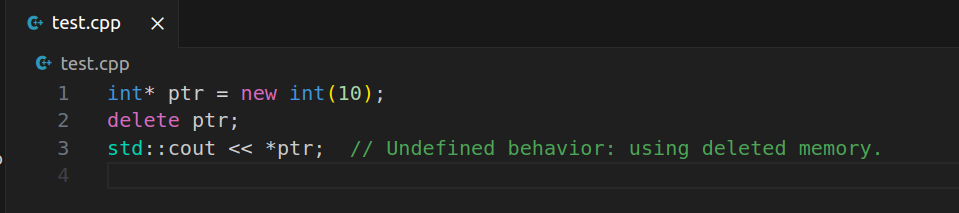
In Rust, this type of error is impossible. The ownership model ensures that memory is managed automatically: Rust prevents accessing x after it’s dropped. The compiler guarantees memory safety without needing manual intervention.
Performance
Both languages are highly efficient, but Rust’s strict compile-time checks come with almost no runtime cost. Rust is designed to be as fast as C++ while ensuring safety. standard for both languages often show similar performance, with C++ sometimes having an edge due to its maturity and optimizations in specific areas. However, Rust’s zero-cost abstractions mean it often catches up, offering the same performance without the risk of unsafe memory access.
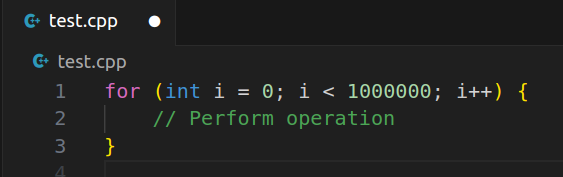
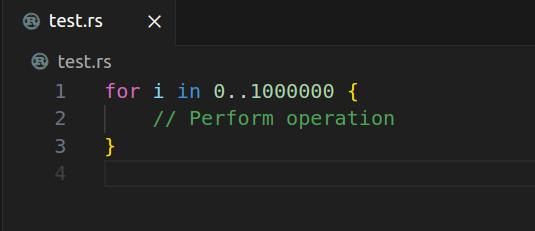
Both languages are comparable in performance. Here’s an example comparing loop performance in Rust and C++:
In both cases, the generated machine code is highly optimized, and the performance is similar. However, Rust enforces stricter safety rules without affecting runtime performance, thanks to its zero-cost abstractions.
Concurrency
Rust makes writing safe, concurrent code easier. In C++, you can use threads, but you have to manually make sure data is safe to use in multiple threads, which can lead to errors. In Rust, the compiler ensures that data races (where two threads try to access the same data at once) are prevented automatically:
Rust is a safer option for memory management and concurrency, without losing speed. C++ is still great for fine control, but Rust simplifies safety and debugging, making it ideal for modern development.

For more Tech related blogs refer to Nashtech blogs