


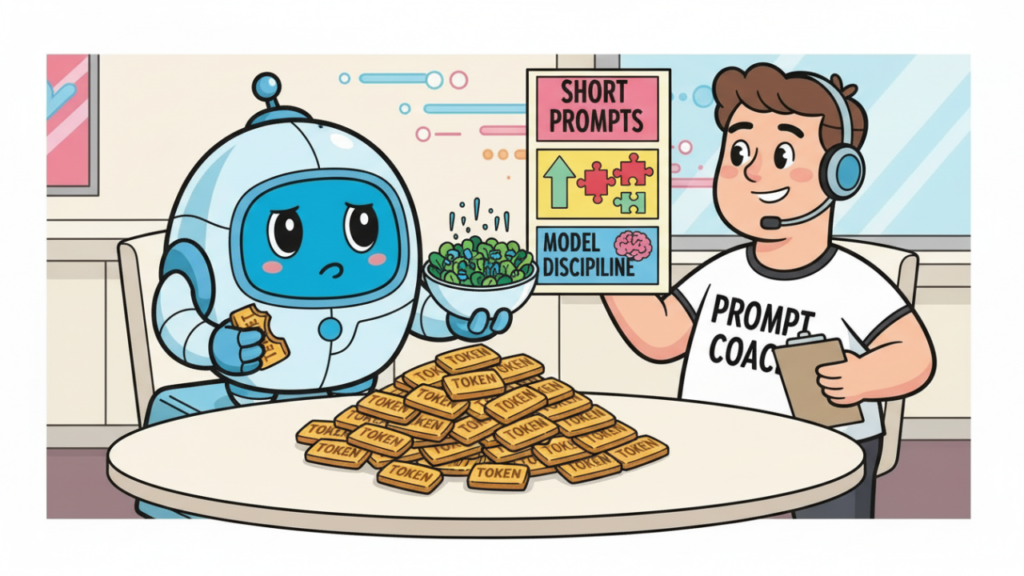
Every AI query has a hidden price tag — tokens. For building AI-driven products, controlling token usage means lower cost, faster performance, and better scalability.
Here are the 5 most effective strategies to optimize token burn without losing intelligence
Make Prompts Short and Focused
What to do: Be direct. Remove filler phrases and extra context that don’t change meaning.
Before:
“Please analyze this property in great depth and include tokenization risk, ROI, and investor details.”
After:
“Analyze property ROI and tokenization risk.”
Result: −30% tokens, same outcome.
Use Structured Data Instead of Long Text
What to do: Send concise, structured inputs (like JSON) instead of descriptive paragraphs.
Example:
json
{"address": "123 Main St", "value": 420000, "beds": 4, "baths": 3}That’s cleaner, cheaper, and easier for models to process — especially in property or financial apps where data is consistent.
Result: −40–60% token reduction per API call.
Offload Logic and Computation to Code
What to do: Let your backend or script handle math, parsing, and data formatting. Use the model for reasoning, not repetitive calculation.
Example:
python
roi = (income - expenses) / valueThen prompt:
“Summarize ROI results and highlight investor insights.”
Result: −15–30% fewer tokens; faster responses.
Choose the Right Model for the Job
What to do: Not every task needs GPT‑5.
- Use smaller models (GPT‑4 mini, Claude Haiku) for classification or summaries.
- Reserve larger models for reasoning, long text generation, or investor reporting.
Result: Often a 50%+ drop in cost with similar accuracy.
Monitor, Measure, and Iterate
What to do: Track token usage per endpoint or feature. Identify the top 10 most expensive prompts — optimize or rewrite them first.
Example: Switch verbose “write a detailed report” calls into controlled templates like
“Generate a structured 3‑section investor summary.”
Result: Up to 25% additional savings through ongoing refinement.
Final Takeaway
By applying these five strategies, you can transform your AI workflow from expensive to efficient — cutting operational costs from roughly 20% all the way up to 40%, while maintaining the same intelligence, performance, and business impact.
In a world where every token counts, efficiency isn’t just a saving — it’s your competitive edge.