


Introduction
Leveraging Simulation in Machine Learning, AWS DeepRacer presents a contemporary method for building your Reinforcement Learning model by incorporating simulation. Rather than undertaking complex procedures to develop an RL model, you can seamlessly harness a virtual environment to interact with an object or, more specifically, a player, allowing them to execute actions aligned with the environment’s objectives. This approach effectively captures the essence of RL, making the process more straightforward and accessible.
Initially, it was designed to train an RL model for autonomous tasks, in which the model interacts with a virtual car and responds appropriately to stay on the correct path. This is how we are developing an RL model to make decisions, and a correct decision is rewarded by the environment, aiding the model in learning whether it has made the right decision or not with greater precision. Since we are talking about a smart way of training our RL Model, we can also take a look at other tools that helps in our AI journey.

Understanding the Mechanism
Employing simulation in machine learning, AWS DeepRacer is a miniature self-driving race car operating at a 1/18th scale, purpose-built for hands-on exploration of machine learning. Its fundamental approach involves reinforcement learning, a subset of machine learning in which an agent refines decision-making by receiving feedback as rewards or penalties. Running on AWS RoboMaker, the model undergoes training to navigate a virtual track through leveraging simulation in machine learning.
Iterative Learning
Unlike traditional methods that rely on predefined algorithms, AWS DeepRacer leverages the power of iterative learning. The model continuously improves its performance through trial and error, adapting to evolving track conditions and challenges.
Adaptability
AWS DeepRacer excels in adaptability. The model can navigate various tracks, each presenting unique challenges. This adaptability mirrors the flexibility required in real-world applications, where conditions are dynamic and unpredictable.
Scalability
The cloud-based nature of AWS DeepRacer allows for scalable and efficient training. Multiple models can be trained simultaneously, accelerating the learning process. This scalability is a significant advantage over traditional methods that may face limitations in computational resources.
Revolutionizing Everyday Robotics [Utilizing Simulations in ML]
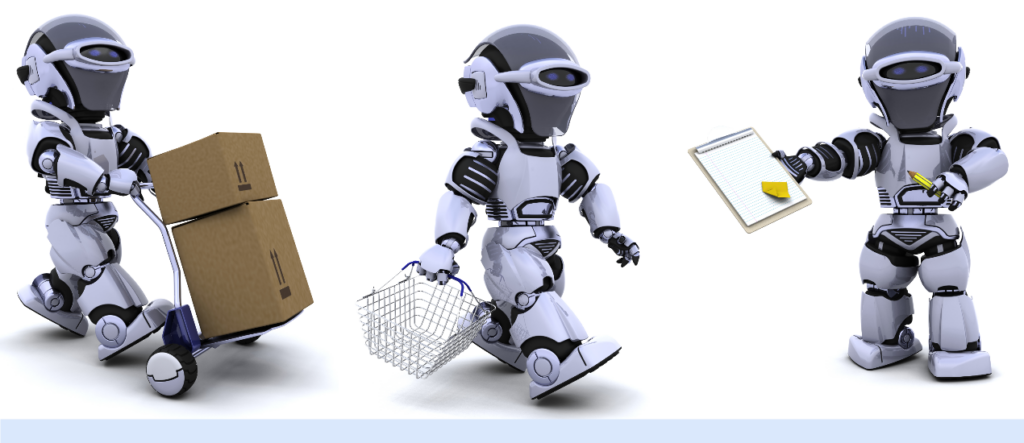
Imagine applying the same learning architecture used in AWS DeepRacer technology to train a robot for everyday tasks. It’s remarkable that instead of focusing on a car, we could employ a fully rigged model. Picture interacting with it as if playing a game teaching the robot not only how to navigate its environment but also how to replicate the various tasks a human performs in their daily life.
Conclusion
In summary, the data presented underscores the inventive features and benefits of AWS DeepRacer, a compact self-driving race car crafted for interactive exploration of machine learning. Employing reinforcement learning [Incorporating Simulated Environments in ML], the technology prioritizes iterative learning, the ability to navigate diverse tracks, and scalability facilitated by cloud-based training.
AWS DeepRacer’s possibilities transcend its original purpose of autonomous car training, envisioning a broader impact by applying its learning architecture to transform everyday robotics. This approach facilitates the creation of dynamic and responsive models. The information underscores the distinctive qualities that distinguish AWS DeepRacer in the domains of machine learning and robotics.
Visuals Credits
- Image by pikisuperstar on Freepik
- Image by kjpargeter on Freepik