


Software testing ensures applications work correctly, reliably, and smoothly for users. But as software grows more complex and release cycles faster, traditional testing methods are being challenged by AI-powered testing solutions. This blog breaks down both approaches, helping us determine which testing strategy aligns best with our business goals.
🌱 1. What Is Traditional Testing?
1.1. What is Traditional Testing?
Traditional software testing includes:
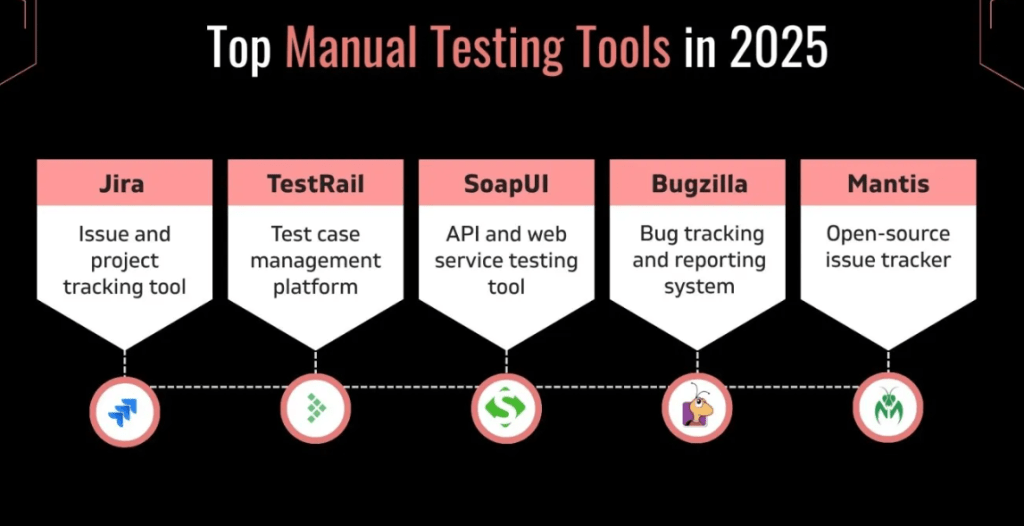
- Manual testing – Human testers run test cases by hand.
- Scripted automated testing – Test scripts written with tools like Selenium or JUnit execute predefined checks.
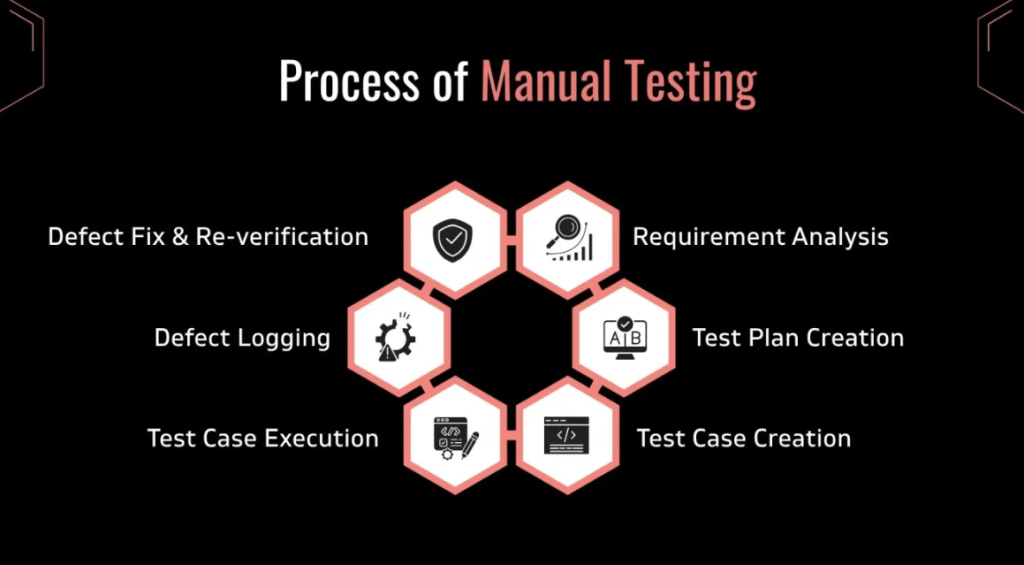
Traditionally, testing was done after coding was completed. Human testers would check features line by line. As software matured, automation tools helped reduce repetitive tasks, but testers still had to write and maintain scripts.
📌 1.2. Key Characteristics:
- Manual execution of test cases by human testers
- QA specialists write and maintain scripted tests (e.g., Selenium, JUnit)
- Relies on human judgment for exploratory and UI usability tests
- Involves techniques like black-box, white-box, regression and risk-based testing
- Test planning, documentation, and execution heavily guided by human insight
📊 1.3. Pros of Traditional Testing
Traditional software testing offers precision and control, especially for usability, compliance, and exploratory testing tasks. It remains vital in QA strategies where human intuition, UI validation, and manual verification are irreplaceable.
Let’s look at the strengths of traditional software testing and why it matters:
| Advantage | Why It Matters |
|---|---|
| Human insight | Essential for usability, UX, and business logic issues that machines can’t judge well. |
| Flexible exploratory testing | Humans can explore real-world behavior without rigid scripts. |
| Proven tools & practices | Long history, strong tooling ecosystem, and well-established standards. |
🚫 1.4. Cons of Traditional Testing
| Limitation | Impact |
|---|---|
| Slow execution | Manual and scripted tests take longer, especially for large suites. |
| Hard to scale | More test cases mean more resources, time, and maintenance. |
| Human errors | Fatigue and inconsistent execution can cause oversights. |
In short, traditional testing is still valuable, especially for tasks where human intuition and judgment are irreplaceable — but it increasingly struggles with speed and scale in modern development environments.
🤖 2. What Is AI-Powered Testing?
2.1. What Is AI-Powered Testing?
AI testing uses machine learning (ML), predictive analytics, and intelligent automation to enhance and sometimes automate QA efforts:
- AI can generate test cases automatically based on requirements and user data
- Self-healing automation adapts when UI changes, reducing maintenance
- Defect prediction and prioritization — AI spots risky areas first
- Dynamic test data generation and adaptive analysis
AI isn’t just faster — it learns from past results and evolves testing strategies. This makes it especially powerful in agile, DevOps, and CI/CD environments.
📌 2.2. How It Works
- Learns the application by analyzing UI, workflows, requirements, and past test data
- Automatically generates test cases based on user behavior and risk areas
- Prioritizes high-risk and frequently used features for testing
- Executes tests quickly across browsers, devices, and environments
- Uses self-healing to adapt when UI or code changes occur
- Detects defects by spotting unusual patterns and failures
- Analyzes results to predict future risk areas
- Continuously learns from every test run to improve accuracy
👉 In short: AI testing observes, learns, tests, adapts, and improves automatically.
📊 2.3. Pros of AI Testing
AI-powered testing improves test efficiency, accuracy, and scalability in agile and DevOps environments. It leverages machine learning to optimize test execution, defect prediction, and test script maintenance.
| Advantage | Benefit |
|---|---|
| Faster test execution | Parallel runs and automation yield quicker results. |
| High coverage | AI can explore edge cases humans might miss. |
| Scales easily | Works well in complex systems with frequent updates. |
| Adaptive and learning | Tests update automatically as the software evolves. |
🚫 2.4. Cons of AI Testing
AI testing is not “magic” — it enhances automation but doesn’t entirely eliminate the need for skilled testers.
| Challenge | Reason |
|---|---|
| Setup complexity | Requires initial training, data preparation, and integration. |
| Upfront cost | Tools and infrastructure may be costly for small teams. |
| Needs oversight | Human testing still needed for UX, compliance, and context-specific logic. |
3. Key Differences Between AI Testing and Traditional Testing
AI testing leverages machine learning for faster, adaptive test execution, while traditional testing relies on manual or scripted methods. Understanding how these methods differ is essential for making an informed decision.
| Feature | Traditional Testing | AI-Powered (Autonomous) Testing |
|---|---|---|
| Speed & Efficiency | Slower execution; depends on humans and scripts | Fast execution with parallel runs and automation |
| Test Coverage | Limited to defined cases | High coverage including edge scenarios |
| Human Involvement | High | Reduced after setup |
| Adaptability | Updates require manual effort | Self-heals and adjusts to changes |
| Scalability | Hard to scale | Easily scalable |
| Cost | Lower initial cost | Higher upfront, but better long-term ROI |
AI and traditional testing can complement each other in hybrid frameworks for balanced quality assurance. Choosing the best fit depends on our team’s goals, tech stack, release frequency, and test complexity.
4. Why AI Testing Matters in Modern Software Development
Modern software development is very different from the past. Applications are more complex, users expect frequent updates, and teams release new features faster than ever. This is where AI testing becomes increasingly important.
🚀 Speed Matches Modern Release Cycles
Today, many teams use Agile and CI/CD pipelines, where code changes happen daily or weekly. Traditional testing often cannot keep up with this pace because:
- Manual tests take time
- Scripted tests need maintenance
AI testing helps by:
- Running tests faster
- Prioritizing what needs to be tested most
- Providing quicker feedback after every code change
This allows teams to release software with confidence, without delaying delivery.
🧠 Smarter Test Coverage
Traditional testing checks what humans explicitly define. AI testing goes further by:
- Analyzing application behavior
- Learning from past test results
- Identifying patterns and risky areas
As a result, AI testing often uncovers:
- Edge cases
- Rare user paths
- Issues humans didn’t anticipate
This leads to better overall product quality.
🔄 Reduced Maintenance Effort
In traditional automated testing, small UI changes can break many tests, forcing testers to constantly update scripts.
AI testing reduces this problem by:
- Recognizing UI changes
- Adapting test logic intelligently
- Reducing false failures
This saves time and allows QA teams to focus on testing strategy instead of test repair.
🎯 Better Use of Human Testers
AI testing doesn’t replace testers — it changes their role. Instead of spending time on repetitive execution, testers can focus on:
- Exploratory testing
- Risk analysis
- UX and usability
- Quality strategy
📌 Why it matters:
Teams get both speed and human intelligence, which is essential for modern software success.
5. Choosing the Right Testing Approach for Our Business
Selecting the right testing strategy requires evaluating our project’s complexity, team skills, and budget to align with business goals. Balancing AI-powered and traditional testing approaches ensures optimal software quality and delivery speed.
The table below clearly shows which testing approach fits which situation best.
| Situation / Need | Traditional Testing | AI Testing |
|---|---|---|
| Early-stage development | ✅ Very suitable – flexible, fast feedback without setup | ❌ Not ideal due to setup and training needs |
| Frequent requirement changes | ✅ Easy to adapt manually | ⚠️ Possible, but may require model adjustments |
| User experience (UX) testing | ✅ Best choice – human judgment and empathy | ❌ Limited understanding of user emotions |
| Exploratory testing | ✅ Excellent – creative and intuitive testing | ❌ AI follows learned patterns, less creativity |
| Small projects / low budget | ✅ Cost-effective and simple | ❌ Tool cost may outweigh benefits |
| Large and complex applications | ❌ Hard to manage and scale | ✅ Very effective at handling complexity |
| Frequent releases (Agile / CI-CD) | ❌ Too slow to keep up | ✅ Designed for fast, continuous testing |
| Regression testing | ❌ Time-consuming and repetitive | ✅ One of AI testing’s strongest use cases |
| High test coverage needed | ❌ Limited by time and manpower | ✅ Can generate and run many test scenarios |
| Reducing repetitive work | ❌ Manual repetition required | ✅ Automates repetitive execution |
| Long-term scalability | ❌ Cost and effort grow quickly | ✅ Scales efficiently over time |
Instead of choosing one approach blindly, teams should decide based on project needs, size, speed, and goals. Choosing the right mix ensures robust test management and reliable software releases.
6. Final Conclusion: Which Approach Delivers Better Results?
There is no one-size-fits-all answer. Traditional Testing and AI Testing each deliver better results in different situations.
- Traditional Testing is best when human judgment matters—such as UX, usability, and exploratory testing.
- AI Testing is best when speed, scale, and consistency are needed—especially for large systems and frequent releases.
👉 The best results come from using both together.
AI testing handles repetitive and large-scale testing, while traditional testing focuses on areas that require human insight. This balanced approach delivers higher quality software, faster releases, and better user satisfaction.
Source:
https://www.frugaltesting.com/blog/ai-testing-vs-traditional-testing-pros-cons-and-the-right-fit-for-your-business
https://owlity.ai/articles/autonomous-testing-vs-traditional-testing