


Introduction: A Complex System Behind a Simple Interface
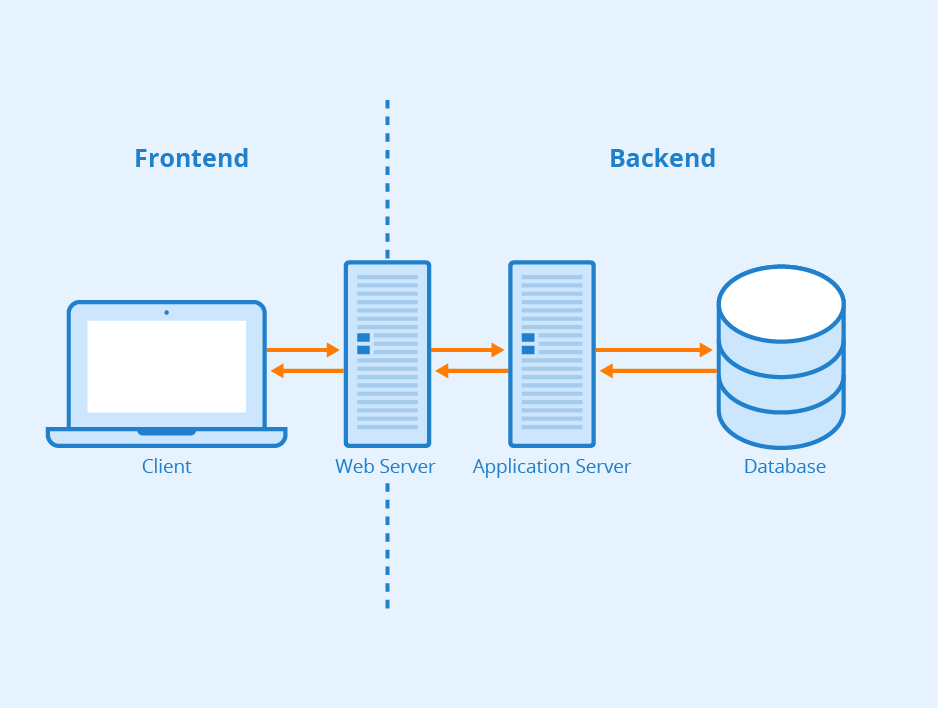
In our current project, we’re maintaining a platform that integrates multiple financial services into a unified solution. The front-end website is intentionally simple, designed for ease of use by bank staff and customers. But behind that simplicity lies a highly intricate database structure, reflecting the complexity of financial operations.
New team members often find themselves overwhelmed. Imagine a developer trying to trace a simple “loan approval” button click. What seems like a straightforward UI action actually triggers a cascade of backend processes—credit checks, risk scoring, regulatory validations, and database updates across multiple tables. Without a clear understanding of the data flow, even experienced engineers can get lost.
This is why verifying both UI flow and data flow is not just a best practice—it’s a necessity.
Why Dual Verification Matters
Let’s say a customer logs into their banking portal and sees their account balance. Behind the scenes, this number is pulled from a live database, calculated based on recent transactions, interest accruals, and pending transfers.
Now imagine this: the UI shows a balance of $5,000, but due to a backend sync issue, the actual balance in the database is $4,200. That $800 discrepancy could lead to overdrafts, failed payments, or worse—loss of customer trust.
In finance, such mismatches can have serious consequences:
- Real-time data like stock prices or currency rates must be accurate to the second.
- Sensitive transactions like fund transfers must reflect instantly and correctly.
- Complex calculations like loan interest or portfolio performance must be precise.
Verifying both flows ensures:
- ✅ Data integrity: What users see is what the system actually processes.
- ✅ User trust: Accurate and timely information builds confidence.
- ✅ Regulatory compliance: Financial systems must meet strict audit and reporting standards.
Step-by-Step Approach to Verification
1. Understand the Data Lifecycle
Start by mapping the entire data journey. For example, when a user requests a transaction history:
- Source: Data is pulled from transaction logs and external APIs.
- Transformation: It’s filtered by date, formatted, and enriched with metadata.
- Presentation: It’s displayed in a table on the UI.
Understanding this flow helps identify where things can go wrong—like a missing filter or a delayed API response.
2. UI Flow Testing
UI flow testing ensures users can navigate the app as intended. For instance:
- Can a user successfully apply for a loan?
- Does the “submit” button trigger the correct backend call?
- Are error messages shown when inputs are invalid?
Tools like Selenium, Cypress, or Playwright can automate these checks across browsers and devices.
3. Data Flow Testing
This is where we validate the backend. For example:
- When a loan is approved, is the status updated in the database?
- Are all related tables (e.g., customer profile, loan ledger) updated correctly?
- Is the data consistent across microservices?
Use tools like Postman, JMeter, or custom scripts to simulate and verify backend processes.
4. End-to-End Testing
Combine UI and data flow testing to simulate real-world scenarios:
A customer applies for a credit card → backend checks eligibility → approval is stored → confirmation appears on the dashboard.
This holistic approach ensures the entire system works as expected—not just isolated components.
5. Monitoring and Alerts
Even after deployment, things can go wrong. That’s why we implement:
- 📈 Real-time alerts for data anomalies
- 🧭 UI performance metrics to track responsiveness
- 🗂️ Audit logs for traceability
Tools like Datadog, Grafana, and the ELK stack help us stay ahead of issues.
Best Practices
- 🧪 Use mock data for early UI testing, then switch to live data for integration.
- 🔁 Automate regression tests to catch issues after updates.
- 🤝 Collaborate across teams—QA, devs, and analysts should align on test cases.
- 📋 Document test coverage to ensure all critical flows are verified.
Conclusion
In finance domain projects—especially those with complex backend systems and deceptively simple UIs—verifying both data and UI flows is not just a technical task. It’s about building trust, ensuring accuracy, and protecting the integrity of financial operations.
By adopting a dual-verification strategy, teams can deliver applications that are not only functional but also reliable, secure, and user-friendly.