


Organizations invest millions of dollars every year in their analytics platforms, modern data architectures, cloud infrastructure, and BI tools. Yet despite these investments, many analytics initiatives struggle to deliver any business value. Some projects are delayed by months, while others never make it to production. Surprisingly, most failures do not originate from technology decisions. They begin much earlier.
The root causes are often fragmented planning, disconnected teams, unclear requirements, poor governance, and inadequate data quality controls.
As analytics ecosystems become increasingly complex, organizations need more than individual tools. They need orchestration (aka AIDLC) across the entire analytics lifecycle.
This article explores the common reasons analytics projects fail before they begin and introduces a new approach powered by Datus, an analytics orchestration platform designed to unify planning, engineering, modeling, governance, validation, and reporting.
Typical Analytics Platform Development Lifecycle
Many organizations approach analytics as a series of disconnected activities:
- A business team defines requirements.
- The data engineering team builds pipelines.
- Data modelers design schemas.
- Governance teams implement controls.
- BI developers build reports.
- Quality teams conduct testing.
Unfortunately, these activities often occur in isolation.
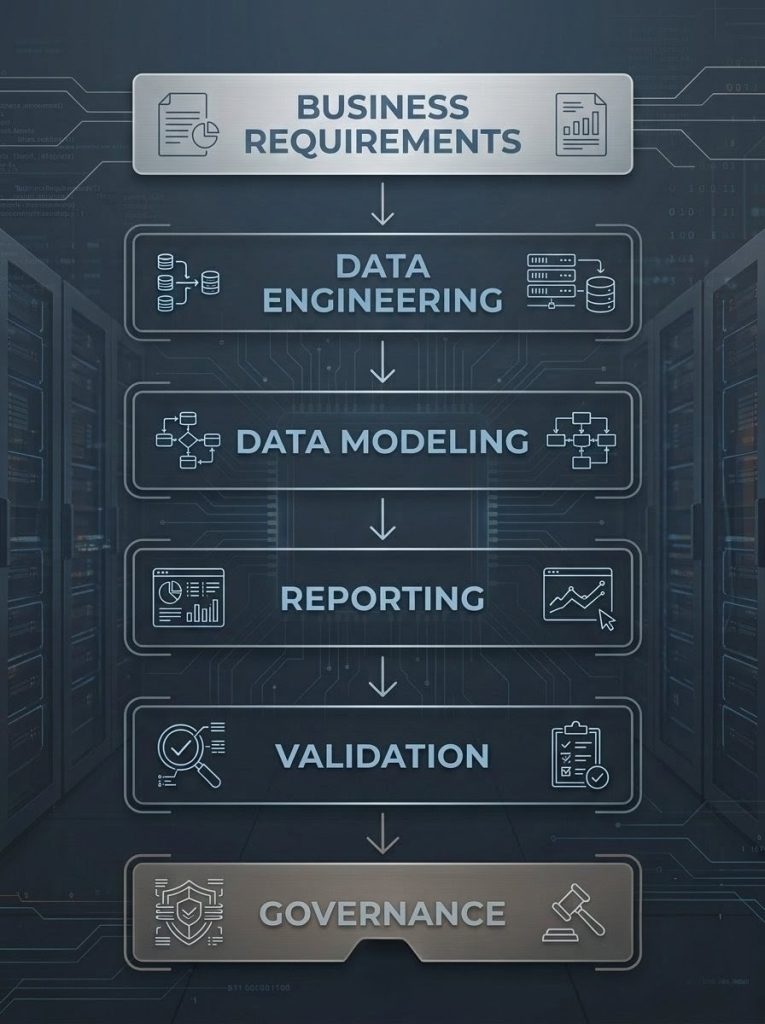
While this looks logical on paper, each stage commonly uses different tools, methodologies, and artifacts. The result is:
- Requirement drift
- Duplicated effort
- Inconsistent metrics
- Governance gaps
- Delayed releases
- Rising operational costs
Reason #1: Unclear Business Requirements
One of the biggest causes of analytics failure is ambiguity. Stakeholders often express needs in business language:
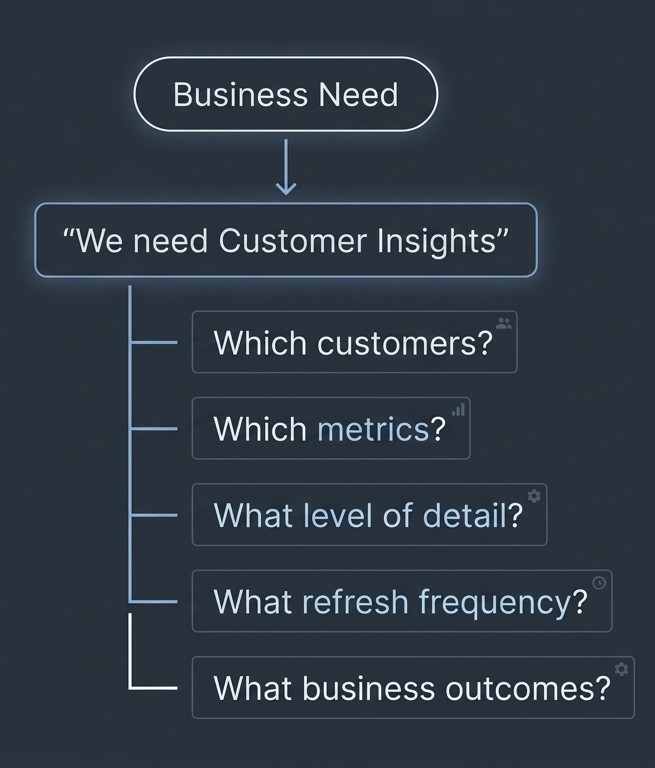
These statements sound reasonable but rarely contain enough detail for implementation teams. Without structured requirement decomposition:
- KPIs remain undefined
- Data sources are unclear
- Success criteria are missing
- Scope continually expands
Consequences
- Rework during implementation
- Endless stakeholder reviews
- Contradictory dashboard requirements
- Missed business expectations
Reason #2: Siloed Teams
Analytics platforms involve multiple stakeholders:
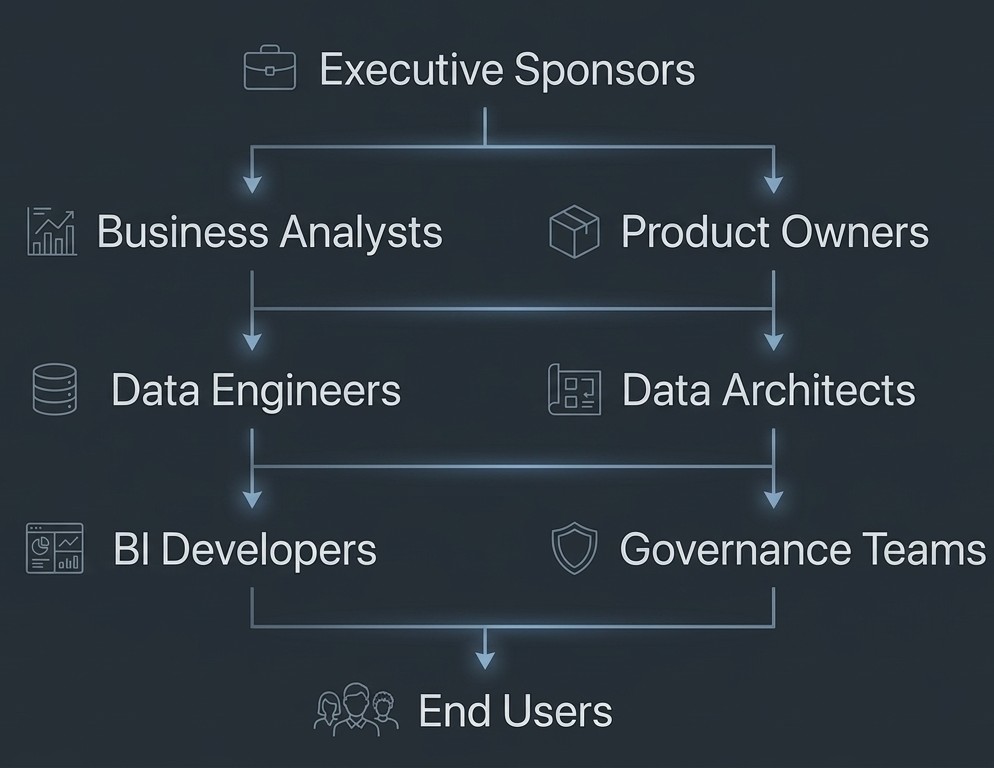
Each team owns a piece of the solution. However, they frequently operate using separate tools and documentation. Common outcomes include:
- KPI definitions differ between teams
- Data pipelines do not align with reporting needs
- Governance requirements are discovered late
- Teams duplicate effort
The larger the organization, the bigger the problem becomes.
Reason #3: Data Quality is an Afterthought
Many analytics programs prioritize dashboards before validating data. This creates a dangerous situation, i.e., beautiful visualizations built on unreliable data.
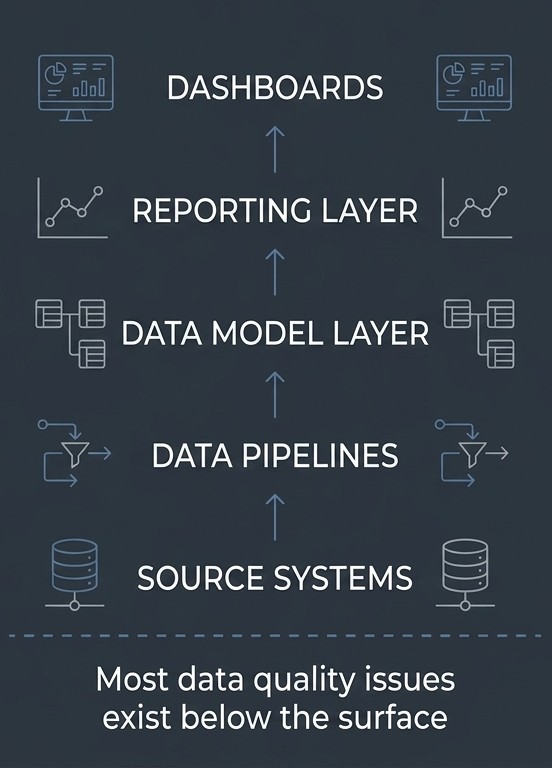
When quality assessments occur late:
- Trust declines
- Adoption falls
- Teams create manual workarounds
- Executive confidence drops
Once trust is lost, even technically correct reports face skepticism.
Reason #4: Governance Arrives Too Late
Governance is often viewed as a compliance activity. In reality, it is an enabler of scale. Without governance:
- Multiple versions of metrics emerge
- Sensitive data becomes exposed
- Lineage is lost
- Regulatory risks increase
Common Governance Questions
- Who owns this dataset?
- What does this KPI mean?
- Where did this number originate?
- Who has access?
- Is the dataset certified?
If these questions cannot be answered quickly, governance is already a challenge.
Reason #5: Architecture Decisions Are Based on Assumptions
Organizations today have many choices:
- Data warehouses
- Data lakes
- Lakehouses
- Streaming platforms
- Semantic models
- BI platforms
- AI services
Selecting technologies without a structured evaluation process introduces risk.
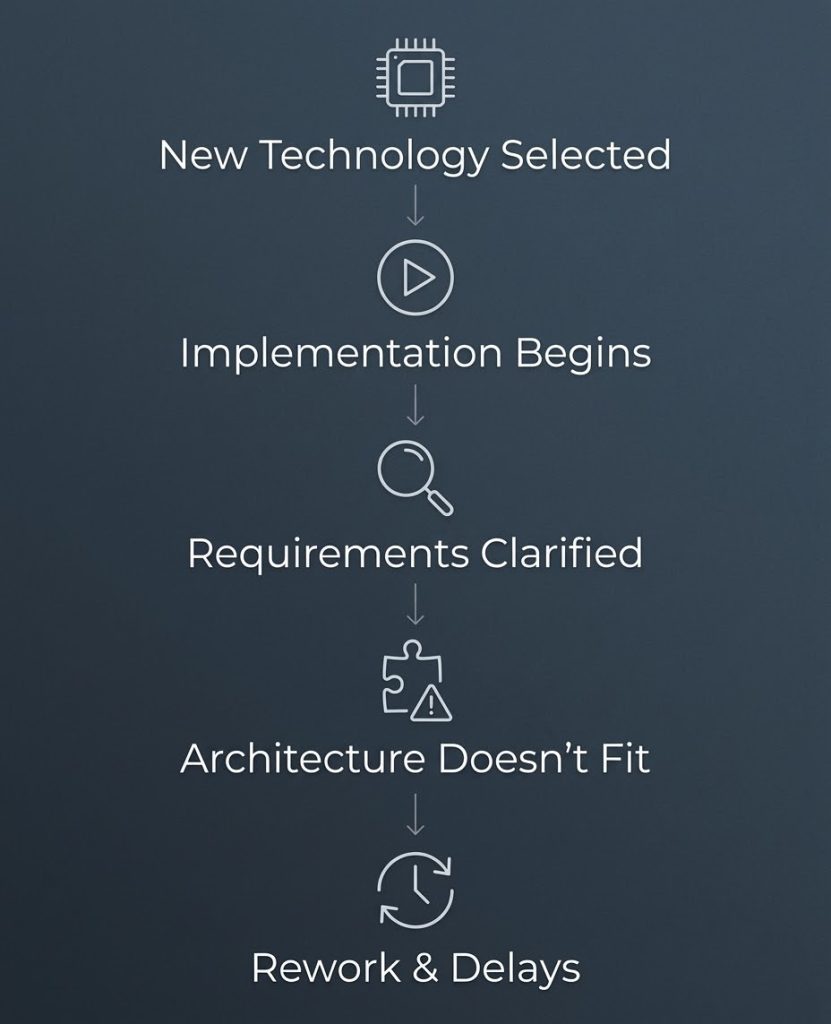
Many architecture reviews happen after significant implementation effort has already occurred. At that point, changes become expensive.
Reason #6: Validation Happens at the End
Validation should be continuous. Instead, many organizations conduct validation shortly before go-live. By then:
- Pipelines are built
- Models are created
- Reports are developed
- Security is configured
Fixing issues becomes significantly more expensive.
Cost of Late Discovery (Relative)
| Stage | Cost |
| Planning | $x |
| Design | $5x |
| Engineering | $10x |
| Testing | $50x |
| Production | $100x |
The later an issue is discovered, the more expensive it becomes to resolve.
The Hidden Cost of Fragmentation
All of these challenges originate from one fundamental issue, i.e., Lack of Orchestration. Organizations typically use separate tools for:
| Function | Tool Category |
| Planning | Requirements Tools |
| Engineering | ETL / ELT Platforms |
| Modeling | Data Modeling Tools |
| BI | Reporting Platforms |
| Governance | Catalog Solutions |
| Quality | Testing Solutions |
| Validation | Review Frameworks |
Every handoff introduces risk. Every disconnected process creates potential rework. Every manual activity slows delivery.
A Different Approach: Analytics Lifecycle Orchestration
Instead of treating analytics delivery as isolated activities, organizations should manage it as a unified lifecycle.
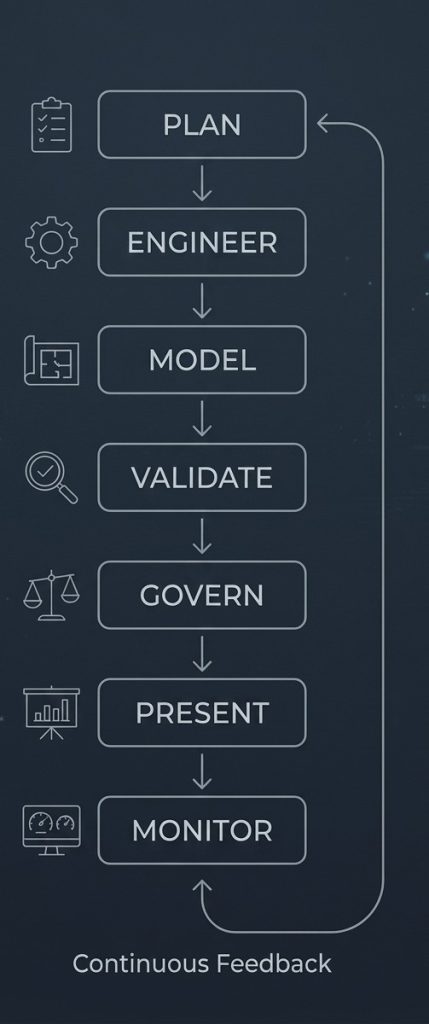
Datus was designed around this philosophy. Rather than focusing on a single stage, Datus orchestrates:
- Business requirement analysis
- Platform planning
- Data engineering recommendations
- Analytics modeling
- Data quality assessments
- Governance validation
- BI enablement
- End-to-end platform reviews
The objective is simple:
Reduce delivery risk before implementation begins.
How Datus Helps?
- Planning – Requirement decomposition, KPI discovery, stakeholder mapping, and architecture recommendations.
- Engineering – Pipeline design guidance, metadata generation, and platform best practices.
- Modeling – Semantic model recommendations and data architecture validation.
- Governance – Ownership definitions, lineage requirements, and compliance checks.
- Quality – Data quality frameworks and validation scorecards.
- BI – KPI standardization and reporting readiness assessments.
In-Summary
Analytics projects rarely fail because of dashboards, databases, or visualization tools. They fail because of fragmented planning, disconnected teams, poor governance, inadequate validation, and the absence of lifecycle orchestration.
Organizations that address these challenges early can significantly improve delivery timelines, reduce project risk, and increase stakeholder confidence. As analytics ecosystems continue to grow in complexity, orchestration becomes more important than any individual technology decision. That is the problem Datus is designed to solve.
In the next blog, we’ll explore how modern organizations can move from fragmented delivery models to an orchestrated analytics lifecycle, complete with architecture patterns, governance frameworks, and AI-assisted decision-making.