



In the rapidly evolving landscape of software development, the demand for applications that exhibit high scalability, responsiveness, and fault tolerance has surged. This shift has led developers to explore frameworks and tools that streamline the creation of such robust applications. Among these tools, Axon Framework stands out as a Java-based toolkit offering a structured approach to building event-driven, distributed systems. In this comprehensive guide, we’ll embark on an extensive exploration of Axon Messaging, uncovering its principles, components, advantages, real-world applications, and the impact it holds in shaping the future of software development.
Understanding Axon Framework
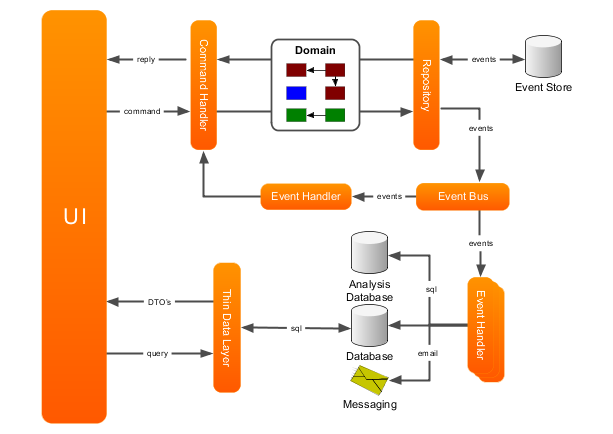
At its essence, Axon Framework emerges as a potent solution for simplifying the complexities associated with developing distributed systems. It provides a principled approach to implementing CQRS (Command Query Responsibility Segregation) and event sourcing patterns, enabling developers to focus on crafting scalable, event-driven architectures without getting entangled in intricate technical nuances. This paradigm shift in software development fundamentally alters the way applications are designed, offering a structured framework that aligns with the demands of modern applications.
Core Concepts in Axon Messaging
Axon Framework operates on the foundational concepts of commands, events, aggregates, command bus, and event bus.
Commands and Events
Commands represent intentions or requests to change the system’s state, while events capture outcomes or occurrences that have transpired. This distinction between intent and outcome allows for a clear and traceable flow within the application.
Commands and events serve as fundamental building blocks in event-driven architectures, playing distinct yet complementary roles in shaping the behavior and state of a system.
Command Bus
The Command Bus in Axon acts as a dispatcher, ensuring that commands are routed to their respective handlers. This separation of concerns allows for flexibility and scalability in handling command processing within the application.
Commands act as explicit instructions or intentions from external sources, such as users or other systems, aiming to trigger a change in the application’s state. They represent actionable directives, requesting the system to perform specific operations or modifications. For instance, a command might entail actions like creating a new user account, updating inventory levels, or processing a payment. Commands are crucial in initiating changes within the system but do not guarantee their immediate execution; instead, they are handled and validated by the application.
Event Bus
The Event Bus is responsible for propagating events throughout the system. By notifying interested components or services about state changes, it enables a loosely coupled architecture, facilitating independent reactions to relevant events across the system.
Events, on the other hand, encapsulate occurrences or outcomes that have already taken place within the system as a consequence of executing commands or due to internal processes. These events represent immutable facts or state changes, capturing the history of the system’s evolution. An event could signify the successful creation of a user account, the depletion of inventory after a purchase, or the completion of a payment transaction. Events are logged and persisted to form a historical record of the system’s state transitions, serving as a reliable source of truth for subsequent operations.
The Significance of the Distinction
The differentiation between commands and events is pivotal in maintaining a clear and traceable flow within the application. Commands, being actionable directives, represent the intent or request for change, providing a roadmap for altering the system’s state. However, they do not directly modify the state; rather, they trigger processes that may result in state changes.
On the other hand, events serve as immutable records of state changes or occurrences that have transpired. They provide a historical narrative of the system’s evolution, offering a comprehensive audit trail. This separation between intent (commands) and outcome (events) ensures a coherent flow and a structured approach to understanding how the system evolves over time. It enables a clear delineation between actions initiated and the subsequent effects, facilitating traceability, fault isolation, and system comprehension.
In essence, commands initiate actions or intentions for change, while events capture the outcomes or effects of those actions, together forming a fundamental mechanism that maintains the integrity and coherence of an event-driven system.
Aggregates
Axon introduces the concept of aggregates, which represent clusters of domain objects that change together. These aggregates enforce transactional consistency and serve as command-handling entities within the application.
In the domain of Axon Framework, aggregates play a crucial role in structuring and managing the changes to domain objects within an application. They represent cohesive clusters of related domain entities that are designed to handle commands and enforce transactional consistency, ensuring that changes to these objects occur in a reliable and coherent manner.
- Clusters of Domain Objects: Aggregates encapsulate domain entities that are closely related and often change together as a part of a transactional boundary. For instance, in an e-commerce application, an order and its associated line items, shipping details, and payment information can form an aggregate. These elements, collectively forming the order, are bound together within the aggregate to maintain consistency and integrity.
- Ensuring Transactional Consistency: One of the primary roles of aggregates is to enforce transactional consistency within the application. Transactions, in this context, refer to a series of actions that must be completed as a single, indivisible unit. Aggregates facilitate this by ensuring that any modifications made to the collection of domain objects within an aggregate occur atomically. In other words, changes to the aggregate’s constituent objects are either entirely applied or entirely discarded, preserving the system’s consistency and preventing inconsistencies resulting from partial updates.
- Command-Handling Entities: Aggregates serve as command-handling entities, acting as the entry points for processing incoming commands. Commands, representing the intentions to modify the system’s state, are directed to the appropriate aggregates, where they are validated, processed, and potentially result in state changes within the aggregate. Each aggregate contains the necessary logic to handle specific types of commands related to its encapsulated domain entities, ensuring that commands are handled consistently and in adherence to business rules.
- Role in Maintaining Coherence: By clustering related domain objects and managing their changes as cohesive units, aggregates contribute significantly to maintaining the coherence and integrity of the application’s data. They establish clear transactional boundaries, preventing inconsistencies that could arise from concurrent modifications to related domain entities by different parts of the system. This ensures that operations on aggregates maintain a consistent and valid state throughout the process.
- In summary, aggregates in Axon Framework represent clusters of domain objects that change together, enforcing transactional consistency and serving as the primary entities for handling commands within the application. They play a pivotal role in structuring the application’s domain model, ensuring atomicity in state changes, and maintaining data integrity by encapsulating related domain entities within clear transactional boundaries.
Advantages of Axon Messaging
Axon Framework offers several advantages that revolutionize the development of scalable and resilient applications.
Scalability
Axon’s design principles and messaging mechanisms facilitate the creation of highly scalable systems. By decoupling components and leveraging asynchronous messaging, it enables horizontal scaling without compromising performance.
Resilience
The event sourcing capabilities of Axon ensure that the history of state changes is persistently maintained. This allows systems to recover from failures by replaying events, restoring the application’s state accurately.
Simplifying Complexity
Axon empowers developers by simplifying the complexities associated with event-driven architectures and distributed systems. Its clear patterns, abstractions, and streamlined APIs allow developers to focus on domain-specific logic, abstracted from architectural intricacies.
Real-World Applications and Adoption
Axon Framework has emerged as a pivotal tool across various industries that demand high-performance, fault tolerance, and scalability in their software systems. Its robust features and architectural principles make it particularly well-suited for domains where real-time processing and resilience are critical factors. Let’s delve deeper into the specific industries that extensively utilize Axon Framework:
- Finance: In the finance sector, where precision, speed, and security are paramount, Axon finds extensive adoption. Financial institutions leverage Axon to build systems that handle complex transaction processing, trading platforms, risk management, and compliance. The framework’s ability to manage real-time data, ensure fault tolerance, and maintain the integrity of financial transactions makes it a preferred choice for critical financial applications.
- E-commerce: E-commerce platforms rely on Axon Framework to power their systems handling high transaction volumes, inventory management, order processing, and customer interactions. Axon’s support for scalable architectures, event-driven systems, and its ability to ensure consistency across distributed components align well with the demands of e-commerce applications, where reliability and scalability are crucial for seamless customer experiences.
- Healthcare: In the healthcare industry, where precision, data accuracy, and rapid response times are vital, Axon Framework plays a significant role. Health information systems, patient data management, electronic health records (EHR), and medical device integration benefit from Axon’s ability to handle real-time data processing, maintain data consistency, and ensure fault tolerance in critical healthcare applications.
- IoT (Internet of Things): The IoT landscape heavily relies on Axon Framework for building scalable and responsive systems managing vast amounts of sensor data, device communication, and real-time processing. Axon’s support for event-driven architectures, distributed systems, and its capability to handle massive data streams make it an ideal choice for IoT applications, ensuring reliability, scalability, and fault tolerance in IoT ecosystems.
- Adoption and Impact: Across these industries, Axon Framework has made a significant impact by empowering organizations to build robust, scalable, and resilient systems. Its architecture aligns seamlessly with the specific demands of these sectors, offering solutions that address the challenges of real-time processing, fault tolerance, scalability, and data consistency.
Conclusion: Paving the Way for Future Development
In an era where agility, scalability, and resilience are prerequisites for modern applications, Axon Framework emerges as a cornerstone in software development. By providing a structured approach to messaging, event sourcing, and CQRS, it empowers developers to architect robust, responsive, and future-proof applications.
Axon Messaging’s ability to simplify the complexities of distributed architectures and event-driven systems fosters an environment where agility meets resilience. Ultimately, it enables the creation of highly efficient and dependable software solutions, marking a significant leap forward in modern application development.