


Introduction of AI
Imagine if computers could think and learn like humans do. That’s what Artificial Intelligence (AI) is all about! It’s like giving brains to machines. With AI, computers can do smart things, like understand what you’re saying to them, recognise faces in photos, or even drive cars without people steering them. It’s super cool because AI helps us solve tricky problems and makes our lives easier. But it’s also important to think about how we use AI responsibly, so everyone benefits from its amazing abilities.
Introduction of Test Data Generation
Test data generation means making new data that looks like real data you already have. This new data helps to test software, build features, and train AI models. The new data can be totally random or very similar to the original data in terms of statistics.
To make sure our apps work well and to create new features, we need to generate test data that looks like real data but isn’t. This fake data can range from being completely made up to very similar to the actual data we use. We do this to test whether our apps perform as intended and to train computer models to learn from this data. So, test data generation is like making pretend data that acts like the real stuff.
AL Based Test Data Generation
- AI can help in test data generation for both unit tests and system tests
- Al based test data generation for PDF/XML/HTTP/ image data has been used in several projects
- Data generation for use uses where limited inputs are available made possible with ML techniques like GENs
Advanced Techniques In AI-Powered Test Data Generation
Following are some techniques in AI Test Data Generation:
- Generative Adversarial Networks (GANs)
- Synthetic Data Generation with NLP
- Synthetic Data for Privacy Preservation
- Rule-Based Systems
And here we will discuss Predictive Modeling for tailored test data Technique
AI-Powered Test Data Generation: Beyond Randomization
Predictive Modeling for Tailored Test Data
Instead of just making up random test data, predictive modeling uses smart computer programs to guess what kind of data would be best for testing.
For example, let’s say we have a healthcare app that checks patients’ vital signs. With predictive modeling, the computer looks at how people have used the app before and their health info to figure out what might happen when real users use it. Then, it can create test scenarios that copy these situations. This way, we can test the app properly under realistic conditions, not just randomly. This method is smarter because it uses computers to learn from patterns in data and make good guesses, so the testing is more focused and useful.
Example of Predictive Modeling for Tailored Test Data
Predictive Modeling for Tailored Test Data in E-commerce
Imagine you’re testing a system that suggests products to people when they shop online, like how Amazon recommends items. The aim is to make sure that the suggestions are good and match what users are interested in, based on what they’ve looked at or bought before. Instead of just making up random test situations, we can use predictive modeling to create special test data that acts like real users, doing things like browsing and buying.
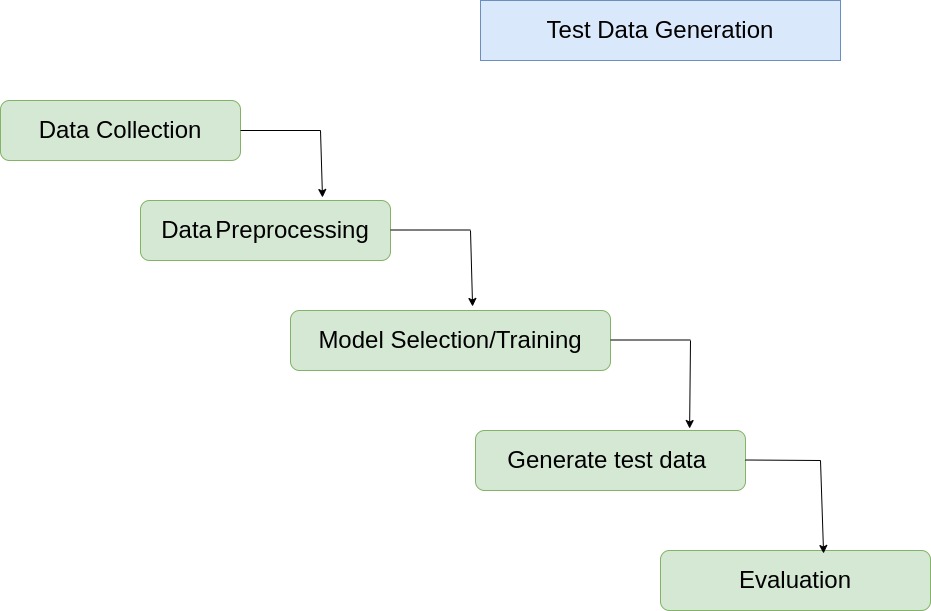
- First, historical user data such as prior purchases, browsing history, things put to cart, and products clicked on are gathered. Next, patterns and trends in user behaviour are found by analysing this data.
- Based on the analysis we found important things that help the recommendation system work well. These things include details about users like their age, where they live, what they’ve bought before, what they look at online, what time of day it is, and what season it is.
- Machine learning algorithms such as regression, decision trees, and neural networks are used to create a model that predicts whether a user will buy or show interest in a product.
- Test data is then generated to mimic this situation, including the user’s browsing history, past purchases, and the recommended product.
Example
// Define a simple decision tree model for predicting user interest
function predictInterest(user) {
// Assume user is an object containing user data such as purchase history
const { purchasedItems } = user;

// Analyse the user's purchase history to make a prediction
if (purchasedItems.includes('running shoes') && purchasedItems.includes('sports apparel')) {

return 'fitness tracker';
} else {
return 'other';
}
}

// Generate test data for evaluating the recommendation system
function generateTestData(user) {
const interestPrediction = predictInterest(user);

// Simulate test scenario based on predicted interest
const testData = {
user: {
id: user.id,
name: user.name,
purchasedItems: user.purchasedItems,
// Add other relevant user data
},
recommendation: {
predictedInterest: interestPrediction,
recommendedProduct: (interestPrediction === 'fitness tracker') ? 'Fitbit Charge 5' : 'Other product'
}
};

return testData;
}

// Example usage
const user1 = {
id: 123,
name: 'John',
purchasedItems: ['running shoes', 'sports apparel']
};

const testDataForUser1 = generateTestData(user1);
console.log(testDataForUser1);
- Using the user object as input, the predictInterest function examines the items they have bought to determine their likely interests. It indicates a user’s interest in a “fitness tracker” if they have bought both “running shoes” and “sports apparel”; if not, it indicates “other.”
- The generateTestData function uses the predictInterest function to generate tailored test data for a given user. It predicts the user’s interest and recommends a product based on the prediction.
- Finally, we demonstrate the usage of these functions by creating a user1 object with some example data (including purchased items), generating test data using generateTestData, and logging the result.
Benefits of AI Based Test Data Generation
Scalability: AI algorithms are especially helpful for testing complicated systems or apps because they can manage massive amounts of data.
Efficiency:The process of generating complicated and varied test datasets can be automated by AI-based test data generation.
Flexibility: AI algorithms can adapt and learn from feedback, continuously improving the quality of generated test data over time.
Complexity Handling: AI can handle complex data relationships and dependencies more effectively than manual methods.
Conclusion
In conclusion, there are a number of benefits to using AI and machine learning methods for test data production, including increased efficacy and efficiency in testing procedures. Businesses can create customised test data that closely mimics real-world scenarios. By utilising AI-based models, such as recommendation systems and predictive modelling, which improves the breadth and quality of their testing efforts.
References
https://gretel.ai/blog/test-data-generation
https://www.lambdatest.com/blog/generative-ai-for-efficient-test-data-generation/