


Introduction
Performance optimization is crucial for modern Spring applications, especially when dealing with high traffic and complex data operations. One of the most effective strategies to enhance application performance is implementing robust caching mechanisms. In this comprehensive guide, we’ll explore how to leverage Redis and EhCache to supercharge your Spring applications.
Understanding the Need for Caching in Spring Applications
Before diving into implementation details, let’s understand why caching is essential for Spring applications. Every database query, external API call, or complex computation takes time and resources. Without proper caching, your application repeatedly performs the same operations, leading to:
- Increased response times
- Higher Database load
- Elevated server resource consumption
- Poor user experience during peak traffic
Caching acts as a performance multiplier by storing frequently accessed data in memory, dramatically reducing the time needed to retrieve information.
EhCache: The Local Caching Powerhouse
EhCache is a widely-used, open-source caching solution that provides fast, lightweight, and feature-rich caching capabilities for Java applications. It operates as an in-memory cache within your application’s JVM, making it perfect for single-instance applications or scenarios where you need ultra-fast data access.
Key Benefits of EhCache
EhCache offers several advantages that make it an excellent choice for Spring applications. It operates as an in-memory cache within your application’s JVM, making it perfect for single-instance applications or scenarios where you need ultra-fast data access.
The cache automatically manages memory usage through configurable eviction policies, preventing out-of-memory errors. EhCache also supports disk persistence, allowing cached data to survive application restarts, and offers thread-safe operations ensuring data consistency in multi-threaded environments.
Setting Up EhCache in Spring Boot
Getting started with EhCache in Spring Boot is straightforward. Begin by including the required dependency in your pom.xml file.
<dependency>
    <groupId>org.springframework.boot</groupId>
    <artifactId>spring-boot-starter-cache</artifactId>
</dependency>
<dependency>
    <groupId>org.ehcache</groupId>
    <artifactId>ehcache</artifactId>
</dependency>
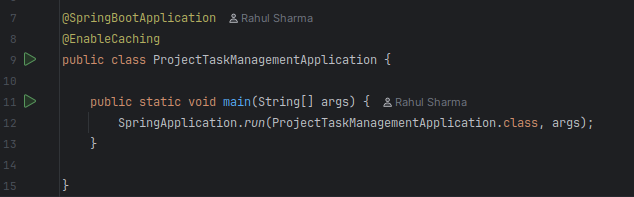
To activate caching, annotate your main Spring Boot application class with @EnableCaching.
Create an EhCache configuration file (ehcache.xml) in your resources folder:

Implementing EhCache in Service Layer
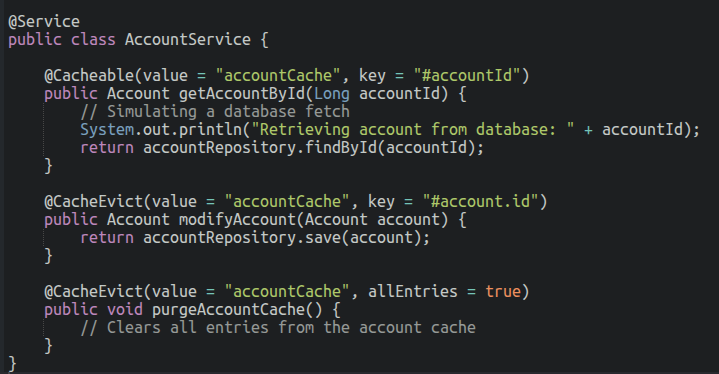
We can now apply caching annotations directly within your service layer methods.
Redis: Distributed Caching Excellence
While EhCache excels in single-instance scenarios, Redis shines in distributed environments. Redis is an in-memory data structure store that can function as a database, cache, and message broker. It’s perfect for microservices architectures and applications running across multiple instances.
Key Benefits of Redis
- Distributed Caching: Distributed caching allows several Spring app instances to access a shared cache, boosting scalability and consistency.
- Rich Data Structure Support: Supports strings, hashes, lists, sets, and more — suitable for a wide range of caching use cases.
- Persistence Options: Offers built-in mechanisms like RDB (Redis Database Backup / Snapshotting) and AOF (Append Only File) to prevent data loss during restarts or crashes.
- Pub/Sub Messaging: Useful for real-time features like notifications, chat systems, and event broadcasting.
- High Performance: Delivers sub-millisecond latency, ensuring fast data access and boosting application responsiveness.
Integrating Redis with Spring Boot Application
Setting up Redis in our Spring Boot application requires adding the Redis starter dependency:
<dependency>
    <groupId>org.springframework.boot</groupId>
    <artifactId>spring-boot-starter-data-redis</artifactId>
</dependency>
<dependency>
    <groupId>org.springframework.boot</groupId>
    <artifactId>spring-boot-starter-cache</artifactId>
</dependency>
Configure Redis connection properties in your application.yml:
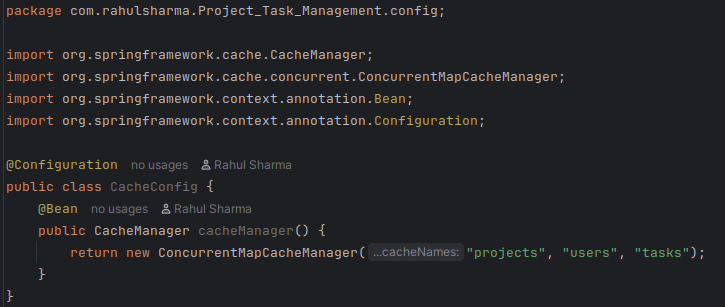
Next, set up a Redis config class to adjust and optimize how caching functions in your application.
Using Redis Cache in our Application
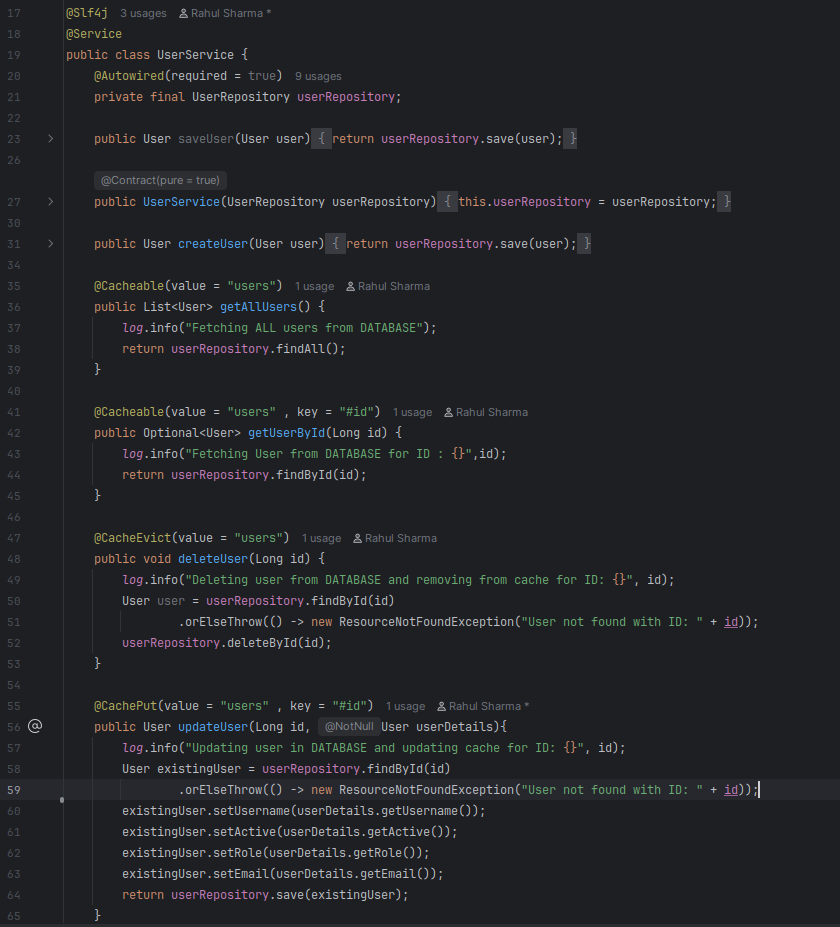
Implement Redis caching in our service layer using the same Spring caching annotations:
Implementing Multi-Layer Caching in Spring
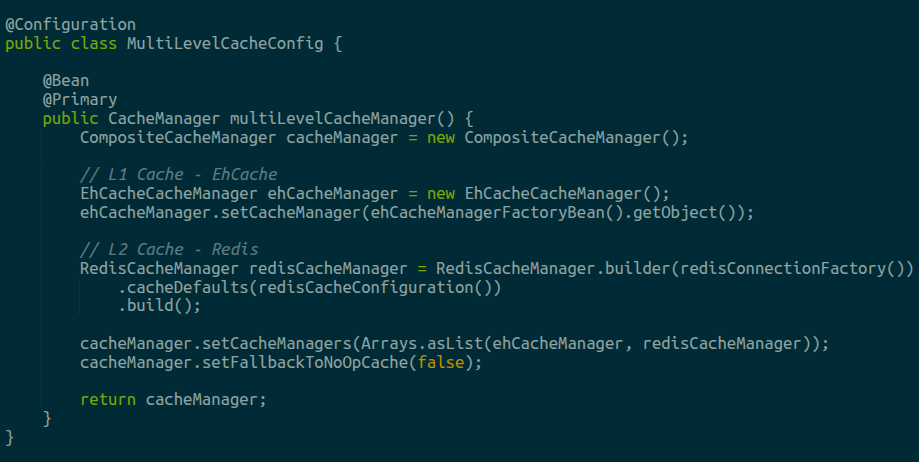
Create a custom cache manager that uses EhCache as L1 (first-level) cache and Redis as L2 (second-level) cache:
Best Practices for Spring Caching
- Define Cache Eviction Policies: Prevent memory leaks and stale data by using appropriate eviction strategies (e.g., LRU, TTL).
- Use Meaningful Cache Keys: Create keys that uniquely identify data to avoid cache collisions and ensure accurate lookups.
- Handle Cache Failures Gracefully: Ensure your application can function even if the cache is temporarily unavailable.
- Maintain Data Consistency: Choose caching strategies that align with how frequently your data changes.
- Set Appropriate TTL (Time-To-Live): For rapidly changing data, use shorter TTLs or invalidate cache entries based on events.
Frequent Caching Mistakes and Tips to Prevent Them
- Over-Caching: Avoid caching everything — it wastes memory and pollutes the cache.
- Poor Key Design: Use unique, consistent keys to avoid wrong cache hits/misses.
- Caching Dynamic Data: Invalidate frequently changing data properly to avoid staleness.
- Missing Error Handling: Catch cache failures to prevent app crashes.
Conclusion
Use EhCache for local caching and Redis for distributed environments to improve both performance and scalability in your Spring application. Start with basic caching, monitor metrics like hit rates and memory usage, and refine your strategy over time. Remember, caching isn’t one-size-fits-all — plan carefully, handle data consistency, and optimize based on real usage patterns.