


 Introduction
 Introduction
In the dynamic landscape of the Internet of Things (IoT), where devices are becoming increasingly interconnected, the choice of technology stack plays a pivotal role in shaping the efficiency and scalability of IoT solutions. Amidst the plethora of options available, .NET emerges as a formidable contender, offering a comprehensive framework for seamlessly connecting devices and harvesting valuable data streams.
Here’s an overview of how you can use .NET for IoT:
Embracing Connectivity with .NET
At the heart of IoT lies the ability to establish robust communication channels between devices and the cloud. .NET empowers developers with a diverse array of communication protocols, including MQTT, HTTP, CoAP, and AMQP, facilitating seamless device connectivity irrespective of the underlying hardware or operating system. Leveraging libraries like MQTTnet or Microsoft.Azure.Devices.Client, developers can effortlessly orchestrate the exchange of data between IoT endpoints and cloud services, laying the foundation for a cohesive IoT ecosystem.
Code Example
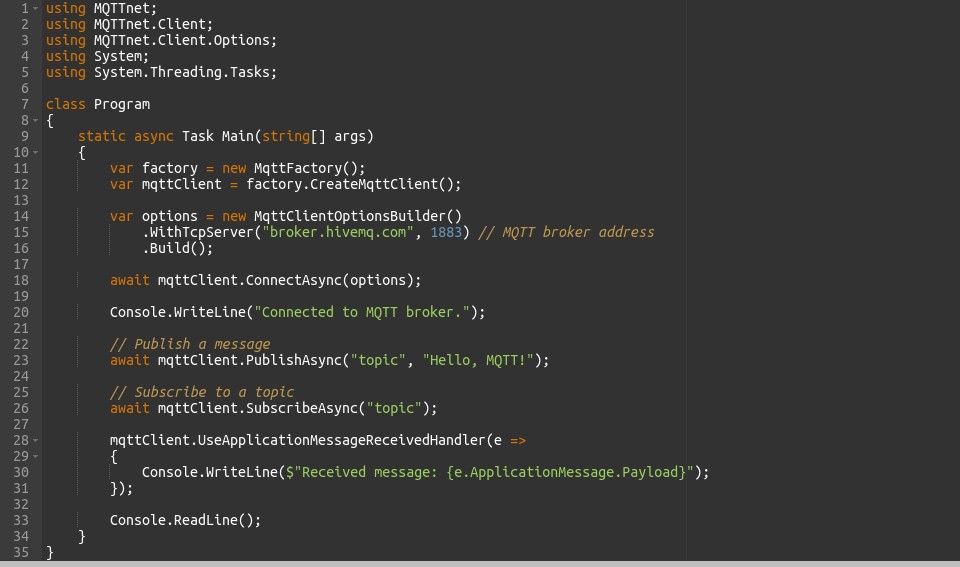
- It connects to the MQTT broker hosted at broker.hivemq.com on port 1883.
- Once connected, it publishes a message “Hello, MQTT!” to the topic named “topic”.
- It subscribes to the topic “topic” to receive messages published to that topic.
- It sets up a message handler to process incoming messages. Whenever a message is received on any subscribed topic, it prints the payload of the message to the console.
- It waits for user input using Console.ReadLine(), keeping the program running until the user decides to exit.
Orchestrating Device Management
Efficient device management is imperative for the seamless operation of IoT deployments. With .NET, developers gain access to a rich suite of tools for provisioning, monitoring, and maintaining IoT devices remotely. Whether it’s orchestrating firmware updates, configuring device parameters, or monitoring device health, .NET equips developers with the capabilities to streamline device management workflows, ensuring optimal performance and reliability across the IoT infrastructure.
Code Example
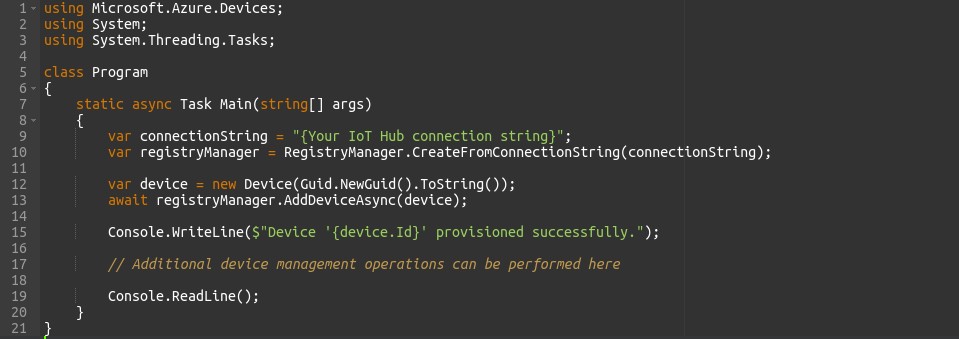
-
- Store the connection string of the Azure IoT Hub.
- Create a registry manager instance using the Azure IoT Hub connection string.
- Generate a unique identifier for the new device and add it to the Azure IoT Hub registry asynchronously.
Unleashing the Power of Data Collection and Processing
In the realm of IoT, data reigns supreme, driving insights and catalyzing informed decision-making. .NET empowers developers to harness the full potential of IoT-generated data through robust data collection and processing capabilities. Leveraging frameworks like Azure IoT Hub, Azure IoT Edge, or AWS IoT Core, developers can seamlessly ingest, process, and analyze data from a myriad of IoT endpoints, unlocking actionable insights and driving innovation across diverse domains.
Code Example
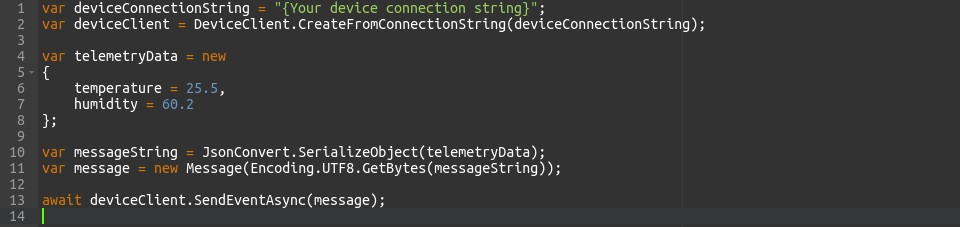
- Store the connection string of the IoT device to Azure IoT Hub.
- Create a sample telemetry data object (temperature and humidity in this case).
- Serialize the telemetry data object into a JSON string and create an IoT Hub message from it.
- Send the telemetry message asynchronously to Azure IoT Hub using the device client.
Harnessing Edge Computing Capabilities
In the pursuit of real-time responsiveness and enhanced efficiency, edge computing emerges as a game-changer in IoT architectures. .NET embraces edge computing paradigms, enabling developers to deploy .NET applications directly on IoT devices or edge gateways. By bringing computation closer to the data source, .NET empowers developers to minimize latency, optimize bandwidth utilization, and enhance the responsiveness of IoT solutions, thereby ushering in a new era of edge-enabled innovation.
Code Example

- Print a greeting message indicating that the code is running on a Raspberry Pi.
- Additional logic for data processing and device interaction can be added here, taking advantage of the Raspberry Pi’s computational capabilities.
- Wait for user input to keep the application running and to interact with any logic implemented.
This code snippet represents a simple .NET application running on a Raspberry Pi. It prints a greeting message to the console and waits for user input. This is where additional logic for data processing and device interaction can be added, leveraging the computational capabilities of the Raspberry Pi for edge computing tasks.
Fortifying Security in IoT Deployments
Security remains paramount in the IoT landscape, with the proliferation of interconnected devices amplifying the risk of cyber threats. .NET prioritizes security, offering robust mechanisms to safeguard IoT deployments against potential vulnerabilities. From secure communication protocols to stringent authentication mechanisms, .NET equips developers with the tools and techniques to fortify IoT solutions, ensuring the integrity and confidentiality of sensitive data in transit and at rest.
Code Example

- Set up connection options for the MQTT client, including the MQTT broker’s address (broker.hivemq.com) and port (8883 in this example).
- Enable TLS encryption for secure communication by calling the WithTLS() method.
- Build the connection options with TLS encryption enabled for connecting securely to the MQTT broker.
Embracing Cross-Platform Development
In an increasingly heterogeneous IoT ecosystem, cross-platform compatibility emerges as a key consideration for developers. .NET addresses this challenge head-on, with .NET Core and .NET 5 (and later versions) enabling seamless cross-platform development across a myriad of operating systems, including Windows, Linux, and macOS. By embracing cross-platform development, .NET empowers developers to build IoT solutions that transcend platform constraints, fostering interoperability and flexibility across diverse environments.
Nurturing a Vibrant Developer Ecosystem
Beyond its technical prowess, .NET boasts a vibrant and thriving developer ecosystem, replete with resources, tutorials, and community support. From Visual Studio and Visual Studio Code to an extensive repository of libraries and frameworks, .NET provides developers with the tools and resources they need to accelerate their IoT development journey. Additionally, the active and engaged .NET community serves as a valuable source of knowledge and expertise, offering guidance and support to developers navigating the intricacies of IoT development.
NET and IoT: Pioneering the Future of Connected Innovation.
Edge Computing
.NET’s embrace of edge computing promises accelerated data processing and minimized latency, bolstering real-time capabilities at the edge.
Integration with Emerging Tech
.NET’s alignment with emerging technologies such as 5G, AI, and blockchain heralds a realm of untapped potential in IoT deployments.
Developer Tools
Streamlined IoT development via enhanced tools and libraries is set to expedite time-to-market for robust solutions.
Standardization
A concerted push for standardization and interoperability ensures the seamless integration of diverse IoT devices and platforms.
Security and Privacy
.NET’s unwavering focus on security will fortify data protection measures, aligning with regulatory mandates and upholding the integrity of IoT solutions.
Scalability and Performance
.NET’s optimizations in resource management and parallel processing promise seamless scalability in dynamic IoT environments.
Cross-Platform Compatibility
Continued support for cross-platform compatibility ensures .NET applications can seamlessly traverse diverse operating systems and architectures.
Industry-Specific Solutions
.NET’s adaptability will drive the development of tailored IoT solutions, addressing sector-specific challenges in healthcare, manufacturing, and smart cities.
Conclusion
In conclusion, the convergence of .NET and IoT heralds a new era of innovation, empowering developers to build robust, scalable, and secure IoT solutions that seamlessly connect devices, harvest data, and drive insights. With its rich suite of connectivity options, powerful data processing capabilities, and steadfast commitment to security, .NET emerges as a formidable ally in the quest to unlock the full potential of the Internet of Things. As IoT continues to redefine the contours of technology and reshape industries, .NET stands poised at the forefront, empowering developers to shape the future of connected ecosystems with ingenuity and innovation.