


Introduction
In today’s rapidly evolving digital landscape, managing and delivering content effectively has become a critical aspect of success. At the core of captivating audiences across a multitude of platforms and devices lies content, encompassing text, images, videos, and interactive experiences. While traditional Content Management Systems (CMS) have effectively fulfilled their roles, the dynamic nature of the digital landscape calls for a more versatile and accommodating solution. Enter the era of Headless CMS — a revolutionary approach to content management that offers unprecedented freedom and scalability.
The Evolution of Content Management
Content has perpetually occupied a central role in shaping online experiences. During the nascent stages of the internet, websites primarily adopted a static nature, typically comprising basic HTML pages. The process of updating content was sporadic, and any modifications necessitated a degree of technical proficiency. As the web evolved, content management systems (CMS) emerged to simplify the process. These traditional CMS platforms combined content creation, storage, and presentation into a single system.
However, as the digital landscape continued to evolve, traditional CMS systems faced limitations. Websites needed to adapt to various screen sizes, devices, and platforms. The desire for more dynamic and interactive content grew, making traditional CMS solutions less flexible. This is where the Headless CMS comes into play.
The Rise of Headless CMS
Headless CMS represents a paradigm shift in content management. Rather than combining content and its presentation layer, Headless CMS separates them. This division between content and presentation delivers exceptional flexibility and scalability, empowering organizations to generate, oversee, and disseminate content across a constantly growing spectrum of channels and devices.
What is a Headless CMS?
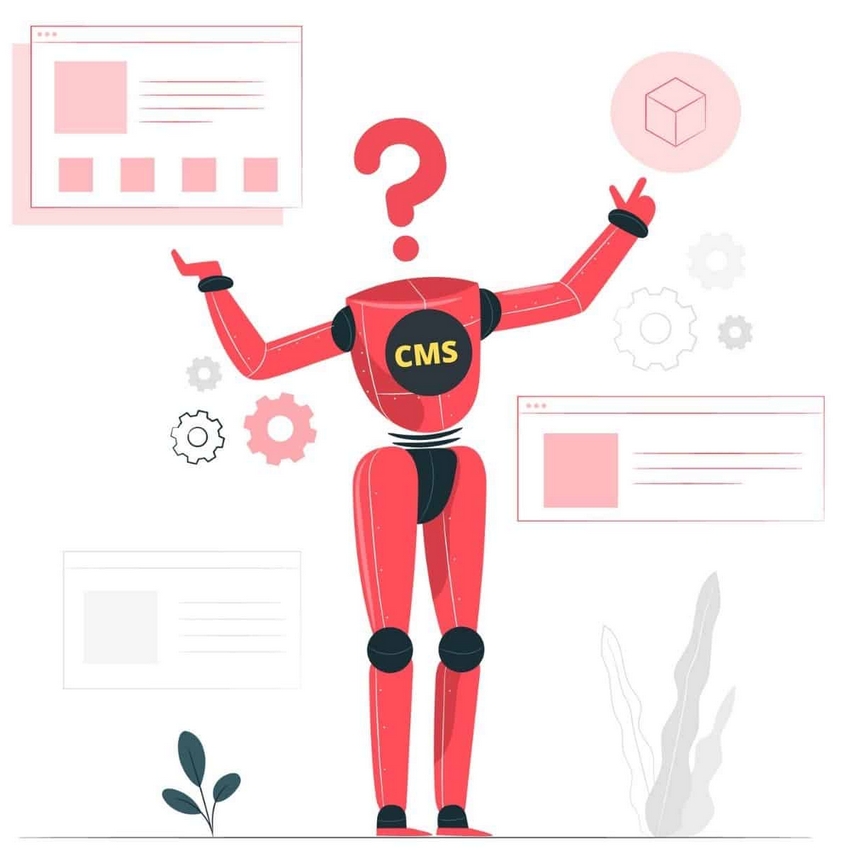
A Headless CMS is a content management system that separates the content from its presentation layer. Unlike traditional monolithic CMS platforms, where content is tightly coupled with the website’s design and structure, a Headless CMS decouples content from its delivery. This decoupling enables content creators and developers to operate independently and with increased efficiency.
Within a Headless CMS architecture, content is organized in a structured format, commonly in JSON or XML, ensuring platform neutrality and seamless accessibility through APIs (Application Programming Interfaces). This results in content being effortlessly delivered to a multitude of channels and devices, including websites, mobile apps, smart speakers, and IoT devices.
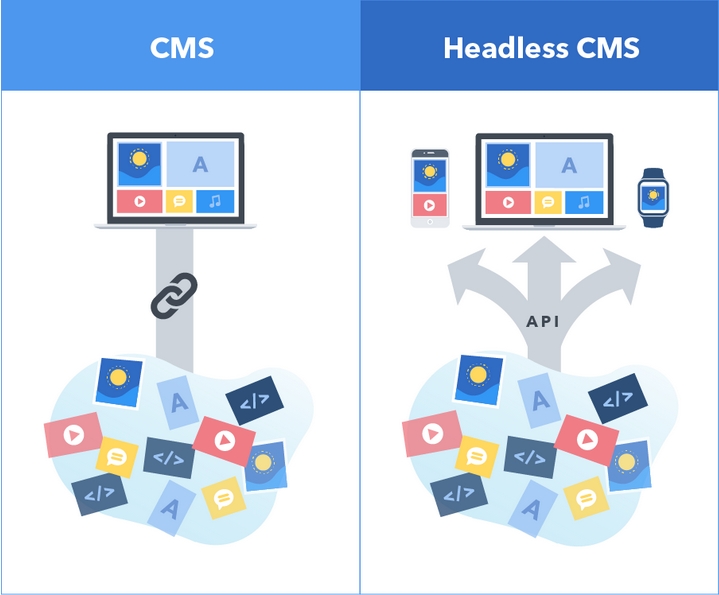
Decoupling Content from Presentation
A fundamental concept behind a Headless CMS is decoupling content from presentation. In traditional CMS systems, content and its presentation (the frontend) are tightly intertwined. Any change to the presentation requires adjustments to the content and vice versa. In contrast, a Headless CMS stores content separately, making it agnostic to the frontend.
The Power of APIs
Headless CMS relies heavily on APIs (Application Programming Interfaces) to deliver content. Content stored in a Headless CMS is typically structured and can be accessed via APIs. These APIs allow developers to retrieve content and display it on various platforms and devices. The flexibility of APIs makes it easy to create dynamic and responsive user experiences.
Platform-Agnostic Content Storage
In a Headless CMS, content is often stored in structured formats like JSON or XML. This platform-agnostic storage ensures that content can be easily adapted for different purposes and platforms. Whether it’s a website, mobile app, smartwatch, or IoT device, the same content can be repurposed and delivered seamlessly.
Advantages of Going Headless
Transitioning to a Headless CMS offers a multitude of advantages that can revolutionize your content management and delivery. In the sections that follow, we will explore these benefits in greater detail, starting with:
Flexibility: Choose Your Frontend
One of the most significant advantages of a Headless CMS is the flexibility it offers. With content decoupled from the frontend, you’re free to choose any technology stack or framework for building your user interfaces. This flexibility empowers developers to create unique and engaging user experiences.
Multi-Channel Publishing
In today’s digital landscape, your audience may interact with your content across various channels and devices. A Headless CMS excels in multi-channel publishing, allowing you to deliver content to websites, mobile apps, wearables, and even emerging technologies like virtual reality (VR) and augmented reality (AR) applications. This versatility ensures a consistent and engaging user experience.
Enhanced Collaboration
Headless CMS promotes collaboration between content creators and developers. Content creators can dedicate their efforts to crafting top-notch content without the concern of its presentation. In contrast, developers can channel their focus towards building engaging and user-friendly front-end experiences. This separation of concerns streamlines the workflow and leads to faster development cycles.
Scalability
As your business grows, so does your content. A Headless CMS can scale effortlessly to handle large volumes of content and high traffic. This scalability ensures that your users continue to enjoy a responsive and consistent experience, even as your content library expands.
Security
With content stored separately from the presentation layer, headless CMS solutions often include robust security features. This separation minimizes the risk of security breaches and unauthorized access to sensitive content assets.
Use Cases for Headless CMS
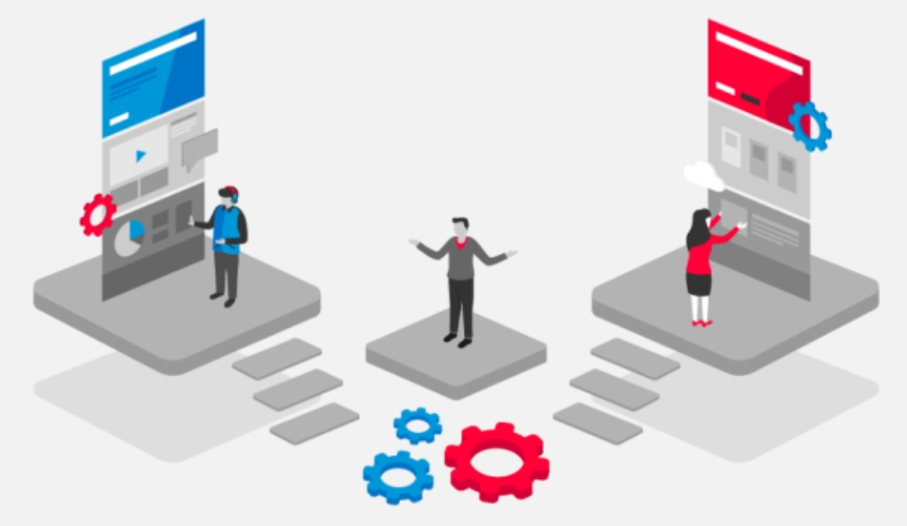
Understanding the diverse applications of a headless CMS can help you harness its potential to enhance your content management strategy. Let’s explore some key use cases:
E-commerce
Within the realm of e-commerce, a Headless CMS stands as a transformative force. It empowers you to effectively distribute product details, pricing alterations, and promotional content across your online store, mobile applications, and even voice-activated devices. This guarantees that your customers consistently access current and accurate information, ultimately resulting in enhanced conversion rates.
Media and Publishing
Media companies and publishers can benefit greatly from a Headless CMS. It streamlines the content delivery process to websites, mobile apps, and social media platforms. Whether you’re publishing articles, videos, or interactive content, a Headless CMS provides the flexibility needed to engage your audience effectively.
IoT Integration
The Internet of Things (IoT) is experiencing significant growth, and a Headless CMS is ideally suited for overseeing content on smart devices. Whether you are disseminating content to digital signage, interconnected appliances, or any other IoT devices, a Headless CMS can guarantee the uniformity and timeliness of your messaging throughout the IoT ecosystem.
Gaming
Gaming companies can leverage a Headless CMS to provide real-time updates and content to gamers within the gaming ecosystem. Whether it’s delivering patch notes, in-game events, or player statistics, a Headless CMS can help keep players engaged and informed.
Travel and Hospitality
The travel and hospitality industry relies on delivering consistent content experiences across various touchpoints. From hotel websites to mobile apps and in-room displays, a Headless CMS can ensure that guests receive accurate and enticing information, enhancing their overall experience.
How Headless CMS Works
To understand the inner workings of a headless CMS, let’s delve into its core components:
Content Creation and Management
Within a Headless CMS, the process of content creation and management revolves around crafting structured content that is both easily manageable and reusable. Content creators are provided with user-friendly interfaces to seamlessly add, edit, and organize content, thereby preserving its consistency and timeliness.
API-Driven Content Delivery
At the core of a Headless CMS lies its API-powered content delivery system. Content is fetched through APIs and can be presented on diverse front-end platforms. Developers leverage these APIs to craft and construct user interfaces tailored for specific devices and channels.
Frontend Development Freedom
With content and frontend separated, developers have the freedom to choose the best frontend technologies for their projects. Whether it’s a JavaScript framework like React, a mobile app development tool, or a custom solution, developers can select the right tools for the job, leading to more innovative and dynamic user experiences.
Popular Headless CMS Solutions
Discover some of the leading Headless CMS solutions that have gained prominence in the industry:
Contentful
Contentful is a versatile and developer-friendly Headless CMS known for its ease of use. It offers a content-first approach and provides robust APIs for content delivery.
More information: https://www.contentful.com
Strapi
Strapi is an open-source Headless CMS that offers complete customization and control. It’s highly flexible and suitable for developers who want to create bespoke content management solutions.
More information: https://strapi.io
Sanity
Sanity is a structured content platform that enables real-time collaborative content creation. It’s known for its customizable content models and APIs, making it a popular choice for organizations with complex content needs.
More information: https://www.sanity.io
Kontent.ai
Kontent.ai is a cloud-based Headless CMS that offers a user-friendly interface for content creators. It provides multi-language support and robust content delivery APIs.
More information: https://kontent.ai
Prismic
Prismic is a Headless CMS that focuses on content personalization and rich media management. It’s suitable for organizations that want to deliver tailored content experiences to their users.
More information: https://prismic.io
Getting Started with Headless CMS
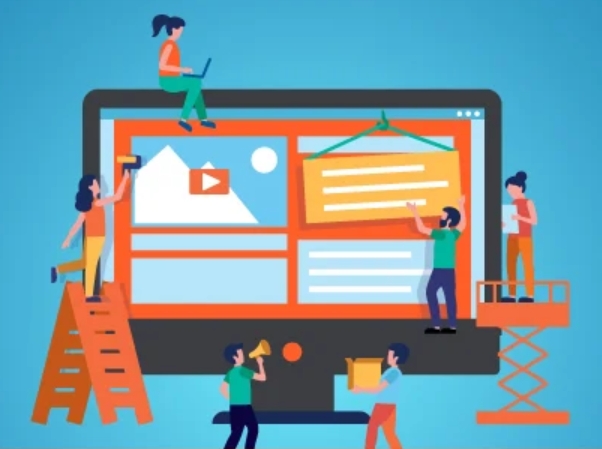
Embarking on your Headless CMS journey requires careful consideration and planning. Here are some essential steps to guide you:
Evaluating Your Needs
Before diving into a Headless CMS, it’s crucial to evaluate your organization’s content management requirements. Consider factors like the types of content you create, the number of channels you target, and your team’s technical expertise.
Choosing the Right Solution
Selecting the right Headless CMS solution is a critical decision. When choosing, consider elements such as ease of use, scalability, developer assistance, and cost-effectiveness. Dedicate time to exploring different choices and opt for the one that aligns most precisely with your goals.
Migrating to a Headless CMS
If you’re transitioning from a traditional CMS to a Headless CMS, migration is a crucial step. Plan the migration process carefully, ensuring that your existing content is smoothly transferred to the new system. This may involve content mapping and data migration tasks.
Best Practices for Headless CMS Implementation
Successful implementation of a headless CMS relies on following industry best practices. Here are key considerations to guide you:
Content Modeling
Effective content modeling is the foundation of a successful Headless CMS implementation. Organize your content in a manner that facilitates efficient management, reuse, and adaptability across various channels. Consider using taxonomies, metadata, and content relationships to enhance content organization.
API Security
Security is paramount when using APIs to deliver content. Implement robust API security measures to protect your content assets from unauthorized access and potential threats. Use authentication and authorization mechanisms to control API access.
Performance Optimization
Optimizing the performance of your Headless CMS is essential for delivering content quickly and efficiently. This includes optimizing API response times, implementing content caching, and leveraging content delivery networks (CDNs) to reduce latency.
Continuous Integration and Deployment
Adopting a continuous integration and deployment (CI/CD) workflow can streamline content updates and frontend development. Implement automated testing and deployment processes to ensure that changes to content or code are delivered smoothly.
Challenges and Considerations
Transitioning to a Headless CMS offers numerous advantages, but it’s essential to navigate potential challenges and considerations effectively. Here are key factors to keep in mind:
Learning Curve
Moving to a Headless CMS may present a learning curve for your team, particularly if they are accustomed to traditional CMS systems. Offer training and support to assist your team in acclimating to this novel paradigm.
Maintenance and Updates
Like any technology solution, a Headless CMS requires ongoing maintenance and updates. Stay well-informed about software updates, security patches, and industry best practices to ensure the smooth operation of your system.
Cost Considerations
While Headless CMS solutions offer great flexibility, it’s essential to consider the cost implications. Factor in subscription fees, hosting costs, and any development expenses when budgeting for your Headless CMS implementation.
Conclusion
The digital landscape undergoes continual transformation, demanding that content management systems adapt to these changes. Headless CMS stands as the harbinger of content management’s future, delivering unparalleled flexibility, scalability, and the capability to captivate audiences across a multitude of channels and devices. As you embark on your expedition into the realm of Headless CMS, keep in mind that success hinges on comprehending your organization’s distinct requirements, selecting the appropriate solution, and embracing best practices for its implementation. Welcome to the future of content management!