



Introduction
Overview of Predictive Test Analytics
Predictive test analytics utilizes past test data to anticipate future results. Detecting potential issues early in the development process allows teams to resolve problems proactively, preventing them from escalating into larger challenges. This approach helps improve software quality, reduce costs, and ensure faster delivery by prioritizing high-risk areas and better resource allocation. In this blog, we’ll discuss how predictive analytics can optimize the testing process and enhance software reliability.
How can Predictive Test Analytics Anticipate Defects
- Prioritize Test Cases based on Past Trends:
The team identifies high-risk areas like the payment gateway, which frequently experiences failures, and prioritizes tests for these functionalities during every test cycle.
Outcome: This helps catch and fix payment issues quickly, ensuring customers can make purchases without any problems. - Failure Prediction: The team uses a Machine Learning algorithm tool to study past mistakes and predict where new ones might happen. For example, they notice that updates to the product stock system could cause errors. They test this area carefully and fix the issue before it impacts customers.
Outcome: Fixing problems early prevents customer complaints and makes the system more reliable. - Improved Test Coverage: The team realizes they’ve missed testing rare situations, like using multiple discounts or expired promo codes. They add these missing tests to make sure everything works smoothly.
Outcome: Covering these gaps ensures the website handles all types of customer actions correctly, improving the overall experience.
Integrating Machine Learning with TestNG
Prerequisites for Integration
- Data Collection: Gather historical test data.
- Machine Learning Framework: Choose an appropriate machine learning framework (e.g., Weka, TensorFlow, scikit-learn, Keras).
- Technical Skills: Basic understanding of machine learning and TestNG
Steps to Integrate Machine Learning Models with TestNG
Flow Diagram for Integration
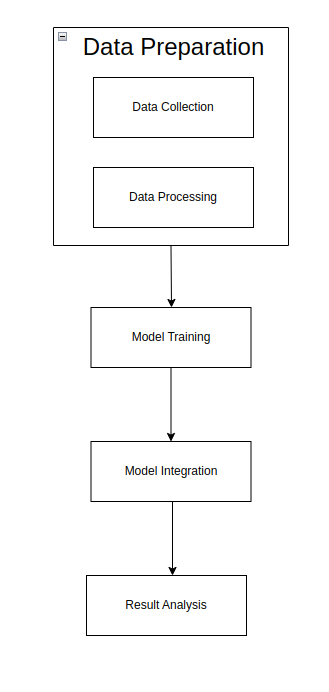
- Data Preparation: Collect and preprocess data from TestNG reports.
- Model Training: Train machine learning models using historical test data.
- Model Integration: Integrate the trained models into the TestNG framework.
- Result Analysis: Use the model to analyze new test data and predict potential defects.
Implementing Predictive Test Analytics
Data Preparation
Data Collection
To train the Machine Learning model, we need historical test execution data. For that we will be using the TestNG Listener to log test results (name, duration, and status) to a CSV file.
For storing the data using TestNG we have to add the Listeners into our testng.xml file

Below code shows how we can store the data from TestNG report into CSV file:
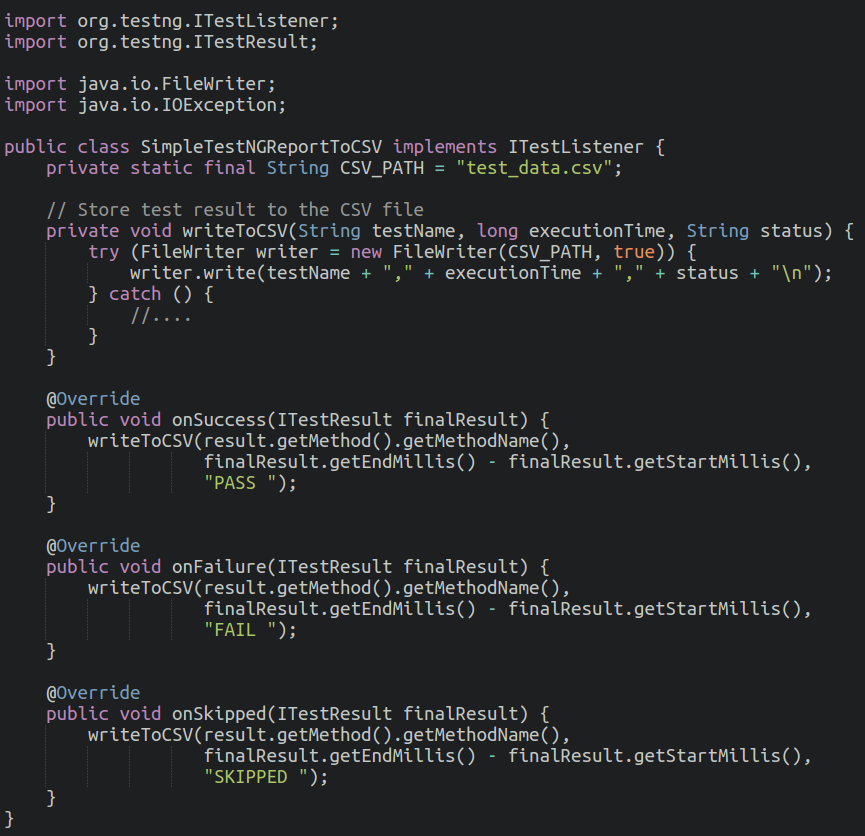
When we run our testng.xml tests, then CSV file will look like this
loginTest,150,PASS
checkoutTest,1200,FAIL
profileUpdateTest,400,SKIPPED
Training Machine Learning Models for Predictive Test Analytics
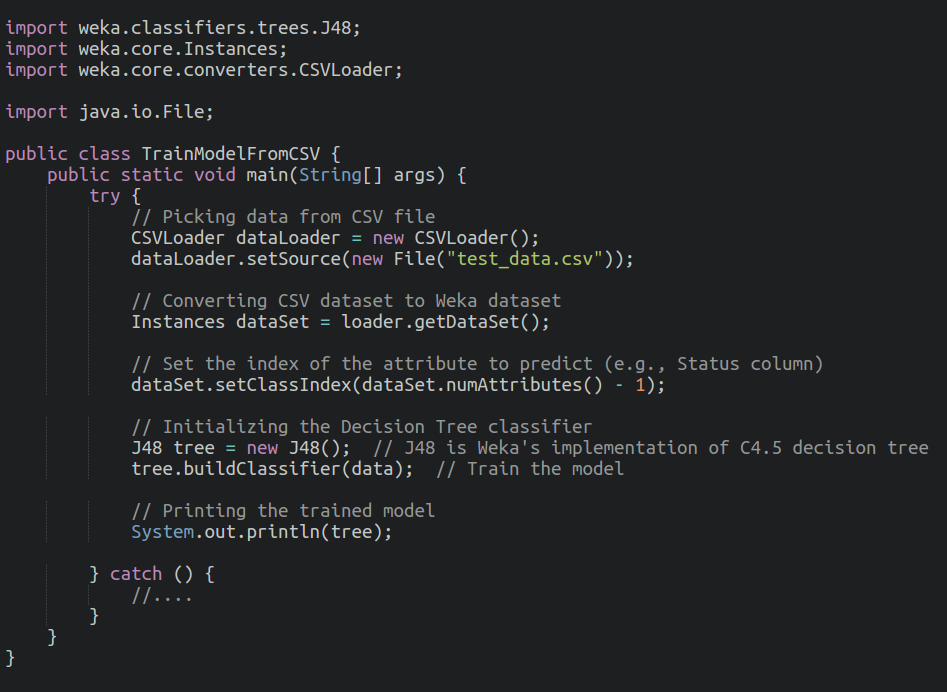
Use the processed data to pick and train the right machine learning models. Models like decision trees, random forests, and neural networks work well for predicting test results.
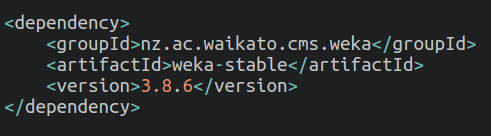
We have to add the dependency into our pom.xml file to use the Weka Library
After data collection and data pre-processing, it’s time to train our model with CSV data using Weka library.
Model Integration
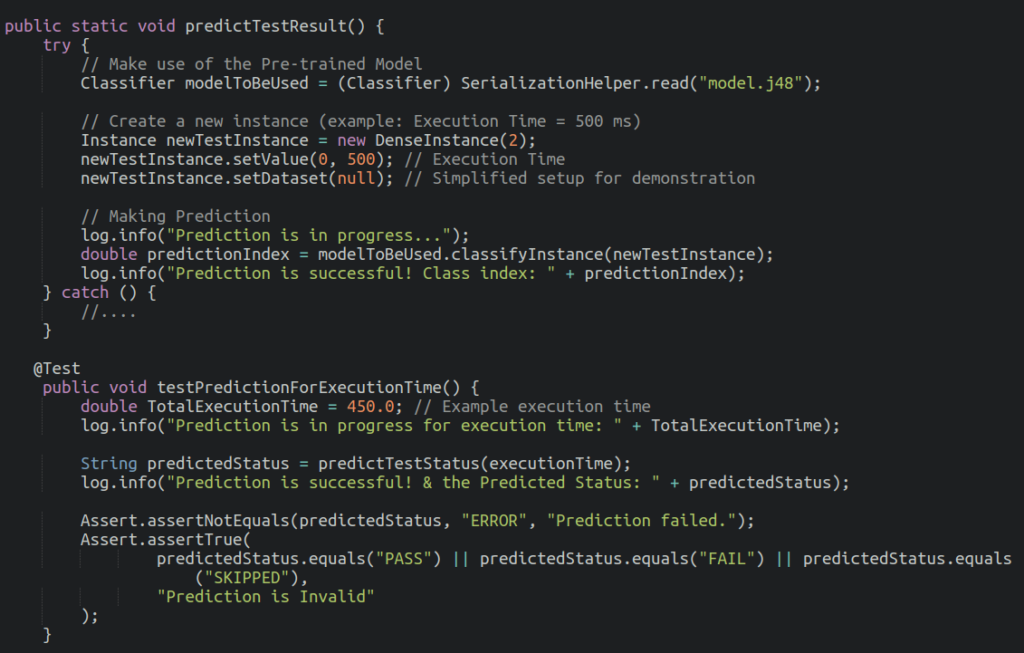
In the integration process we will now use the trained model to make predictions with TestNG.
Below code snippet describes the process of integration along with prediction.
Analyzing Test Results
By incorporating the prediction result we can then focus on the high-risk areas and resolves the issues in the early stages of the Software development and thus able to prioritize the tests which is having high priority.
Case Study: Predictive Analytics in Action
Real-world Examples of Predictive Test Analytics
Consider a software development company that implemented predictive test analytics using TestNG and machine learning. By analyzing historical test data, the team predicted and fixed defects early, resulting in a significant reduction in post-release bugs and improved software quality.
Challenges and Best Practices
Common Challenges in Implementation
- Data Quality: Making sure the data used to train models is high-quality and relevant.
- Technical Skill: Requiring specialized knowledge in machine learning.
- Integration Complexity: Integrating machine learning models with existing testing frameworks is one of the challenges.
Best Practices for Effective Predictive Test Analytics
- Start Small: Start with a pilot project to show value.
- Continuous Improvement: Frequently refresh models with the latest data.
- Cross-functional Collaboration: Involve both testing and machine learning experts.
Future of Predictive Test Analytics
Emerging Trends
- AI-driven Testing: Increased use of AI for more precise predictions.
- Automated Data Collection: Enhanced tools for seamless data integration.
- Real-time Analytics: Instantaneous prediction and feedback mechanisms.
Future Prospects
As machine learning technologies evolve, predictive test analytics will become more precise and easier to implement. The future holds the promise of fully automated, intelligent testing systems that can foresee and handle defects with minimal human intervention.
Conclusion
Summary of Key Points
Predictive test analytics, leveraging machine learning and TestNG, offers a powerful approach to anticipating and mitigating defects before they occur. By integrating machine learning models with TestNG, teams can enhance their testing processes, improve software quality, and reduce costs.