


Introduction
As Artificial Intelligence (AI) becomes more common, people wonder if it will take over jobs, like software testing. Software testing is important because it makes sure software works well. As AI technologies continue to grow, questions arise about whether AI replace human testers. However, an examination reveals that while AI is transforming software testing, it is more likely to augment human testers rather than replace them entirely.
The Current Landscape of Software Testing
Software testing is a critical phase in the software development lifecycle, ensuring that software products meet quality standards and perform as expected. Historically, software testing has been a manual process, relying heavily on human testers to identify bugs, validate functionality, and ensure user satisfaction. While automation tools have improved testing efficiency, humans still play a big role, especially in challenging aspects like understanding the users.
The Rise of AI in Software Testing
In recent years, AI technologies have made significant advancements in revolutionizing software testing practices. It uses smart algorithms to help with tasks like making test plans, looking at data, and finding problems in how the software works. AI tools promise to make testing faster and better.

Using AI Tools to Support Testing and How They Help:
AI tools play a crucial role in enhancing various aspects of the software testing process. These tools leverage artificial intelligence and machine learning algorithms to automate repetitive tasks, analyze large datasets, and provide valuable insights to testers. Some common AI tools used in software testing include:
- Selenium: Selenium is one of the most robust and versatile testing tools, making it a favorite among developers. The tool is now equipped with AI to provide extensive flexibility for running and executing tests. The open-source nature of this framework enables compatibility across various platforms, such as Linux, macOS, and Windows. Moreover, it works with various browsers, including Safari, Chrome, and Firefox.
- Robust integration with diverse programming languages and frontend frameworks
- Compatible with various platforms and browsers
- Effective collaboration with tools for source code compilation and continuous automated testing
- Seamless management and generation of test cases and reports

- Testsigma: Testsigma uses AI to make test automation up to 5 times faster, allowing you to ship products with greater confidence. Empowering functional QAs to automate tests in plain English, Testsigma offers a platform to test web, mobile, and desktop apps, as well as APIs. It effortlessly integrates with your CI/CD pipeline for continuous testing, enabling seamless and efficient test management and TestOps experience.

- Code Intelligence: Code Intelligence combines dynamic testing and self-learning AI capabilities to identify flaws and vulnerabilities with each code change allowing more robust automated testing to occur throughout the development lifecycle, assuring high-quality code while seamlessly integrating with various coding environments. The power of Code Intelligence lies in its ability to access the source code, which allows developers to leverage information about an application’s runtime behavior to generate intelligent test cases that can expose bugs and vulnerabilities that conventional testing methods frequently overlook. As all of this occurs automatically with each code change, developers are provided the precise line of code and input causing the crash so they can resolve issues well before a product is complete.

- mabl: mabl is a powerful, low-code ai test automation solution offering reliable end-to-end test coverage with significantly less effort. Its platform seamlessly integrates load testing, enabling teams to shift performance testing earlier in the development lifecycle. mabl reduces infrastructure and operations costs while speeding up the production of the applications.





The Strengths of Human Testers
Despite the advancements in AI-driven testing, human testers possess unique strengths that are difficult for AI to replicate. Human testers bring critical thinking, creativity, and intuition to the testing process. They can anticipate user behaviors, identify edge cases, and assess the overall user experience – aspects that are often overlooked by AI algorithms. Moreover, human testers possess domain expertise and contextual knowledge that are invaluable in interpreting testing results and making informed decisions.
Types of Testing That AI Cannot Replace
While AI can automate many testing processes, there are still some types of testing that AI cannot completely replace manual testing for. Some examples include:
-
Exploratory Testing: Exploratory testing is an important part of the testing process that requires creativity and intuition from humans to uncover unexpected issues and gain a deeper understanding of the software’s features. Current AI capabilities have not demonstrated the same level of creativity and intuition as humans in performing exploratory testing.
-
User Experience (UX) Testing: Evaluating user experience is a critical aspect of testing, but it requires human perception and judgment. AI can automate the collection of user experience data, but understanding and evaluating it still requires human intervention.
-
Visual Testing: Visual testing involves checking the user interface and ensuring that elements such as colors, sizes, and layouts function as expected. However, evaluating visual elements and human perception are still necessary when conducting this type of testing.
Working Together
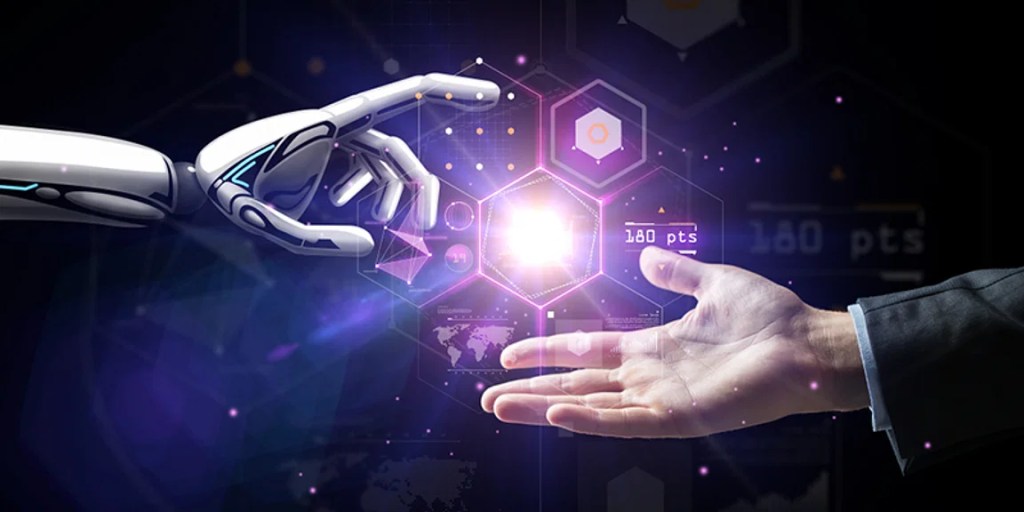
Rather than viewing AI as a replacement for human testers, it can help humans do their job better. AI can do repetitive tasks and help with data analysis, while humans focus on harder things like planning tests, exploratory testing, and user experience evaluation. By leveraging the strengths of both AI and human testers, organizations can achieve faster delivery cycles, higher software quality, and improved customer satisfaction.

The Future of Software Testing
As AI gets better, the future of software testing will probably involve using both AI-driven automation and human expertise. Human testers will play a central role in validating AI-generated test results, ensuring accuracy, relevance, and ethical considerations. Moreover, human testers will remain essential in addressing non-functional aspects of software quality such as usability, accessibility, and security – areas where human judgment and empathy are indispensable.
Conclusion
In the end, AI won’t replace human testers. Instead, it will help them do their job better. By working together, AI and humans can make software testing faster, better, and more user-friendly.
References
- AI testing tool – https://www.code-intelligence.com/blog/ai-testing-tools#:~:text=AI%20testing%20tools%20leverage%20artificial,overall%20scalability%20of%20testing%20strategies.
- Images from – https://elearningindustry.com/how-learning-and-development-connects-humans-and-ai,
- Images from – https://ai-hmc.com/