


In a single-threaded application, tasks run sequentially without interference. However, when multiple threads access shared data, issues can arise if they modify this data simultaneously.
Why Thread Synchronization is Needed
Imagine a simple scenario where two threads are trying to update the same bank account balance simultaneously. Without synchronization, both threads might retrieve the same balance, make changes, and save it back. As a result, one thread’s update could unintentionally overwrite the other’s, leading to incorrect data.
Thread synchronization is the solution to these conflicts. Synchronization techniques ensure that only one thread can access the critical section (the shared data) at a time, preventing race conditions and ensuring data consistency.

What Are Locks in .NET?
Locks are mechanisms that allow only one thread to access a particular resource or piece of code at a time. When a thread acquires a lock, other threads must wait until the lock is released before they can proceed.
Types of Synchronization in .NET
.NET provides several synchronization techniques, each suited to different scenarios. Here are some of the most commonly used ones:
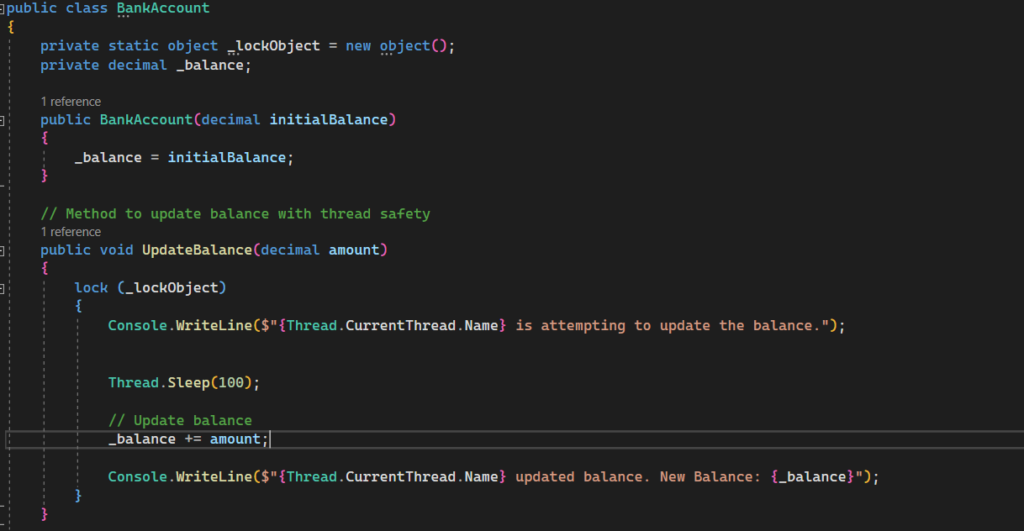
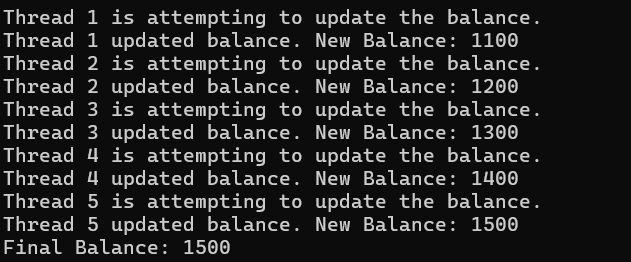
- Locking with the lock statement: The lock keyword is used for critical sections where you want only one thread to execute a specific block of code. It’s simple to use and works well for basic needs.

Output
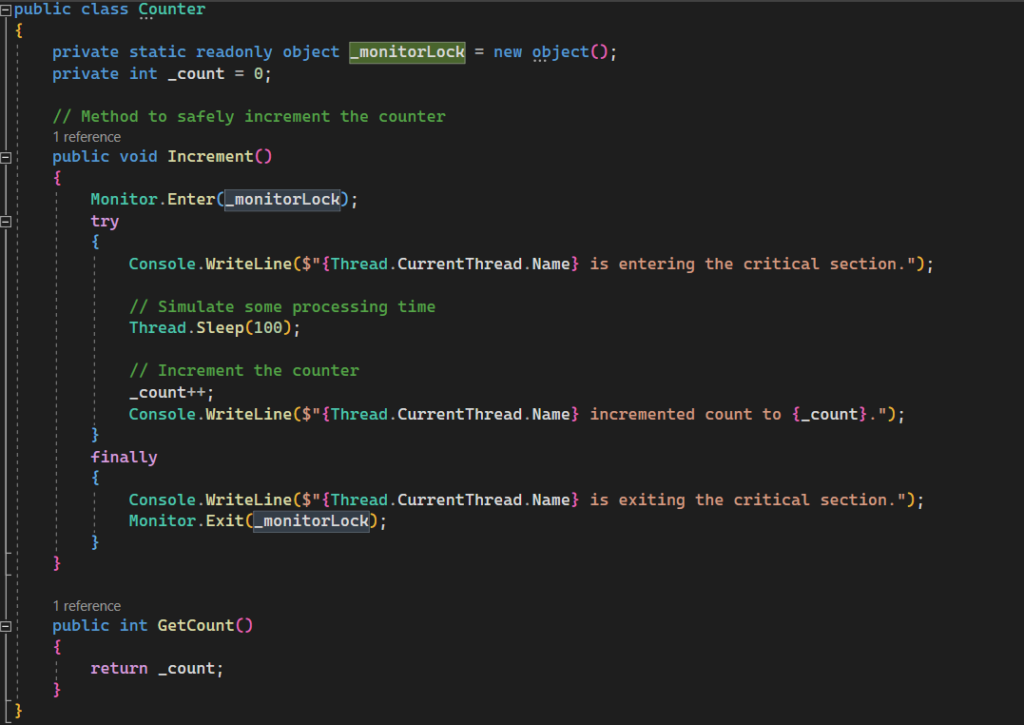
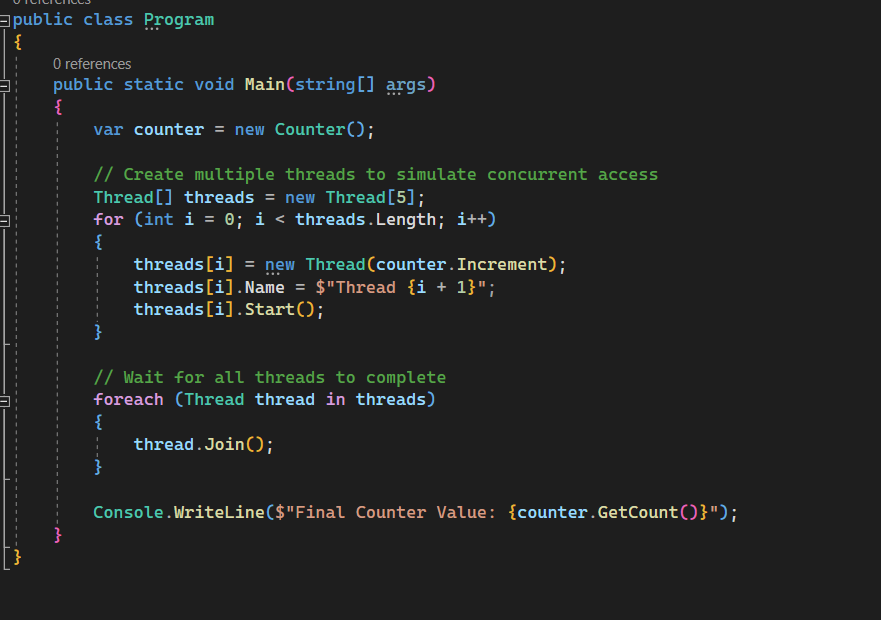
- Monitor: The Monitor class in .NET provides additional control over locking by allowing finer-grained operations, such as waiting and pulse signaling, which can be used to manage thread access more flexibly.
Output
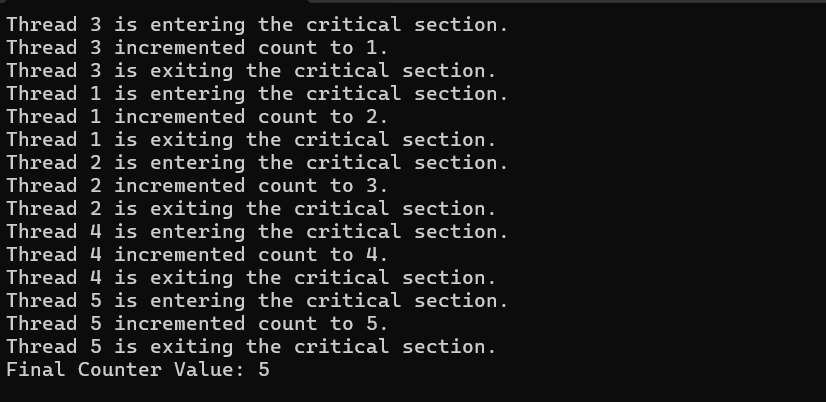
- Mutex: A Mutex is a synchronization primitive that is often used across different processes. Unlike lock, which is restricted to threads within the same process, a Mutex can control access to resources across multiple processes.
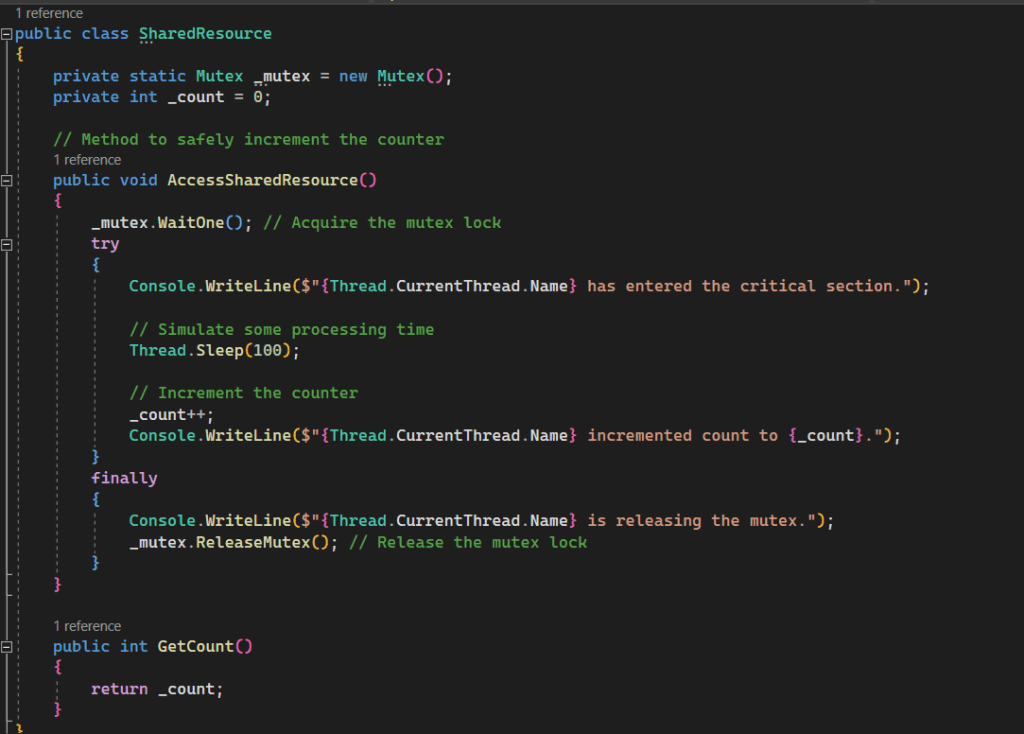
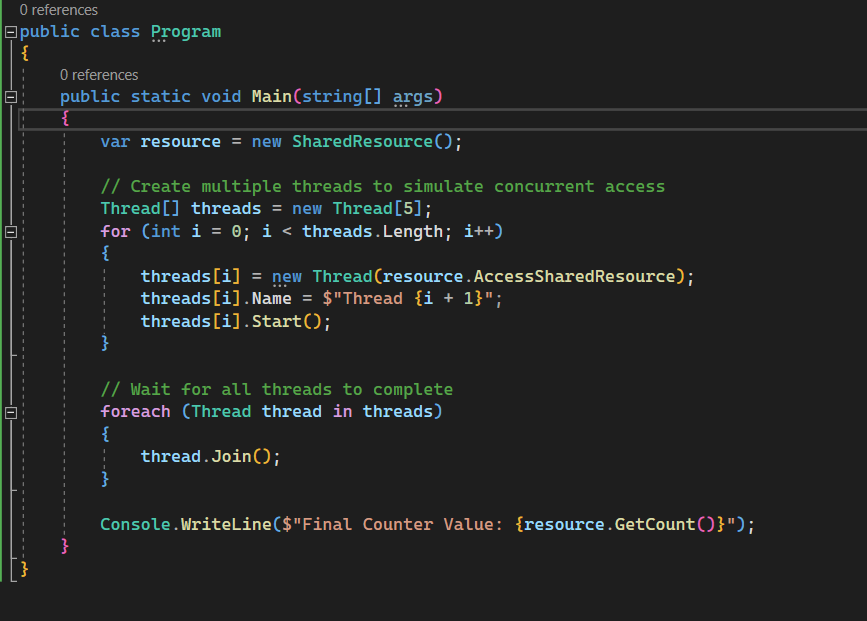
Output

- Semaphore and SemaphoreSlim: A Semaphore limits the number of threads that can access a resource at the same time. Unlike a Mutex, which allows only one thread, a Semaphore can permit multiple threads to access a resource concurrently (up to a specified limit).
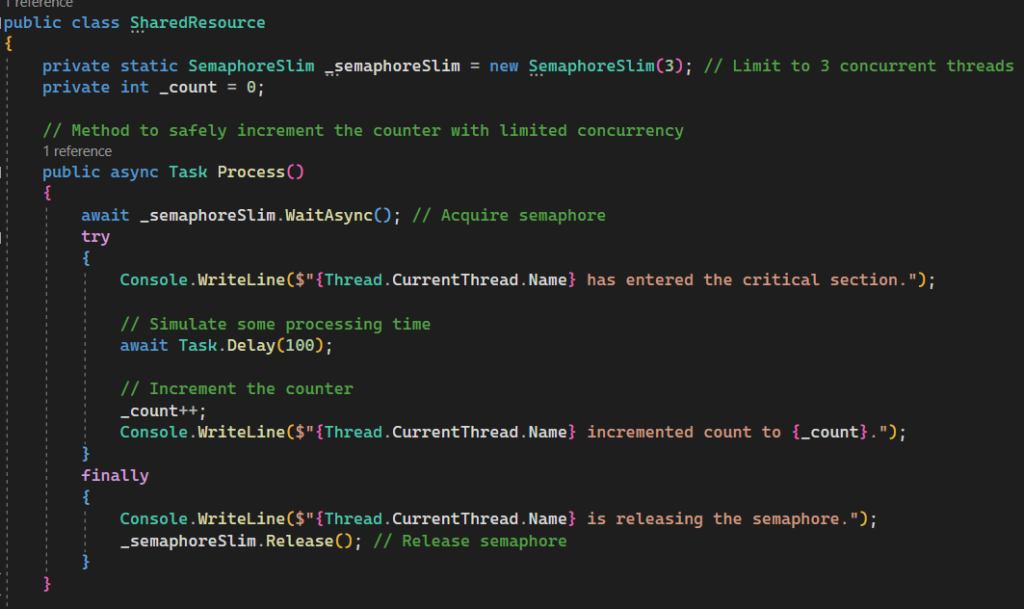

Output
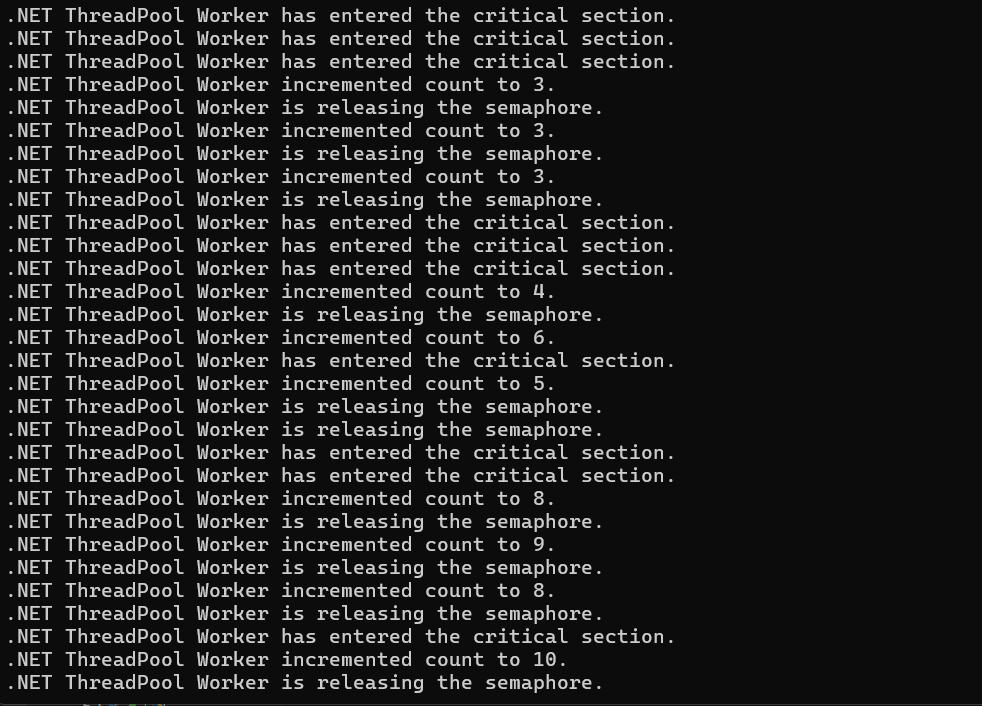
- ReaderWriterLockSlim: ReaderWriterLockSlim is useful when you have scenarios where multiple threads need read access but only one can write. This lock type allows multiple threads to read simultaneously but restricts write access to only one thread at a time.


Output:

Choosing the Right Synchronization Technique
Choosing the right synchronization technique depends on the nature of the application and the resources being shared:
- Simple Critical Section: Use lock for short, simple critical sections with minimal contention.
- Complex Scenarios: Monitor offers more control than lock, making it suitable for complex synchronization scenarios.
- Cross-Process Synchronization: For shared resources across multiple applications or processes, consider using Mutex.
- Limited Concurrency: Use Semaphore or SemaphoreSlim when you need to limit access to a resource, but not exclusively to one thread.
- Read-Heavy Scenarios: ReaderWriterLockSlim is ideal for data structures where many threads read and a few threads write.
Best Practices for Thread Synchronization and Locks
- Keep Locked Sections Short: To avoid performance bottlenecks, keep the critical section (code within lock, Mutex, etc.) as brief as possible.
- Avoid Nested Locks: Nested locks can lead to deadlocks, where two threads are waiting indefinitely for each other to release locks.
- Minimize Lock Usage: Only use locks when necessary. Excessive locking can degrade performance and reduce the responsiveness of your application.
- Use Asynchronous Locks for Async Methods: For asynchronous code, use SemaphoreSlim rather than lock, as lock is not compatible with async methods.
- Leverage Read-Write Locks for Read-Heavy Operations: If your application has many read operations and infrequent writes, ReaderWriterLockSlim can improve performance.
Conclusion
Understanding thread synchronization and locks in .NET is crucial for building efficient and reliable multithreaded applications. Locks like lock, Monitor , and Mutex protect shared resources, while more advanced techniques like SemaphoreSlim and ReaderWriterLockSlim allow for more complex synchronization needs. By choosing the right synchronization technique and following best practices, you can manage thread concurrency effectively, reduce bugs related to race conditions, and create applications that handle multithreading smoothly.