



In the rapidly evolving field of artificial intelligence, leveraging pretrained models can significantly accelerate development and enhance the capabilities of your applications. Microsoft’s Semantic Kernel provides a powerful framework for integrating these models seamlessly. This blog will guide you through the process of utilizing pretrained models with the Semantic Kernel, enabling you to build intelligent, context-aware applications effortlessly.
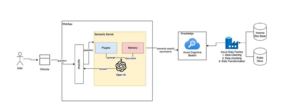
The Semantic Kernel is a comprehensive toolkit designed to simplify the development of AI-powered applications. It offers a variety of components, such as planners, connectors, and plugins, which work together to provide a robust infrastructure for integrating AI models and orchestrating complex workflows.
Why Use Pretrained Models?
Pretrained models, such as those available from HuggingFace or OpenAI, come with a wealth of knowledge and capabilities already baked in. By leveraging these models, you can:
- Save Time: Skip the laborious training process and use a model that has already been trained on vast amounts of data.
- Improve Performance: Utilize state-of-the-art models that have been fine-tuned for optimal performance.
- Enhance Features: Incorporate advanced functionalities like natural language understanding, text generation, and more.
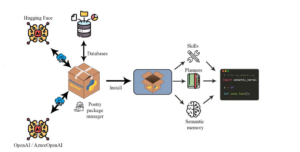
Components used to utilize Pretrain model
To utilize a pretrained model in the Microsoft Semantic Kernel SDK, you need to integrate several key components that work together to enable seamless interaction with the model. Here are the primary components required:
- Connector: This component is essential for communicating with the pretrained model. The connector handles API requests and responses, facilitating the interaction between your application and the model.
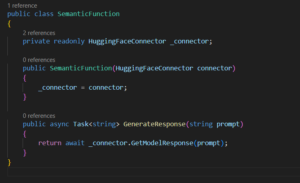
- Semantic Function: This function leverages the connector to generate responses based on user inputs. It acts as an intermediary that processes the input, sends it to the pretrained model, and handles the output.
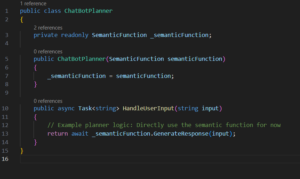
- Planner: Planners orchestrate the sequence of functions to be executed. They decide which functions to use and in what order based on the user’s prompt and the descriptions of the functions.
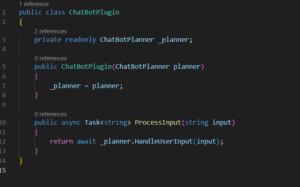
- Plugins: Plugins encapsulate semantic and native functions, making them available to the AI services and applications. They provide a structured way to manage and expose the functionalities of your application.
- Function Descriptions: Descriptions of functions and their parameters are crucial for the planner to understand what each function does and how to use them effectively. These descriptions should be clear, concise, and informative.
- Configuration: Proper configuration is necessary to set up the connectors with the required API keys, endpoints, and other relevant settings to ensure secure and efficient communication with the pretrained model.
Sample Example
- Create a Connector: Develop a connector to interface with the pretrained model’s API.
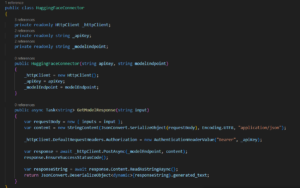
- Configure the Connector: Set up the connector with the necessary API key and model endpoint.
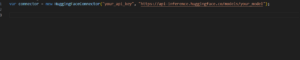
- Create a Semantic Function: Use the connector to build a semantic function that generates responses from the pretrained model.
- Set Up a Planner: Integrate the semantic function into a planner to orchestrate the execution of tasks.
- Develop Plugins: Create plugins to manage and expose the semantic and native functions.
- Define Function Descriptions: Provide clear and detailed descriptions for each function and its parameters to ensure the planner can use them effectively.

By following these steps and integrating these components, you can effectively utilize pretrained models with the Microsoft Semantic Kernel, enhancing the intelligence and capabilities of your AI-powered applications.
Conclusion
Utilizing pretrained models with the Microsoft Semantic Kernel SDK can greatly enhance your application’s capabilities, providing sophisticated AI-powered features with minimal effort. By following the steps outlined in this blog, you can integrate state-of-the-art models into your projects, enabling you to build intelligent, responsive applications that deliver exceptional user experiences.Whether you’re working on a chatbot, an automated customer service system, or any other AI-driven application, the Semantic Kernel SDK and pretrained models offer a powerful combination that can help you achieve your goals efficiently and effectively.