


Introduction
Snowflake, in recent years, has become the most popular data warehousing tool in the market. It has surpassed its competitors like RedShift and BigQuery. This article is trying to find out why.
A great start from Snowflake’s founders.
Benoît Dageville, Thierry Cruanes, and Marcin Żukowski were the three data warehousing experts who founded Snowflake in the year 2012. But even before leaving their previous companies, these three founders had already envisioned a data platform that would overcome the challenges of the existing solutions they were working on.
Raw power comes from innovative design, coded from scratch for cloud.
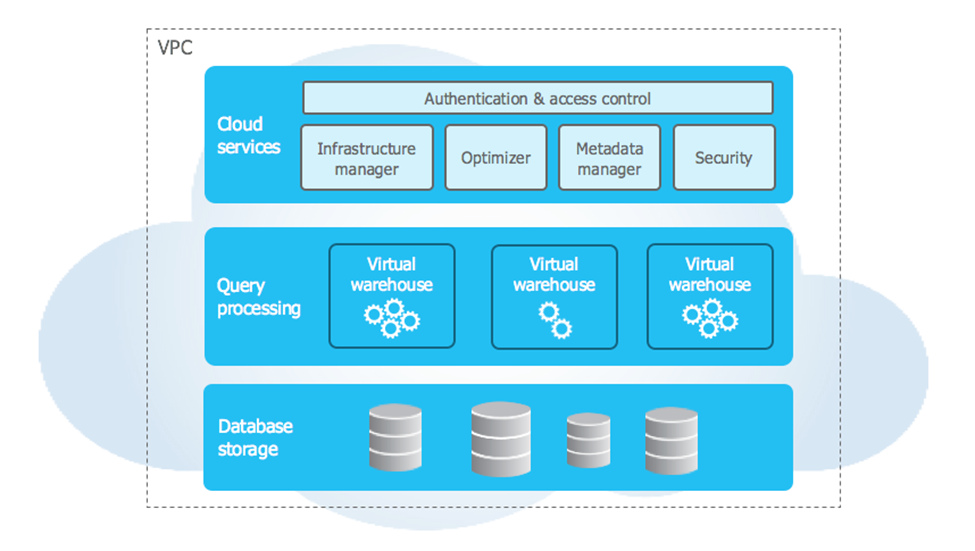
Snowflake has an innovative design that separates compute layer from storage layer. And both layers are built entirely on top of native cloud services like AWS, Azure, GCP. Therefore,
– Snowflake storage layer is nearly unlimited.
– Snowflake compute layer can be scaled very well:
. To support larger data volume and faster queries.
. Or to achieve higher concurrency.
. Or to isolate different workloads.
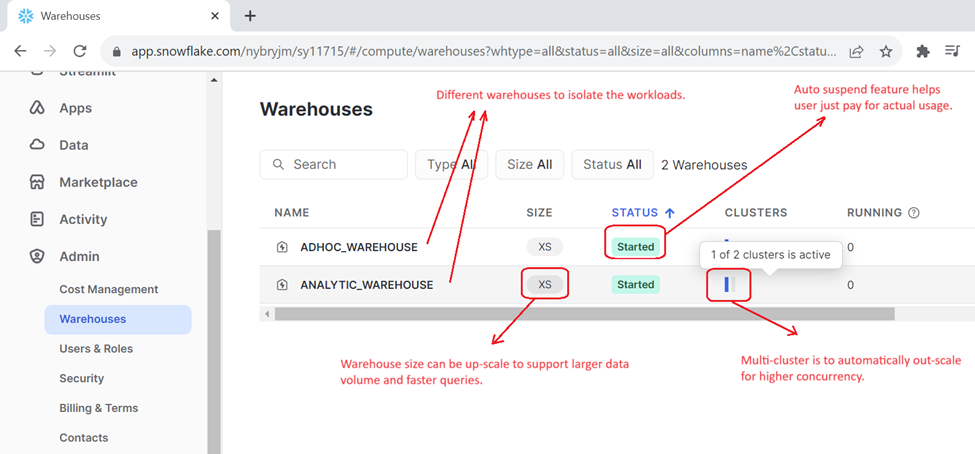
This compute scaling model is the first introduced in the market, way ahead of its competitors. Also, this scaling model later translated to a good billing model giving snowflake’s customer the impression of easy to use yet powerful platform.
Easy to use, for both technical and non-technical users.
Built-in optimization works without user attention.
The build-in optimization includes:
– Storage layer is automatically divided into micro-partitions.
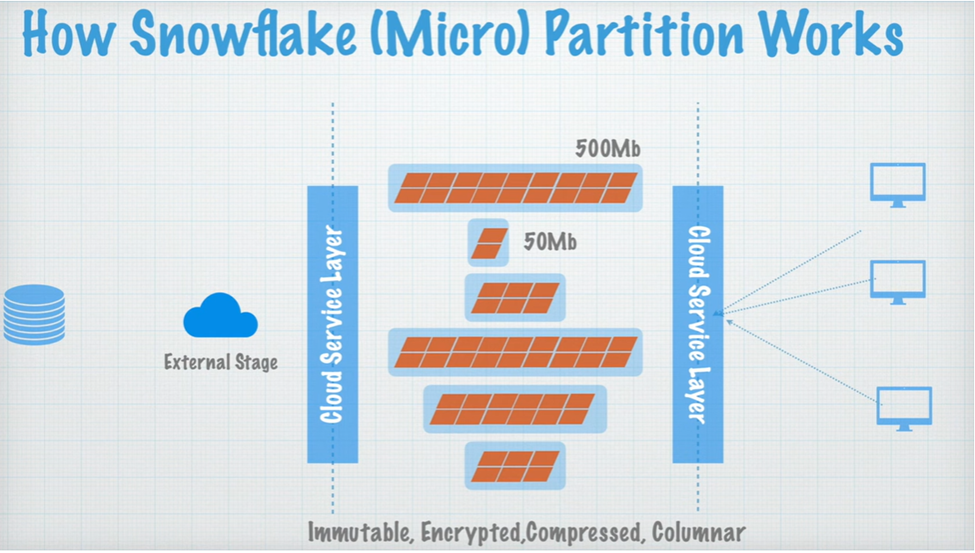
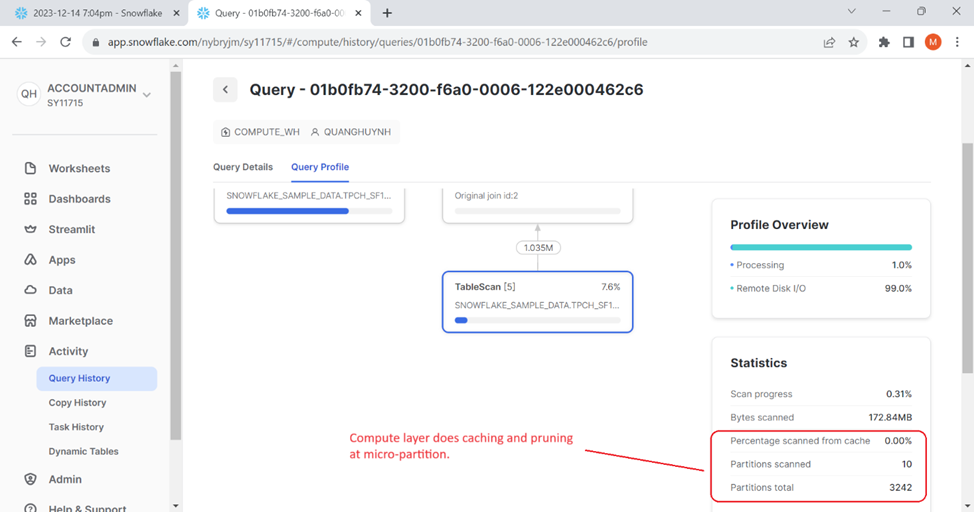
– Compute layer does caching and pruning at micro-partition level as well.
– Tables can be clustered by user defined keys, and after that, being maintained (re-cluster) automatically.
This built-in optimization works seamlessly behind the scenes without any special attention throughout the design/implementation/maintenance phases of the DW life cycle. Thus, giving Development Team a good impression as “easy to use”.
Supporting Standard/Extended SQL.
SQL users, such as DWH Development Team or Data Analyst Team, love how Snowflake supports Standard and Extended SQL, structure as well as semi-structured data. Also, the built-in optimization works well without almost zero care. Thus, it makes their day-to-day work become easy.
Supporting Standard/Extended SQL is also the key point when it comes to existing 3rd data consumption tools in the market. For example, any Business Intelligent Tool (BI Tool) can still generate SQL queries the way it was doing, therefore, can extend quickly to accept Snowflake as a live data source.
Also, by Supporting Standard/Extended SQL, Snowflake smooth things up when it comes to migrating DWH from a traditional RDBMS or Hive to Snowflake. The time to check/recode for code compatible is minimum.
Easy Administration.
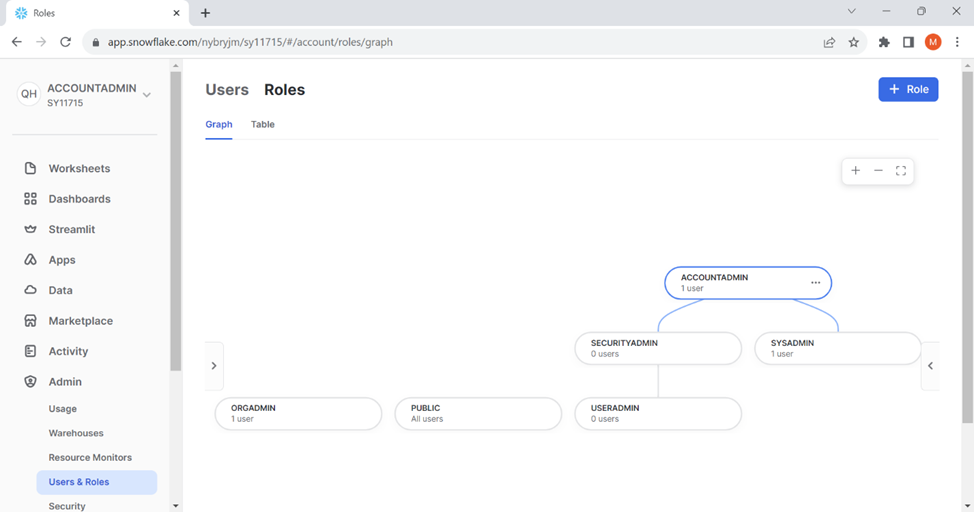
Administration Team love the Security, Governance, and Data Protection feature that is easy to control from either the good looking Web UIs or SQL statements. The base knowledge for these administration tasks is relatively aligned with traditional RDBMS and well documented, therefore, Administrators can start working with almost a non-learning curve. Also, as Snowflake acts as Fully Managed Service, Administration Team are free from handling upgrades, availability, storage maintenance, compliance certifications, etc.
Apps and Extensibility.
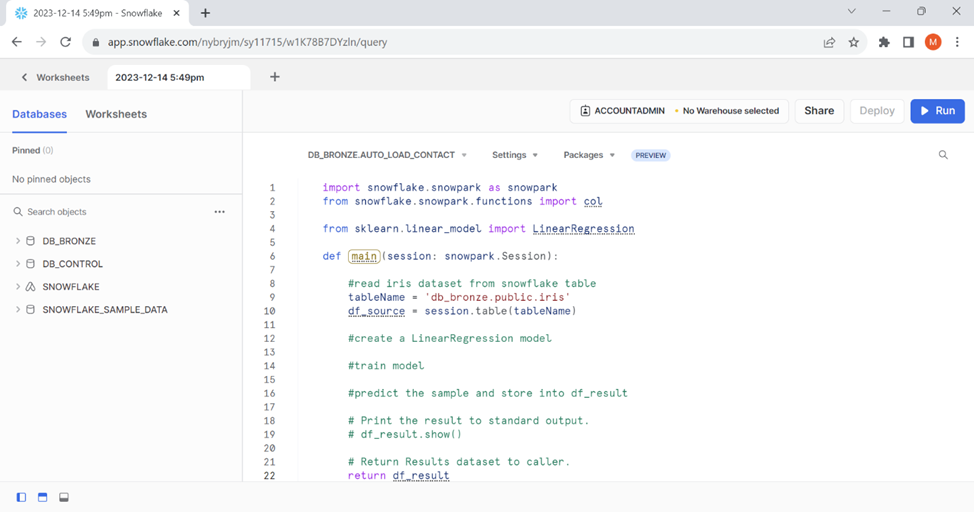
Data Scientist Team loves how Snowflake supports writing code not only by SQL language, but also by Snowpark APIs (Spark alike) in Java/Python/Scala languages. This feature opens up capabilities for ML or AI applications, an indispensable feature for any modern data platform.
Snowflake even goes further to provide a Web UI (Worksheet) as a Snowpark Python client ready, thus allowing Data Scientist to start coding with Snowpark APIs in Python language immediately, without the need of setting up his/her own Client environment.
Straightforward billing model.
A quick recall of the 3 billing models:
– Pay Per TB Scanned
– Pay for Consumed Cloud Resources
– Pay for the Cloud Resources You Choose
And with the 3 distinctive key points:
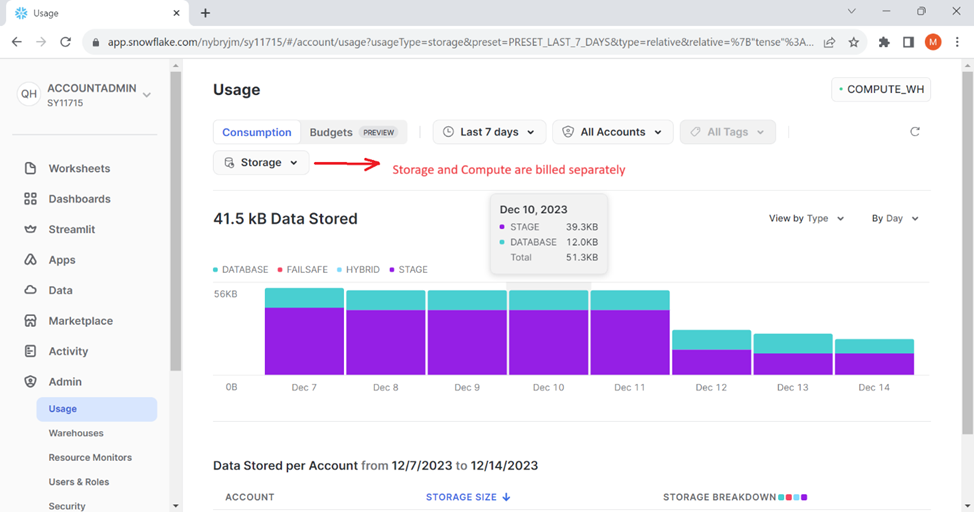
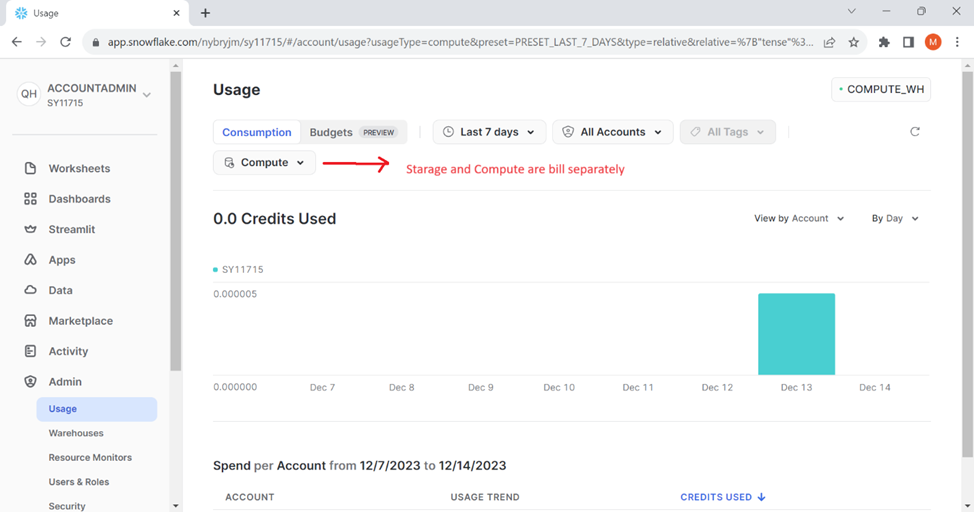
– Snowflake design separates compute and storage layer.
– Snowflake design builds both layers entirely on top of native cloud services.
– Snowflake does not charge its users for data movement between Storage and Compute layers.
So, with these 3 key points, Snowflake goes with “Pay for Consumed Cloud Resources” billing model. This model is more straightforward than the other two, thus wins lots of customers.
Meanwhile, take a glance at Snowflake’s competitors. RedShift Serverless DWH model, and BigQuery are late comers with the same billing model. Therefore, giving Snowflake a big head start.
Easy data collaboration.
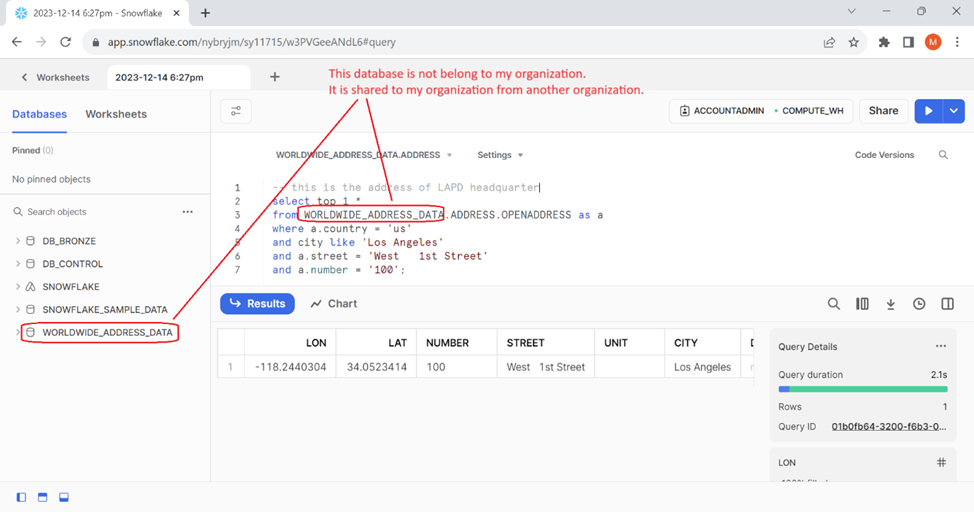
Snowflake governs and allows seamless data collaboration within an organization (aka. a Snowflake account), or securely shared across organizations without copying the data over. This is a extremely powerful feature that none traditional DWH built on RDBMS has. It can save a lot of money and time for business. This is why we see a huge movement to migrate DWH from on-premises to cloud.
Ambitious marketplace.
Sharing data across organizations is just not good enough. Snowflake Marketplace allows one organization to share and monetize not only their data, but also their data applications with others. In short, this is an ambitious and bold concept with growing potential just like Apple App Store or Google Play Store before.
Some minor challenges.
A wide ecosystem that depends on Partners and 3rd Party
Snowflake does not provide in-house tools for integration/orchestration. Instead, it relies entirely on Partners tools that have native connectivity to Snowflake. This is a good thing but also a challenging thing.
Snowflake provides a bare minimum of programmatic drivers for many popular programming languages such as ODBC, JDBC, .Net, PHP, Python, Node.js, etc. So, it is up to the other 3rd party to develop and sell more advanced drivers. This is another challenging thing.
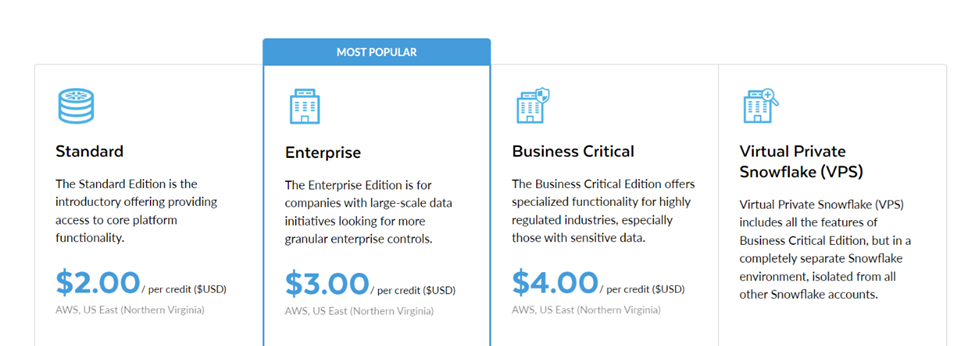
Potential high compute cost for higher editions.
Users may be surprised that they are being charged more for the same “user workload” at higher editions.
Conclusion
Easy to use yet powerful with almost two years head start in comparison with its competitors, Snowflake wins customer satisfaction and becomes the most popular data warehousing tool in the market.
1 thought on “Why is Snowflake so popular?”
A short post that describes many valuable features. Thank you, aQuang.HD.
Comments are closed.