
Create AWS CLI Profile: Step By Step
If you’re working with multiple AWS environments—like production, staging, or development—managing credentials can become chaotic. That’s where AWS CLI profiles […]


If you’re working with multiple AWS environments—like production, staging, or development—managing credentials can become chaotic. That’s where AWS CLI profiles […]

Integrating AI with FullStack Developers is crucial for modern applications. These developers connect frontend, backend, and AI components, managing complex integrations that traditional developers cannot. Their expertise allows for efficient AI product development, enabling rapid MVP creation, real-time interaction, and effective data handling, thus enhancing overall system cohesion and performance.

In the AI-driven landscape, AI FullStack Developers have evolved from mere coders to strategic architects of intelligent systems. They possess skills in AI integration, DevOps, and system architecture, enabling businesses to develop and scale products efficiently. Hiring these developers offers reduced costs, faster time-to-market, and adaptability in uncertain environments.

In today’s fast-paced digital world, hiring a FullStack Developer for AI projects is no longer optional — it’s a competitive
Retrieval-Augmented Generation (RAG) enhances AI by merging real-time information retrieval with content generation, addressing the limitations of traditional models that use only pre-trained data. It minimizes misinformation, keeps responses updated, and improves AI applications like chatbots and knowledge management, making AI responses more accurate and relevant across various industries.

The AWS Well-Architected Framework guides organizations in creating efficient cloud architectures through best practices across six pillars: Operational Excellence, Security, Reliability, Performance Efficiency, Cost Optimization, and Sustainability. By following this framework, businesses can enhance security, manage costs effectively, and ensure long-term resilience while aligning cloud strategies with business objectives.
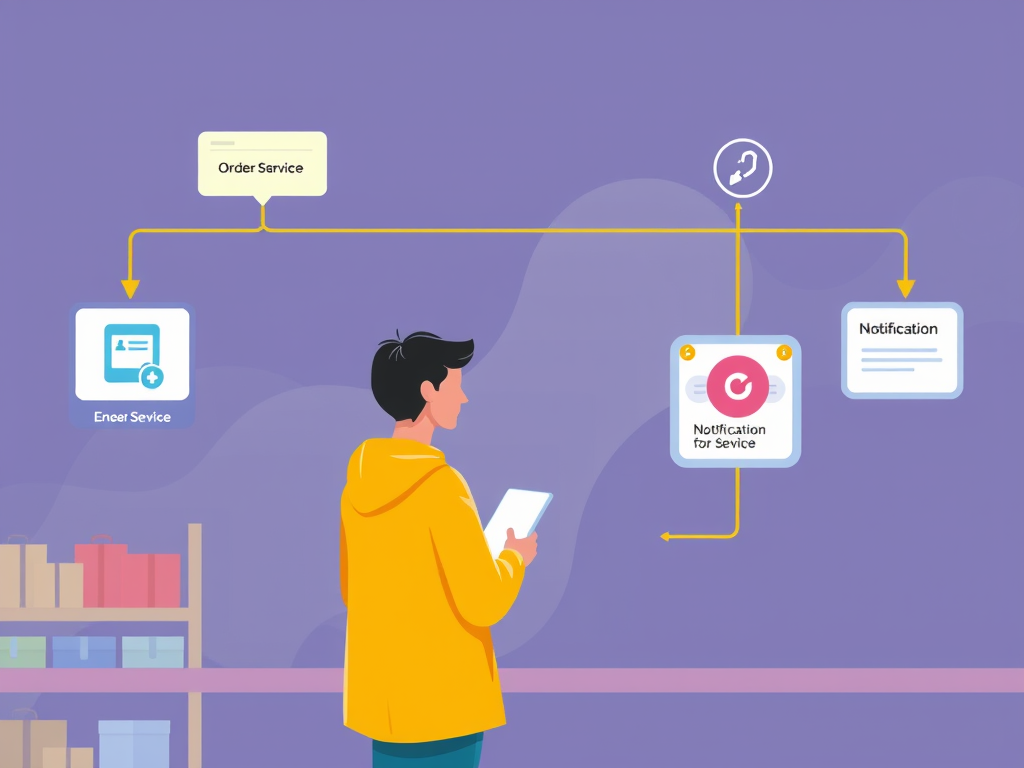
A Choreography-Based Saga enables autonomous service communication via events, eliminating centralized orchestration. In an e-commerce scenario, services handle transactions independently by emitting and responding to events like OrderCreated and PaymentProcessed. This approach enhances scalability, loose coupling, and decentralization, though it requires effective event management and error handling for reliability.

The Orchestrator-Based Saga pattern centrally manages transactions in microservices by coordinating steps and handling compensations for failures. This approach is illustrated through an E-commerce Order Management System example in Node.js, highlighting the interplay between orchestrator, order, payment, inventory, and notification services while emphasizing the method’s reliability and scalability challenges.
ChatGPT can evolve into Agentic AI by enhancing autonomy through integration with APIs, adding decision-making capabilities, and facilitating coordination with other agents. Key steps include implementing memory, continuous learning, and error management. Although ChatGPT alone lacks independence, with proper systems it can be a significant component of Agentic AI.
Agentic AI refers to autonomous AI systems capable of independent decision-making and complex problem-solving, while AI Agents are task-focused components operating under specific instructions. The distinction lies in autonomy and scope, with Agentic AI exhibiting comprehensive capabilities. Evolving from AI Agents to Agentic AI enhances system efficiency and adaptability across various applications.
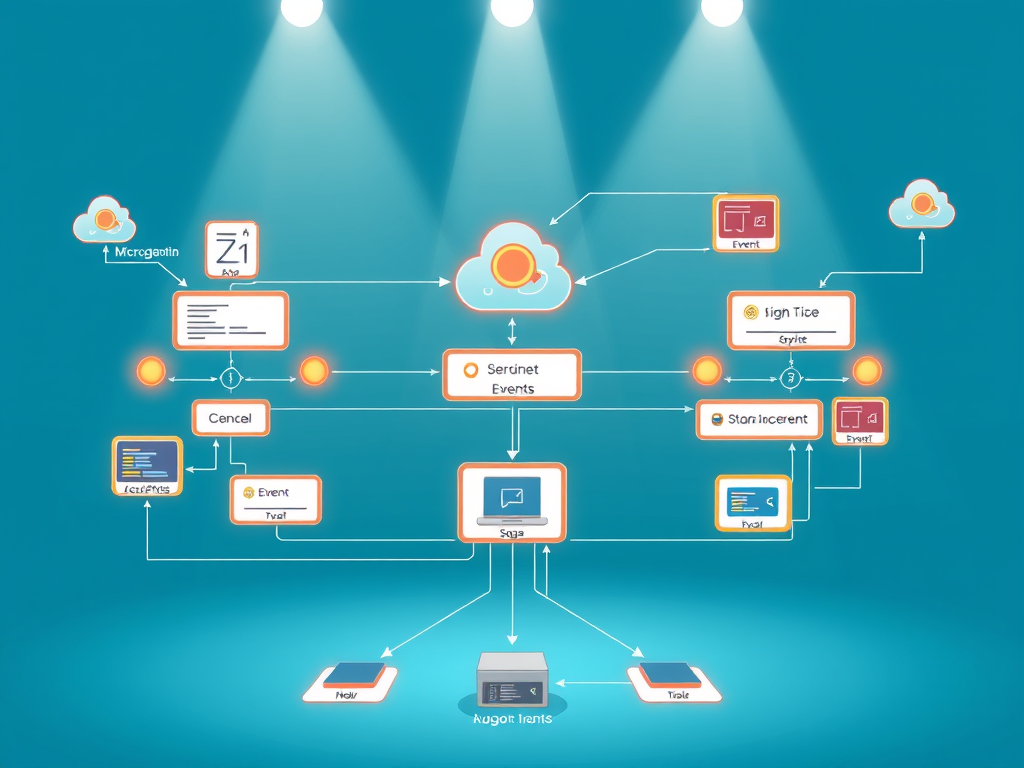
The Saga Pattern manages distributed transactions in microservices by breaking them into smaller steps. It ensures data consistency and fault tolerance via choreography or orchestration. Choreography offers decentralization for simpler workflows, while orchestration provides central control for complex processes. Both implementations enhance scalability and resilience in distributed systems.

Messaging platforms are crucial in modern software architecture, facilitating communication in distributed systems and microservices. They enable asynchronous, decoupled, and reliable message exchange, promoting scalability. Popular options include RabbitMQ and Apache Kafka. Implementing these platforms involves careful setup, integration, and best practices, ensuring efficient system communication and flexibility.