


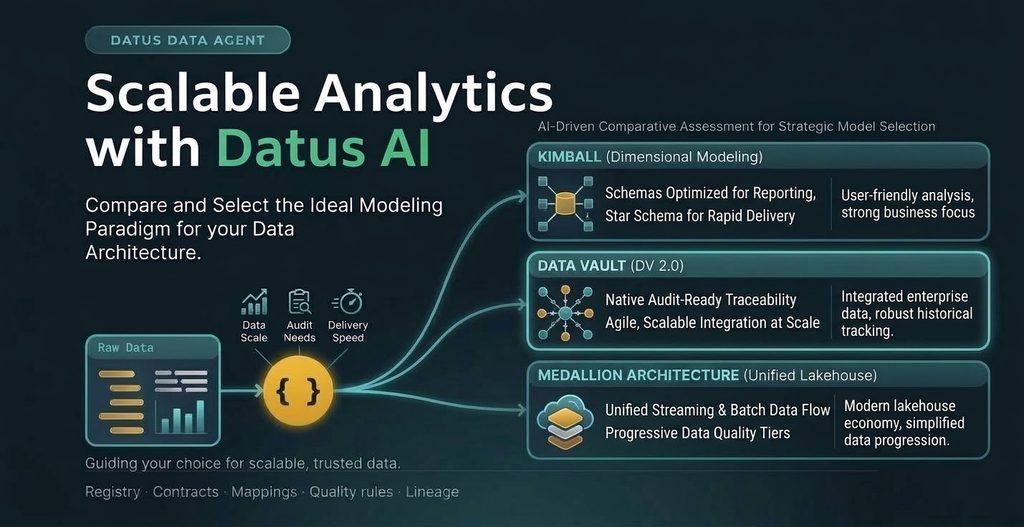
In the previous articles of the Datus AI series, we explored how organizations can move from business questions to analytics architecture, engineer reliable data pipelines, and adopt metadata-driven engineering at scale. Together, these capabilities establish the foundation of a modern analytics platform. The next critical step is often the most overlooked:
Designing analytics models that can scale with business growth.
Many analytics initiatives fail not because data is unavailable, but because the underlying data model cannot adapt to new requirements, increasing data volumes, and changing business processes. A model that works for a departmental dashboard today can become a maintenance burden when the platform expands across domains, regions, and hundreds of analytical workloads.
This article examines proven analytics modeling approaches, compares Kimball, Data Vault, and Medallion architectures, and explains how Datus AI helps architects select the most appropriate modeling strategy for their specific analytics goals.
Why Data Modeling Matters?
Data modeling is more than organizing tables. A well-designed analytics model should:
- Support business-friendly reporting
- Scale to increasing data volumes
- Accommodate schema evolution
- Preserve historical changes
- Minimize engineering effort
- Enable governance and lineage
- Support AI, BI, and advanced analytics workloads
Poor modeling decisions create challenges such as:
- Data duplication
- Inconsistent metrics
- Complex ETL pipelines
- Slow query performance
- Difficult maintenance
As organizations embrace lakehouse architectures, real-time analytics, and AI-driven insights, these challenges become even more pronounced. Modern platforms therefore require a deliberate modeling strategy rather than a collection of disconnected datasets.
Core Modeling Principles
Before selecting any modeling technique, architects should validate their design against several foundational principles.
1. Business Alignment
Models should reflect business concepts rather than technical systems.
Good
- Customer
- Product
- Sales Order
- Store
Bad
- CRM_CUST_MASTER_V3
- ERP_ORD_HDR
- SRC_INV_TABLE
Business-oriented structures improve self-service analytics adoption and reduce the dependency on engineering teams.
2. Scalability
The model should accommodate:
- New data sources
- Additional business domains
- Increased transaction volumes
- Evolving reporting requirements
A scalable model minimizes rework as organizational needs grow.
3. Historical Traceability
Analytics platforms must retain historical changes for:
- Auditing
- Compliance
- Behavioral analysis
- Trend reporting
Historical tracking becomes especially important in regulated industries such as banking, healthcare, and insurance.
4. Performance
Analytical workloads often scan millions or billions of records. Modeling choices directly impact:
- Query response times
- Storage costs
- Compute consumption
5. Maintainability
Teams should be able to:
- Understand the model quickly
- Extend it safely
- Govern it centrally
The best model is not necessarily the most sophisticated one. It is the one the organization can sustain over time.
Kimball vs Data Vault vs Medallion
Three approaches dominate modern analytics architectures.
Kimball Dimensional Modeling
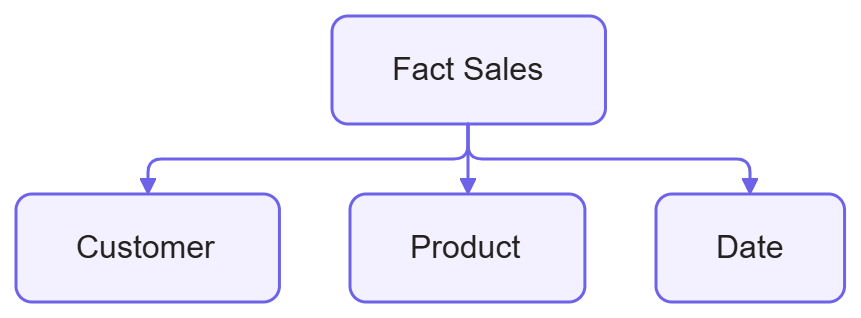
Introduced by Ralph Kimball, this methodology focuses on fact and dimension tables optimized for reporting.
Example
FactSales
- DateKey
- CustomerKey
- ProductKey
- Revenue
DimCustomer
- CustomerKey
- Name
- Region
DimProduct
- ProductKey
- Category
- Brand
Reporting Flow
Advantages
- Excellent query performance
- Business-friendly design
- Easy Power BI integration
- Fast dashboard development
Challenges
- Difficult schema evolution
- Can require significant redesign
- Limited support for historical lineage
Best Fit
Kimball is ideal when:
- Reporting requirements are well understood
- Executive dashboards are primary consumers
- Data sources are relatively stable
Data Vault Modeling
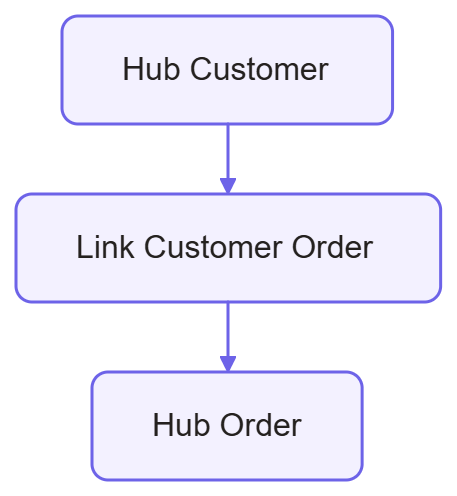
Data Vault prioritizes agility, scalability, and auditability. It introduces three core concepts:
Hubs
Business Entities
- Hub_Customer
- Hub_Product
- Hub_Order
Links
Relationships
- Link_Customer_Order
- Link_Order_Product
Satellites
Descriptive attributes
- Sat_Customer_Details
- Sat_Product_Attributes
Data Flow
Advantages
- Excellent historical tracking
- Supports rapid schema evolution
- Highly scalable
- Enables strong data lineage
Challenges
- Complex for business users
- More tables and joins
- Requires semantic layers for reporting
Best Fit
Data Vault works well when:
- Multiple source systems exist
- Auditability is important
- Enterprise-scale analytics is required
- Requirements change frequently
Medallion Architecture
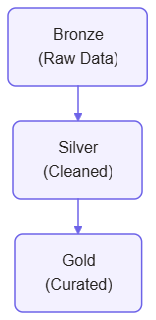
Popularized through lakehouse platforms, Medallion organizes data into progressive refinement layers.
Bronze
Raw Ingestion
- order_id
- amount
Silver
Validation
- order_id
- sales_amount
Gold
Business ready analytics
- Date
- Revenue
- Orders
Data Flow
Advantages
- Aligns naturally with lakehouse platforms
- Supports structured and unstructured data
- Strong scalability
- Simplifies data lifecycle management
Challenges
- Not a true modeling technique by itself
- Requires additional dimensional or business modeling
Best Fit
Ideal for:
- Databricks Lakehouse
- Microsoft Fabric
- Large-scale cloud analytics platforms
- AI and machine learning workloads
Comparing the Approaches
| Dimension | Kimball | Data Vault | Medallion |
|---|---|---|---|
| Query Performance | Excellent | Moderate | Good |
| Historical Tracking | Limited | Excellent | Good |
| Scalability | Moderate | Excellent | Excellent |
| Business Adoption | Excellent | Moderate | Good |
| Schema Evolution | Moderate | Excellent | Excellent |
| Governance | Good | Excellent | Good |
| Complexity | Low | High | Medium |
Scenario: California School Performance Analytics
To illustrate how modeling choices influence architecture decisions, consider the recurring California School Performance analytics scenario used throughout the Datus AI blog series.
The California Department of Education wants to analyze and track:
- Student enrollment trends
- Attendance rates
- Standardized test results
- Graduation rates
- School funding allocations
- Student demographics
- Teacher performance metrics
Data arrives from multiple systems:
Student Information System (SIS)
Learning Management System (LMS)
Assessment Platform
Financial Management System
HR System
The platform must support:
- Historical trend analysis over multiple years
- Cross-school performance comparisons
- Compliance reporting
- Executive dashboards
- AI-driven analytics and forecasting
- Drill-down reporting from district to student level
The Modeling Challenge
Suppose a district initially tracks only enrollment and test scores.
A traditional dimensional model may look like:
FactStudentPerformance
-----------------------
StudentKey
SchoolKey
DateKey
TestScore

DimStudent
DimSchool
DimDate
This works well for reporting.
However, new requirements emerge:
- Student transfers between schools
- Changes in demographic classifications
- Additional assessment providers
- New attendance tracking systems
- Longitudinal student history analysis
As the number of source systems and historical tracking requirements grows, maintaining a pure dimensional model becomes increasingly complex.
Recommended Approach
For the California School Performance platform, a hybrid architecture often delivers the best outcome:
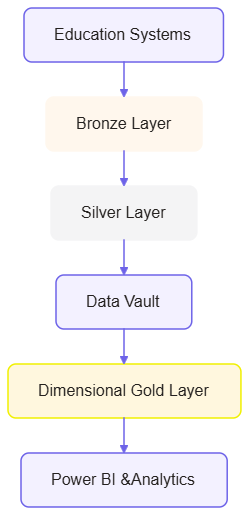
This architecture provides:
- Data Vault scalability and historical traceability
- Medallion governance and data quality controls
- Kimball-style reporting performance for educators and administrators
Using the Datus AI recommendation framework, the California School Performance scenario would typically result in a Medallion + Data Vault + Dimensional Gold Layer architecture, balancing auditability, scalability, and business usability while supporting future expansion across districts, schools, and educational programs.
Key Takeaways
Selecting an analytics model is one of the most consequential architecture decisions in any data platform initiative. The right choice depends on organizational goals:
- Kimball – when reporting simplicity and dashboard performance are top priorities.
- Data Vault – when scalability, lineage, and auditability are critical.
- Medallion – when building cloud-native lakehouse platforms.
- Or, combine approaches when enterprise requirements demand both flexibility and business usability.
Datus AI helps organizations move beyond subjective architecture discussions by evaluating business, technical, governance, and operational requirements and recommending patterns that scale with future growth. By connecting platform planning, data engineering, metadata management, and analytics modeling into a unified operating model, Datus enables teams to design analytics platforms that remain sustainable long after the first dashboard is deployed.