


Introduction
Did you know that nearly most insurance customers drop off before they even reach the claim submission stage? This can happen at any phase – whether it’s the initial research, policy comparison, or even at renewal time. Understanding why a customer might abandon their journey before reaching their insurance goals can be challenging, especially with so many points of interaction and potential pain points along the way.
Insurance customers often face a complex journey, from learning about policies to choosing the right coverage, making payments, and navigating the claims process. Each of these stages has its own set of actions, emotions, and touchpoints that shape the customer’s experience. This is where customer journey mapping comes into play – a tool that visually outlines every step of the insurance process from the customer’s perspective, highlighting key touchpoints, tasks, and areas of potential frustration. By taking this journey map approach, insurers can anticipate customer needs, refine processes, and reduce drop-offs, ultimately building stronger customer relationships.
In this blog, we’ll explore the details of customer journey mapping for insurance: what it depicts, how to build a comprehensive map, and how insurers can leverage this tool to enhance customer satisfaction and loyalty.
Why Customer Journey Mapping is essential in insurance
What is Customer Journey Map?
A customer journey map is a visual representation of the customer’s experience with a company. It also provides insight into the needs of potential customers at every stage of this journey and the factors that directly or indirectly motivate or inhibit their progress.
Why is Customer Journey Map essential?
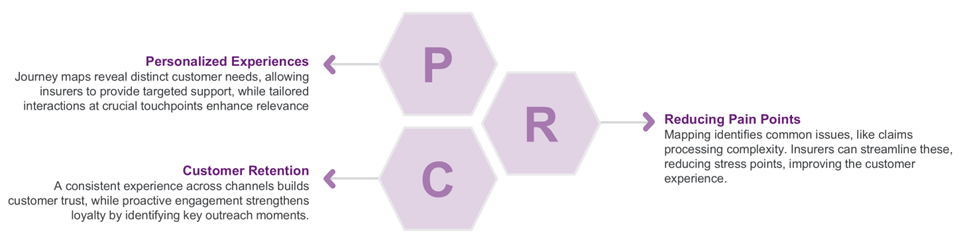
Personalized Experience: Understanding diverse customer needs and preferences
Customer journey mapping allows insurers to break down each phase of the customer’s interaction with the company – from awareness and consideration to claims and renewal. By doing so, insurers gain valuable insights into the unique needs, preferences, and behaviors of their customers at each stage.
Reducing Pain Points: Identifying challenges and suggestions
In the insurance journey, pain points can arise at any phase, often leading to customer frustration and potential drop-offs. Applying customer journey mapping helps insurers pinpoint these challenges and proactively address them to streamline the experience.
Customer Retention: Boosting loyalty through improved experiences
Customer retention is a primary goal for insurers, and journey mapping provides a strategic path to building long-term loyalty by refining each stage of the customer’s experience.
Key Stages in the Insurance Customer Journey
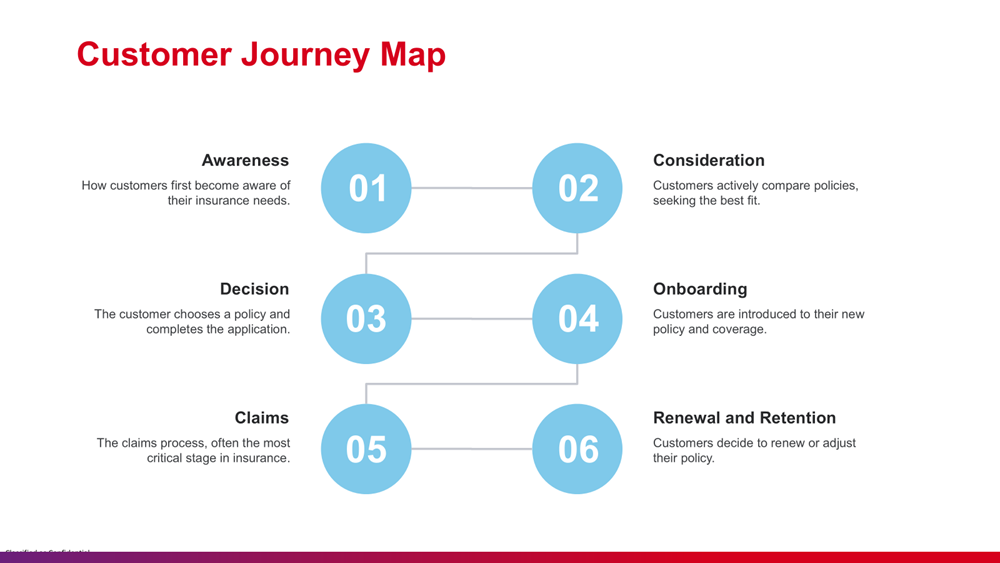
This fictitious customer journey map is a clear example of a journey when a customer wants to purchase insurance. It outlines the thoughts, feelings, and actions the customer seems to have.
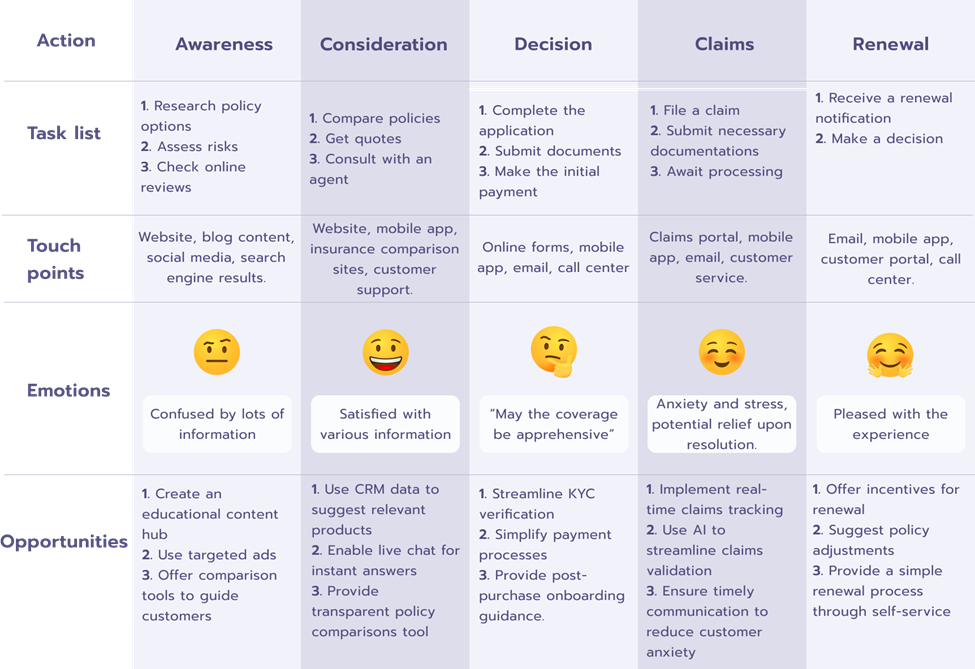
This clear diagram can visualize the company vision and help any department understand where they will fit into building a better user experience.
Enhancing the Journey: Opportunities for Insurers
Utilizing Data for Personalization
Insurers can harness data from journey mapping to personalize each phase of the customer experience. By analyzing this data, insurers can create personalized touchpoints – like tailored policy recommendations during the consideration phase or proactive claim support for specific customer segments.
Integrating CRM and Digital Tools
Customer Relationship Management (CRM) tools and digital platforms are essential for creating a seamless, omnichannel experience. Insurers can integrate CRM systems with journey mapping to capture a 360-degree view of each customer, ensuring that all teams (from sales to claims) have up-to-date insights into the customer’s needs and preferences. Digital tools like chatbots, mobile apps, and online portals enhance this by providing customers with multiple, consistent channels for interaction.
Conclusion
The customer journey in insurance spans several stages – from initial awareness and policy selection to claims and renewal. Journey mapping helps insurers understand each phase, revealing critical touchpoints and customer needs. By identifying these stages, mapping enables insurers to personalize experiences, streamline processes, and address pain points, which ultimately drives customer satisfaction and loyalty.